Why Understanding Commercial and Residential Building Design Matters
Commercial and residential building design may seem similar at first glance—both create spaces where people spend their time—but they serve fundamentally different purposes and follow distinct rules. Here’s what sets them apart:
- Purpose: Residential design prioritizes comfort and personal living, while commercial design focuses on business functionality and profitability
- Building Codes: Commercial projects face stricter regulations for safety, accessibility (ADA compliance), and fire protection due to higher occupancy
- Materials: Residential buildings typically use timber framing for cost-effectiveness; commercial structures rely on steel and concrete for durability and scale
- Timeline: Residential projects generally complete faster (smaller scale, simpler methods), while commercial builds involve phased construction and multiple stakeholders
- Budget Approach: Residential projects use mortgages and personal savings; commercial developments employ formal bidding, investor financing, and ROI analysis
- Customization: Homeowners enjoy high personalization; commercial spaces prioritize standardized, brand-consistent designs
Whether you’re a homeowner planning a custom renovation or a business owner developing a new facility, understanding these differences helps you set realistic expectations and choose the right design partner.
The stakes are real. Buildings account for nearly 40% of global energy-related carbon emissions. Commercial buildings must accommodate larger groups safely, requiring everything from fire suppression systems to accessible entrances. Residential spaces, meanwhile, balance efficiency with the intimate details that make a house feel like home.
I’m Dan Keiser, founder of Keiser Design Group, and I’ve spent over three decades leading commercial and residential building design projects across Ohio and beyond. My hands-on approach ensures every project—from custom homes to mission-driven facilities—reflects both creative vision and practical construction knowledge.
Design Philosophy: Crafting Spaces for People vs. for Profit
When we approach any new project, our first step is to understand its core purpose. Is it a place where a family will grow, make memories, and seek solace? Or is it a dynamic environment designed to foster productivity, attract customers, and drive revenue? This fundamental distinction shapes every decision we make in commercial and residential building design.
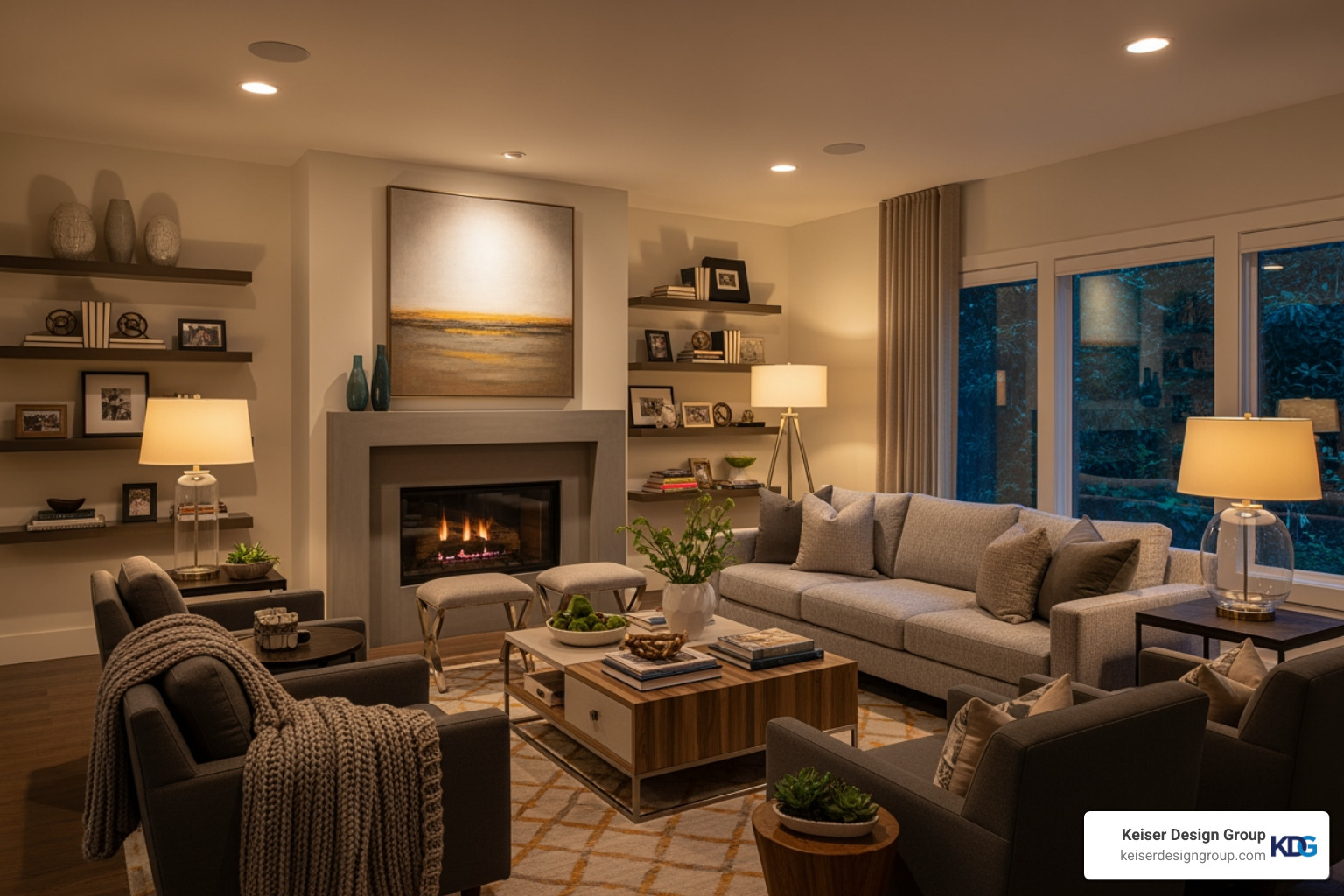
For residential projects, our philosophy centers on creating spaces that resonate with personal expression, comfort, and livability. We aim to integrate seamlessly with our clients’ lifestyles, fostering an emotional connection to their home. Think of a warm, inviting living room in a custom home—it’s designed for relaxation, family gatherings, and reflecting the homeowner’s unique taste. Here, we prioritize elements that contribute to a sense of sanctuary and well-being. From the choice of finishes to the layout of rooms, every detail is custom to meet individual needs and preferences.
Conversely, our approach to commercial architecture is driven by a focus on business functionality and return on investment (ROI). A commercial space must be efficient, durable, and capable of supporting specific business operations while also reflecting brand identity and accommodating public traffic flow. An office space, for example, needs to encourage collaboration and productivity. A retail store must facilitate easy navigation and product display to improve the customer experience. Durability is paramount, as commercial buildings endure higher traffic and more intensive use. Our designs for commercial clients balance aesthetics with practical considerations like operational efficiency and long-term maintenance.

Clientele and Primary Goals
The individuals and entities we work with, and what they hope to achieve, vary significantly between residential and commercial projects.
In residential architecture, our clients are typically homeowners and families. Their primary goals revolve around creating a personal living space that is custom to their unique needs and desires. They seek comfort, aesthetics, and a design that supports their lifestyle choices. For many, the ultimate goal is to create a sanctuary—a place where they can relax, entertain, and feel truly at home. Our collaboration with individual homeowners is often very close, diving deep into their vision and preferences.
For commercial projects, our clientele expands to business owners, property developers, managers, government agencies, and retail chains. Their primary goals are centered on maximizing profitability, ensuring operational efficiency, and achieving a strong return on investment. Whether it’s a new office building, a retail space, or a multi-unit residential development, the design must support the business’s objectives. This often involves managing the expectations and requirements of multiple stakeholders, from investors to future tenants. Commercial budgets, unlike residential ones that reflect personal preferences, emphasize cost-effectiveness and efficiency to support business operations.
Customization and Aesthetics
The degree of customization we can achieve also highlights a key difference in commercial and residential building design.
Residential projects offer a high degree of personalization. Homeowners often desire unique finishes, custom layouts, and specific features that reflect their personal style and improve their daily lives. We can explore custom cabinetry, unique flooring, bespoke lighting, and layouts that perfectly suit a family’s flow. This flexibility allows us to create spaces that are truly one-of-a-kind. Residential architecture offers more flexibility in customization, allowing homeowners to express their personal style and preferences, resulting in custom features like custom cabinetry and flooring.
In commercial settings, while aesthetics are important for brand identity and user experience, customization often takes a backseat to functionality, durability, and regulatory compliance. Designs tend to be more standardized, aiming for brand consistency across multiple locations or focusing on maximizing usable square footage for various business needs. Code-driven limitations, especially regarding safety and accessibility, also play a significant role in shaping aesthetic choices. Commercial construction may have limited design customization due to the need for more standardized designs. The focus here is on functional aesthetics—designs that are visually appealing but primarily serve the business’s operational requirements.
Codes, Materials, and Construction: The Technical Divide
Beyond the philosophical differences, the practicalities of building codes, material selection, construction techniques, and project management create a distinct divide in commercial and residential building design.
When we design and build, we’re not just creating structures; we’re navigating a complex web of regulations and material science to ensure safety, durability, and efficiency.
Why Building Codes and Regulations Vary
The primary reason building codes and regulations vary between residential and commercial construction is public safety. Commercial buildings must accommodate larger groups of people and maintain higher safety standards. This requires stricter compliance with fire safety, accessibility, and structural regulations compared to residential projects.
For instance, commercial projects in Ohio, Indiana, and Kentucky face stringent requirements for fire suppression systems, ensuring the rapid and effective control of fires in spaces with high occupancy. Egress requirements—the rules dictating how people can safely exit a building during an emergency—are far more complex for commercial structures due to the sheer number of occupants and the need for multiple, clearly marked exit routes. Additionally, structural loads in commercial buildings, which might house heavy machinery, large inventories, or numerous people, are designed to withstand significantly greater forces than typical residential loads.
Accessibility is another critical area. Commercial construction must adhere to the Americans with Disabilities Act (ADA) standards, ensuring that all public spaces are accessible to individuals with disabilities. This includes specific requirements for ramps, elevators, restrooms, and door widths, which are often less stringent or not applicable to private residential homes.
Commercial construction faces stricter regulations due to higher traffic, public accessibility, and structural complexity. These requirements often include detailed inspections beyond what a residential project would typically entail. Commercial and residential building design differ in compliance; residential projects typically follow streamlined safety protocols for private use.
Materials and Construction Methods
The choice of materials and construction methods is largely driven by the specific demands of each project type—cost-effectiveness and flexibility for residential, versus durability and scalability for commercial.
| Material | Residential Building Design | Commercial Building Design | Primary Driver |
|---|---|---|---|
| Framing | Timber Framing (wood) | Steel, Reinforced Concrete | Cost-Effectiveness & Flexibility vs. Durability & Scale |
| Exterior | Wood siding, Vinyl, Brick veneer | Large Glass Panels (curtain walls), Metal panels, Precast concrete | Aesthetics & Insulation vs. Durability & Modernity |
| Foundations | Concrete slabs, Crawl spaces | Deep foundations, Large concrete slabs, Pile foundations | Stability for smaller loads vs. Support for heavy loads |
| MEP Systems | Standard HVAC, Plumbing, Electrical | Complex HVAC (multi-zone), Industrial plumbing, High-capacity electrical | Comfort & Basic needs vs. Efficiency & Specialized functions |
Residential projects in our service areas of Ohio, Indiana, and Kentucky typically use timber framing. This offers flexibility in design and is generally more cost-effective for creating comfortable living spaces. Residential structures often incorporate standard elements like insulation and drywall to ensure both comfort and energy efficiency.
Commercial buildings, designed for higher traffic and specialized equipment, rely on more robust materials. Steel and reinforced concrete are common for framing, providing the necessary durability and scalability for larger, more intricate designs. Large glass panels, often seen as curtain walls, are also prevalent in commercial architecture for their aesthetic appeal and ability to maximize natural light. The scale and complexity of framing systems differ significantly; residential uses wood for ease of customization, while commercial uses steel or concrete for structural support and fire safety.
The equipment and machinery needed also reflect these differences. Residential construction typically employs smaller, more versatile equipment suitable for individual homes. Commercial construction, on the other hand, uses heavy machinery like cranes and bulldozers for large-scale tasks, reflecting the often monumental scale of these projects.
Project Timelines and Management Approaches
The journey from concept to completion varies considerably between commercial and residential building design, largely due to differences in scale, complexity, and stakeholder involvement.
Residential construction projects are generally faster to complete. Their smaller scale, simpler construction methods, and fewer regulatory steps contribute to a more streamlined process. While homeowner involvement is high, which can sometimes extend decision-making, the overall project management approach is often more flexible and focused on customer satisfaction. We work closely with our homeowners, prioritizing their vision and providing guidance every step of the way.
Commercial construction projects, by their very nature, typically have longer timelines. Their larger size, greater structural complexity, and the involvement of multiple stakeholders—from investors to various business tenants—necessitate a more formal project management approach. Commercial construction often involves phased construction, where different parts of the building are completed in sequence. However, these projects can also be expedited through systematized workflows, specialized machinery, and sometimes extended work hours to meet tight deadlines imposed by business launch dates or market demands.
Unlike the more informal approach of residential projects, commercial endeavors often employ formal bidding processes to secure competitive pricing for labor and materials. This structured approach helps manage the significant budgets and complex logistics involved. Our multidisciplinary engineering teams are crucial here, ensuring close collaboration between engineers, architectural partners, landlords, and tenants to maintain a common understanding of design solutions, costs, and schedule implications.
Site, Space, and Budget in Commercial and Residential Building Design
Beyond the structural elements, how we select sites, use interior spaces, and manage budgets are critical differentiators in commercial and residential building design. Each aspect is custom to the distinct purpose of the building.
Site Selection: Community vs. Commerce
Site selection is a crucial first step that profoundly impacts the success and longevity of any project. The criteria we use differ dramatically for residential versus commercial developments.
For residential projects in Ohio, Indiana, and Kentucky, our focus is on livability and community integration. We consider factors like the neighborhood character, proximity to amenities like schools, parks, and healthcare facilities, and the overall sense of privacy and security. Zoning regulations for living spaces also play a significant role, dictating allowable building types and densities. Our clients often prioritize quiet streets, good school districts, and a sense of belonging in their chosen community. Residential site selection focuses on livability factors like utilities, schools, and crime rates.
Commercial site selection, conversely, is driven by business objectives. We prioritize factors such as traffic patterns, customer visibility, and access to major roadways to ensure optimal convenience for customers and employees. Parking availability is a major consideration, as inadequate parking can deter potential customers. Commercial zoning is paramount, as it dictates what types of businesses can operate in a given area. For a retail establishment, maximum visibility and high foot traffic are key; for an office building, accessibility for employees and clients might be the priority. Commercial site selection prioritizes access to roadways, visibility, and traffic patterns to optimize customer and employee convenience.
Interior Design and Space Utilization
The way we design and use interior spaces directly reflects whether a building is meant for living or for commerce.
In residential design, we focus on creating intimate spaces that promote comfort and reflect personal aesthetics. The flow of a home is designed around the daily routines and preferences of its occupants—a cozy family room, a private master suite, or an open-concept kitchen for entertaining. Materials and finishes are chosen for their visual appeal, tactile qualities, and contribution to a warm, inviting atmosphere. Residential architecture is custom to meet the personal needs and preferences of occupants, focusing on comfort and aesthetics.
Commercial interior design prioritizes public circulation, durability, and functionality. Spaces are often designed to be flexible and multi-purpose, capable of adapting to various business needs or tenant fit-ups. We select finishes that are not only aesthetically pleasing but also highly durable and easy to maintain, given the higher traffic volumes. Maximizing usable square footage is key to operational efficiency and profitability. For example, retail stores are designed to optimize product display and customer flow, while office spaces must encourage productivity and collaboration. In commercial spaces, we balance brand identity and functionality to reflect organizational values and improve the customer experience.
Budgeting and Cost Management for commercial and residential building design
Managing the budget and costs is a critical aspect of any construction project, but the strategies and considerations differ significantly between commercial and residential building design.
For residential projects, financing is typically secured through mortgages, bank loans, or personal savings. Budget decisions often reflect lifestyle choices and personal preferences. While cost-effectiveness is always a consideration, homeowners may be willing to invest more in features that improve their comfort or personal enjoyment. Our role is to help clients balance their vision with their financial realities, providing custom designs that offer value and align with their desired lifestyle.
Commercial projects, on the other hand, are typically financed through larger bank loans, private investors, or sometimes government grants. The budgeting strategy is heavily focused on return on investment (ROI), efficiency, and cost-effectiveness to support business operations. Commercial projects employ formal bidding processes to secure competitive pricing for labor and materials, ensuring that every expenditure contributes to the project’s financial viability. Lifecycle cost analysis, which considers the long-term operational and maintenance costs in addition to initial construction, is a crucial tool in commercial budget management. This rigorous approach ensures that the investment yields the desired financial outcomes for the business or developer.
Modern Trends: Sustainability and Hybrid Spaces
Both commercial and residential building design are increasingly shaped by a commitment to sustainability and the emergence of innovative hybrid spaces. These modern trends reflect a growing awareness of our environmental impact and a desire for more integrated, efficient communities.
The Growing Role of Energy Efficiency and Sustainable Design
Sustainability practices are no longer optional; they are integral to modern building design, driven by both environmental responsibility and economic benefits. Buildings are responsible for nearly 40% of global energy-related carbon dioxide emissions, emphasizing the urgent need for sustainable design.
We advocate for designs that prioritize energy efficiency and sustainable practices in both residential and commercial projects across Ohio, Indiana, and Kentucky. These approaches lead to lower utility bills for occupants and owners, contribute to healthier indoor air quality, and significantly reduce a building’s overall carbon footprint.
Certifications like LEED (Leadership in Energy and Environmental Design) have become benchmarks for green building. LEED projects are responsible for diverting over 80 million tons of waste from landfills, with future projections expecting this number to reach 540 million tons. Such initiatives not only reduce environmental impact but also improve long-term building value and can reduce maintenance costs.
Passive House (PHIUS) standards represent another powerful approach, particularly for achieving net-zero energy use. The cost premium for PHIUS+ certification, especially for larger commercial projects, has significantly decreased, sometimes as low as 2-3%, and can be offset by long-term savings and incentives. Efficiency scales nicely as buildings get larger, making passive design particularly effective for commercial and multifamily structures due to lower surface-to-volume ratios.
The Rise of Mixed-Use Buildings
The traditional boundaries between where we live, work, and play are rapidly dissolving, leading to the rise of mixed-use buildings. These structures integrate residential, commercial, and sometimes recreational or institutional functions into a single development, redefining cityscapes in places like Columbus, Indianapolis, and Louisville.
Mixed-use buildings offer numerous benefits. They create walkable communities, fostering vibrant live-work-play environments where residents have easy access to services, shops, and entertainment. This integration promotes efficient land use, reduces reliance on private vehicles, and improves economic vitality by bringing businesses and residents closer together. For developers, mixed-use projects can offer diversified revenue streams and potentially higher property values. Residents enjoy lifestyle advantages such as convenience, improved quality of life, and reduced commuting time.
However, mixed-use developments also present unique challenges. Zoning complexities can be intricate, requiring careful navigation of local regulations. Integrating different functions within one building demands meticulous design to address potential conflicts, such as noise from commercial spaces impacting residential privacy. We must ensure seamless integration between residential and commercial spaces, carefully considering soundproofing, ventilation, and visual separation. Despite these challenges, the social and cultural impacts are profound, as mixed-use buildings foster community interaction, contribute to cultural enrichment, and can play a key role in revitalizing underdeveloped areas.
The Architectural Design Process for Any Project
Whether we’re designing a cozy home in Parma or a busy commercial hub in Cincinnati, the architectural design process follows a systematic approach. A client’s unfamiliarity with the process of architectural design should not hinder their comprehension of the phases of design services. Our goal is to make this journey transparent and collaborative, ensuring our clients in Ohio, Indiana, and Kentucky understand each step involved in bringing their vision to life. This structured process, often referred to as design-bid-build, helps us manage complexity and deliver predictable results.
Key Phases of Commercial and Residential Building Design
At Keiser Design Group, we guide our clients through distinct phases, each building upon the last to refine the design and prepare for construction. These phases are fundamental to both commercial and residential building design.
- Schematic Design (SD): This is the foundational discovery phase. We consult closely with the owner to determine project goals, requirements, and to define the architectural program—the functions and estimated square footage of each space. We develop initial design concepts through study drawings, exploring siting, massing, scale, and overall aesthetic. For a commercial project, this might involve optimizing public traffic flow; for a residential one, it could be about maximizing natural light in living areas. We also research zoning requirements and jurisdictional restrictions early on. The outcome is a clear idea of the project’s size, style, and layout, often presented with basic floor plans, elevations, and renderings.
- Design Development (DD): Once the schematic design is approved, we move into refining those initial concepts. This phase digs into the “guts” of the building, where we lay out mechanical, electrical, plumbing (MEP), and structural details. We specify material types and locations for elements like windows, doors, and building envelope assemblies. For a commercial building, this might involve selecting durable, high-traffic finishes; for a home, it could mean choosing specific insulation strategies and interior materials. The goal is to take the initial design documents and add more specific details, allowing for preliminary pricing from contractors.
- Construction Documents (CD): This is where the rubber meets the road, so to speak. We produce a complete set of detailed drawings and specifications—the blueprints—that contain all the pertinent information required for a contractor to accurately price and build the project. These documents are essential for obtaining building permits in Ohio, Indiana, and Kentucky, and they provide the comprehensive instructions needed for efficient construction. The level of detail here ensures that the design intent is clearly communicated to all trades.
- Bidding and Negotiation: With construction documents in hand, the project is ready for contractor selection. For commercial projects, this often involves a formal bidding process where contractors submit competitive proposals. For residential projects, it might be a more informal process based on referrals or trusted local contractors. We assist our clients in evaluating bids, ensuring they understand the scope, pricing, and timelines, and help negotiate terms before a construction contract is awarded.
- Construction Administration (CA): Our involvement doesn’t end when construction begins. During the construction phase, our core responsibility is to help the contractor build the project as specified in the approved construction documents. We conduct regular site visits, answer questions that arise, review shop drawings, and address any unforeseen issues that may occur. This oversight ensures that the design intent is maintained and that the project is executed to the highest standards.
Conclusion: Partnering with the Right Architect for Your Vision
As we’ve explored, commercial and residential building design are distinct disciplines, each with its own philosophies, regulations, materials, timelines, and financial considerations. From the personal comfort sought in a home to the operational efficiency demanded by a business, understanding these differences is key to the success of any construction project.
At Keiser Design Group, we bring over 30 years of experience to both residential and commercial projects across Ohio, Indiana, and Kentucky. Our expertise ensures that whether you’re envisioning a custom sanctuary for your family or a dynamic, profitable space for your business, your project is handled with precision, creativity, and practical construction knowledge. We pride ourselves on offering custom designs and a simple, worry-free process, guiding you through every phase of your project.
Ready to bring your vision to life? Explore our commercial design services or Contact Keiser Design Group today to start the conversation. We’re here to help you build beyond your expectations.