Why Churches Are More Than Buildings—They’re Community Architecture
Architectural design churches represent one of the most meaningful challenges in the built environment. These structures must balance timeless spiritual needs with practical, modern functionality—serving as both sacred gathering spaces and active community hubs.
Key elements of successful church architectural design include:
- Light and atmosphere – Natural light and volumetric space create a sense of peace and spiritual focus
- Flexible, multi-functional spaces – Modern congregations need areas for worship, fellowship, children’s programs, and community service
- Authentic materials – Wood, stone, glass, and steel convey warmth, strength, and transparency
- Balance of tradition and innovation – Respecting historical styles while meeting contemporary needs
- Accessibility and inclusion – Designing for all ages and abilities
- Community presence – Creating a visible, welcoming guide in the neighborhood
For centuries, church buildings have served as the architectural cornerstones of communities—visible symbols of shared faith and gathering places that shape how congregations worship, connect, and serve. From the soaring Gothic cathedrals of medieval Europe to today’s light-filled, flexible sanctuaries, church architecture continues to evolve in response to changing beliefs, technologies, and community needs.
Today’s church design faces unique challenges. Many congregations are working with aging buildings that need accessibility upgrades, expanded children’s areas, and modern technology. Others are building from the ground up, seeking spaces that feel both reverent and welcoming. All are asking the same fundamental questions: How does our building express who we are? How can our space better serve our mission?
I’m Dan Keiser, founder and principal architect of Keiser Design Group, and over three decades I’ve specialized in helping faith communities answer these questions through thoughtful architectural design churches can be proud of. Whether you’re renovating a historic sanctuary or planning a new multi-purpose facility, our collaborative process starts with your mission and ends with a space that truly serves your congregation.
The Foundation: How Architecture Shapes Worship and Community
A church’s design directly influences how a congregation worships, connects, and serves its community by creating spaces that can either encourage or hinder interaction and spiritual reflection. We believe that a church building is far more than just walls and a roof; it’s a living emblem of humanity, a space that defines and activates the communal sphere, uniting individuals through a common purpose.
Historically, places of worship have provided iconic structures in neighborhoods, often setting the very character of communities. From the moment someone approaches a church, its architecture sends a message. Is it welcoming? Does it convey a sense of peace and reverence? Does it invite engagement? Our goal in architectural design churches is to craft spaces that resonate with these questions, ensuring the first impression aligns with the church’s mission.
At Keiser Design Group, we understand that a church building must function as both a sacred space for worship and a vibrant community hub. Modern congregations increasingly look for spaces that foster fellowship, not just during services, but throughout the week. This means designing with flexibility in mind, creating environments where people can gather, learn, and grow together. When we approach a project, we ask ourselves: How can this design foster community, reflect a profound sense of space, and seamlessly integrate with its urban or natural environment? These design decisions become a public declaration of a congregation’s identity, beliefs, worship practices, and traditions.
The influence of a well-designed church extends beyond its immediate congregation, playing a pivotal role in the urban fabric of cities like Columbus, Indianapolis, and Louisville. These civic spaces provide essential social services and create meaningful places for people to connect. As experts in Church Design: How Architecture Shapes Worship, we focus on creating designs that are not only beautiful and functional but also deeply rooted in the community they serve.
Key Principles of Modern Architectural Design for Churches
Successful modern church design balances spiritual reverence with practical functionality, focusing on creating welcoming, flexible, and inspiring environments through the intentional use of light, space, and materials. We are drawn to architectural aesthetics that prioritize clean lines, neat details, and a pared-down material palette, believing these elements contribute to a sense of calm and focus within sacred spaces.
Our philosophy emphasizes simplicity in forms and materials to exalt the integrity of the sacred space. This approach allows the building itself to become a backdrop for the spiritual experience, free from distraction, yet profoundly impactful.
Using Light and Atmosphere
Light is not just for visibility; it’s a fundamental element in creating a holy place, capable of evoking peace, quiet, and a sense of the divine. In our architectural design churches, we carefully plan how natural light interacts with the space. Walls of windows can actively invite nature into the sanctuary, allowing congregants to experience the sun, moon, rain, and changing seasons as part of their worship. This interplay of light and shadow, carefully orchestrated, can make the spiritual experience more profound.
Imagine a domed ceiling with an oculus that draws the eyes upward, visually connecting worshippers to the sky. Or consider how strategically placed openings can create double-height spaces, allowing light to flood a central nave, creating a powerful focal point. The use of natural light and ventilation is also a significant consideration, promoting sustainability and creating a more comfortable, serene atmosphere, sometimes even reducing the need for artificial lighting or air conditioning. Beyond visual impact, we also consider acoustics, ensuring that every word, every note, resonates clearly, enhancing the overall atmosphere of worship.
Designing for Today’s Congregation
Modern congregations require spaces that are dynamic and multi-functional, catering to a diverse range of activities beyond traditional worship services. Our approach to architectural design churches accepts this need for flexibility, creating environments that serve the entire community.
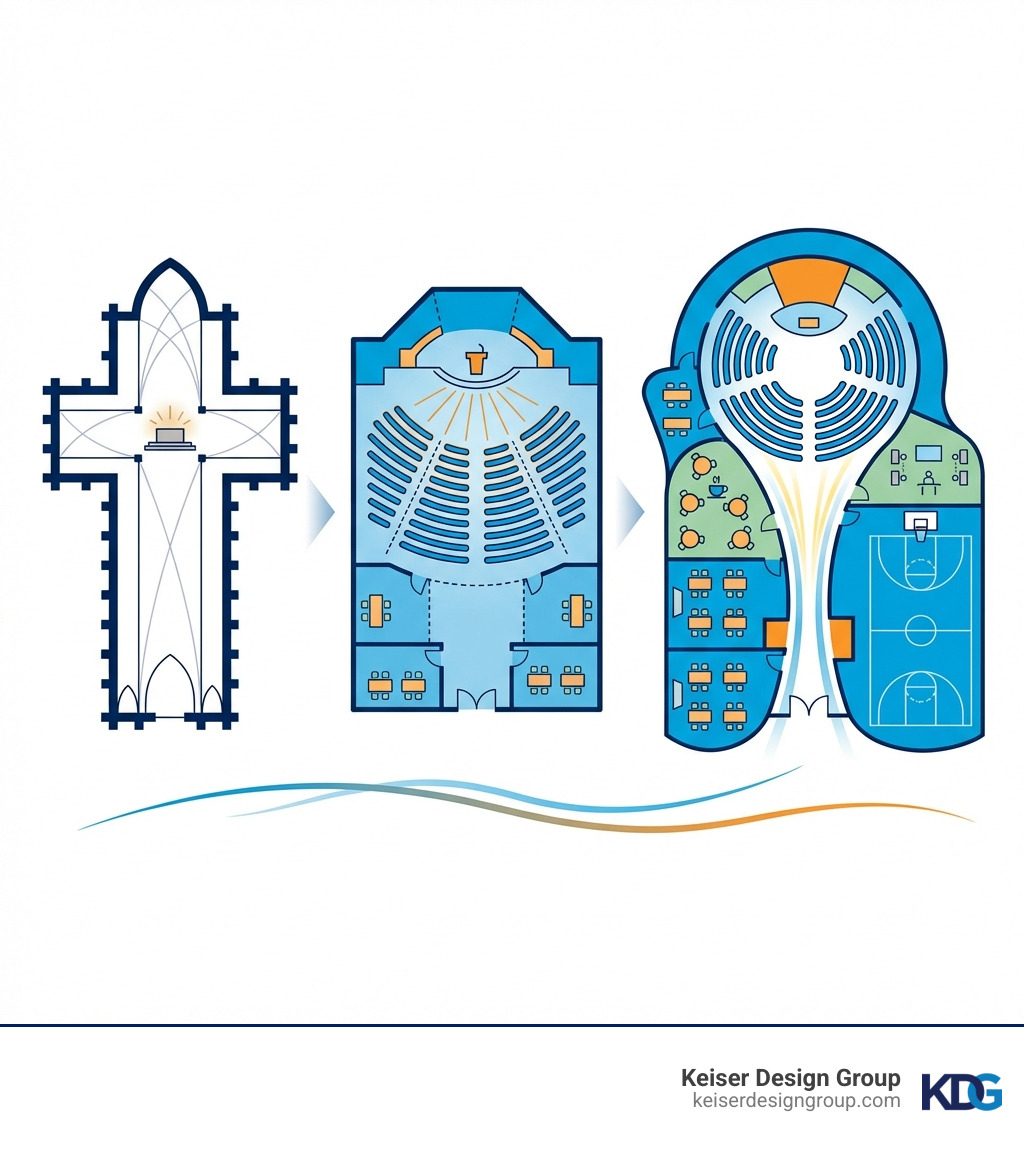
We design auditoriums and gymnasiums that can host community events, sports leagues, or large gatherings. Kitchens and cafes often become central hubs for fellowship, offering spaces for casual conversation and connection. Classrooms and dedicated youth areas are essential for children’s ministries, providing safe and engaging environments for the next generation. As specialists in Church Design, we know how crucial these spaces are.
Technology and AV integration are no longer luxuries but necessities, ensuring sermons are heard clearly, presentations are seamless, and remote participation is possible. Most importantly, accessibility for all ages and abilities is paramount. This includes everything from ramps and elevator lifts to thoughtful restroom design, ensuring everyone can fully participate in church life. We constantly strive to create Mission-Minded Worship Spaces that empower congregations to fulfill their purpose.
Materiality and Symbolism in architectural design churches
The choice of materials in church architecture is deeply symbolic, conveying messages of warmth, strength, transparency, and reverence. We believe in using authentic and pure materials like concrete, glass, wood, and steel, carefully detailed to create a canvas for liturgical celebration without unnecessary embellishment or distraction.
Wood, for example, can bring warmth and a connection to nature, often used in structural elements or finishes. Steel and concrete provide strength and durability, forming the robust framework of a building. Glass offers transparency, inviting natural light and creating a visual connection between the interior and the surrounding community. This pared-down material palette, often characteristic of modernist design, allows the inherent beauty of the materials to shine.
Form also creates meaning. The shape of a sanctuary, the height of a ceiling, or the direction of light can all contribute to the spiritual experience. Sometimes, abstract symbolism can be woven into the very fabric of the building, such as a facade pattern subtly referencing a biblical symbol. The relationship between heaven and earth can be symbolized through material choices and structural elements, creating a profound sense of place and purpose.
Navigating Tradition and Modernity
Balancing historical reverence with contemporary needs is a key challenge in church architecture, often solved by integrating traditional forms in new ways or thoughtfully adding modern extensions to historic structures. The evolution of church architecture has always been influenced by changing beliefs and practices, and today is no different. We see ourselves as part of this ongoing story, weaving contemporary needs with reverence for the past to create forward-looking landmarks.
Learning from Historical Styles
While our designs accept modernity, we are deeply informed by the rich history of church architecture. We look to the soaring heights and intricate details of Gothic influence, characterized by pointed arches and large stained-glass windows, which allowed for taller structures and were seen as a tribute to God’s majesty. We also appreciate the robust strength of Romanesque architecture, with its massive quality, thick walls, and round arches.
A particularly relevant historical style for us in Ohio, Indiana, and Kentucky is the Ohio-born Akron Plan. Developed in the late 19th and early 20th centuries, this plan focused on flexible, auditorium-style worship with seating radiating from a central pulpit, allowing for better sightlines and a more communal experience. This innovative approach to layout continues to inform how we think about modern, flexible worship spaces. Understanding these historical concepts helps us create layouts that honor tradition while serving today’s congregations.
The Art of Renovation and Preservation
Many of the churches we work with in cities like Cleveland, Indianapolis, and Lexington are historic buildings with deep roots in their communities. These aging structures present unique challenges and incredible opportunities for renovation and preservation. Our expertise lies in addressing these challenges, from upgrading for modern codes and accessibility to creating additions that seamlessly complement the original structure.
For example, a project in Delaware, Ohio, involved renovations and additions to a historic building, including sanctuary updates and a new flexible space. This demonstrates how thoughtful design can breathe new life into existing spaces. We frequently undertake projects that involve improving accessibility, such as incorporating elevator lifts or enhancing exterior entrances, ensuring that older buildings can welcome everyone. These efforts are crucial for the longevity and continued relevance of these important community assets. Our work often involves Reimagining Sacred Spaces, changing them to meet contemporary needs while honoring their heritage.
The Process: Partnering with an Architect for Churches
The architectural process for a church is a collaborative journey that translates a congregation’s unique identity, mission, and vision into a physical structure, starting with deep listening and ending with a building that truly serves its community. We see ourselves not just as designers, but as partners in your ministry. Our approach is rooted in understanding that the architect’s role is to help a congregation find the “perfect questions” about their identity and beliefs, rather than simply providing “perfect answers.”
This process is a profound quest to define who you are, what you believe, how you view worship, what your traditions are, and how you practice them in a modern era. It’s about creating a building that isn’t just functional, but deeply meaningful.
From Vision to Reality: The Design Journey
Our design journey is structured yet flexible, ensuring that your vision is at the heart of every decision. We guide you through distinct architectural phases:
- Visioning & Programming: This initial stage is crucial. We engage in intensive collaborative workshops, often lasting several months, with your staff and congregation. This is where we conduct a thorough facility analysis, define your church’s identity, and establish a detailed program of needs and desires for the space. User group involvement is paramount here, ensuring that the final design reflects the ideas of everyone who will use the building.
- Conceptual Design: Based on the programming, we develop initial design concepts, exploring different layouts, forms, and aesthetics. This is where we begin to translate your mission into tangible architectural ideas.
- Detailed Design: Once a concept is approved, we refine the design, selecting specific materials, finishes, and systems. This stage includes all necessary drawings and specifications for construction.
- Construction: We work closely with contractors to ensure the building is constructed to the highest standards, overseeing the process from groundbreaking to completion.
This integrated approach ensures that every step is a collaborative effort, resulting in a building that truly embodies your church’s unique identity and mission.
Choosing the Right architectural design churches Specialist
Selecting the right architect for your church project is one of the most critical decisions you’ll make. You need a partner who not only understands the intricacies of architectural design churches but also deeply comprehends the unique needs of faith communities.
When choosing an Architect for Churches, we encourage you to:
- Review their portfolio: Look for experience with similar projects and a design aesthetic that resonates with your vision.
- Assess their understanding of liturgy and worship styles: A specialist should appreciate the nuances of different denominations and how they influence spatial requirements.
- Seek a collaborative and client-focused approach: Look for a firm that prioritizes listening to your needs and guiding you through the process, rather than imposing their own agenda. Client testimonials often highlight this quality, praising firms for their guidance and partnership.
- Prioritize local experience: A firm with local experience in your region, whether it’s Columbus, Ohio; Indianapolis, Indiana; or Louisville, Kentucky, will understand local building codes, climate considerations, and community contexts.
As a Columbus, Ohio-based firm with extensive experience across Ohio, Indiana, and Kentucky, Keiser Design Group offers custom designs and a simple, worry-free process. We pride ourselves on listening to our clients, assessing their needs, and creatively designing solutions that are both beautiful and functional.
Frequently Asked Questions about Church Design
How much does it cost to build a new church?
The cost to build a church is not a single, fixed number but is influenced by a variety of factors. These include the building’s size (square footage), the quality and type of materials used, the complexity of the site, and the level of custom detailing and technology integration. Other factors like specific program needs, such as a large auditorium, gymnasium, or extensive children’s ministry facilities, will also impact the overall budget. Establishing a clear and realistic budget early in the process with your architect is the best path to a successful project. We work closely with our clients to balance program needs with budget constraints, ensuring a cost-effective yet impactful design.
How long does the church design and construction process take?
A typical church project can take anywhere from 18 to 36 months or even more, spanning from the initial design meeting to the first service in the new or renovated space. This timeline is generally divided into several key phases:
- Programming and Design (6-12 months): This involves the visioning sessions, facility analysis, conceptual design, and detailed design.
- Construction Documents (4-6 months): During this phase, all necessary blueprints, specifications, and permits are prepared.
- Construction (12-18+ months): This is the actual building phase, which can vary significantly based on the project’s scale and complexity.
These timelines are estimates and can be influenced by factors like the project’s size, site conditions, unforeseen challenges, and the speed of decision-making within the congregation.
Can our existing church be renovated to be more welcoming and functional?
Absolutely. Renovating an existing church is an excellent and often highly effective way to improve its functionality, improve accessibility, and create a more welcoming atmosphere without the need for entirely new construction. We have experience in changing existing church buildings across Ohio, Indiana, and Kentucky.
Projects can range from interior updates to the sanctuary and chancel, which can refresh the worship experience, to more extensive additions. These might include new multi-purpose community wings, modern cafes for fellowship, expanded and secure children’s areas, or accessibility improvements like adding elevator lifts and enhancing entry points. For instance, a project in Delaware, Ohio, involved significant renovations and additions to a historic building, demonstrating how old structures can be adapted for new uses. Our team specializes in addressing the challenges of aging buildings, ensuring they meet modern codes and accessibility standards while preserving their unique character.
Conclusion: Building Your Legacy of Faith
A well-designed church is far more than just a building; it is a powerful tool for ministry and a lasting legacy for generations to come. It embodies your faith, fosters community, and empowers your mission. The architectural design churches accept should reflect who you are as a congregation and where you aspire to go.
At Keiser Design Group, we believe your church’s physical space should be your greatest asset in achieving your mission. We specialize in providing custom designs and a simple, worry-free process, helping you create a space that truly reflects your faith and serves your community in Ohio, Indiana, and Kentucky.
Whether you’re considering a new build, a significant renovation, or an expansion, partnering with a design specialist who understands your unique mission is paramount. We’re here to help you explore how to create mission-minded worship spaces that inspire and engage.
Your congregation deserves a space that reflects its unique mission and heart. At Keiser Design Group, we specialize in the thoughtful architectural design churches need to thrive in the modern era. Let’s collaborate to build a legacy that serves your community for generations.