Why Church Construction Planning Matters for Your Ministry
Church construction planning is the process of thoughtfully preparing for a new church building or renovation, from defining your ministry vision and assembling a team to managing budgets, selecting architects, and overseeing construction. Here’s what you need to know:
Key Steps in Church Construction Planning:
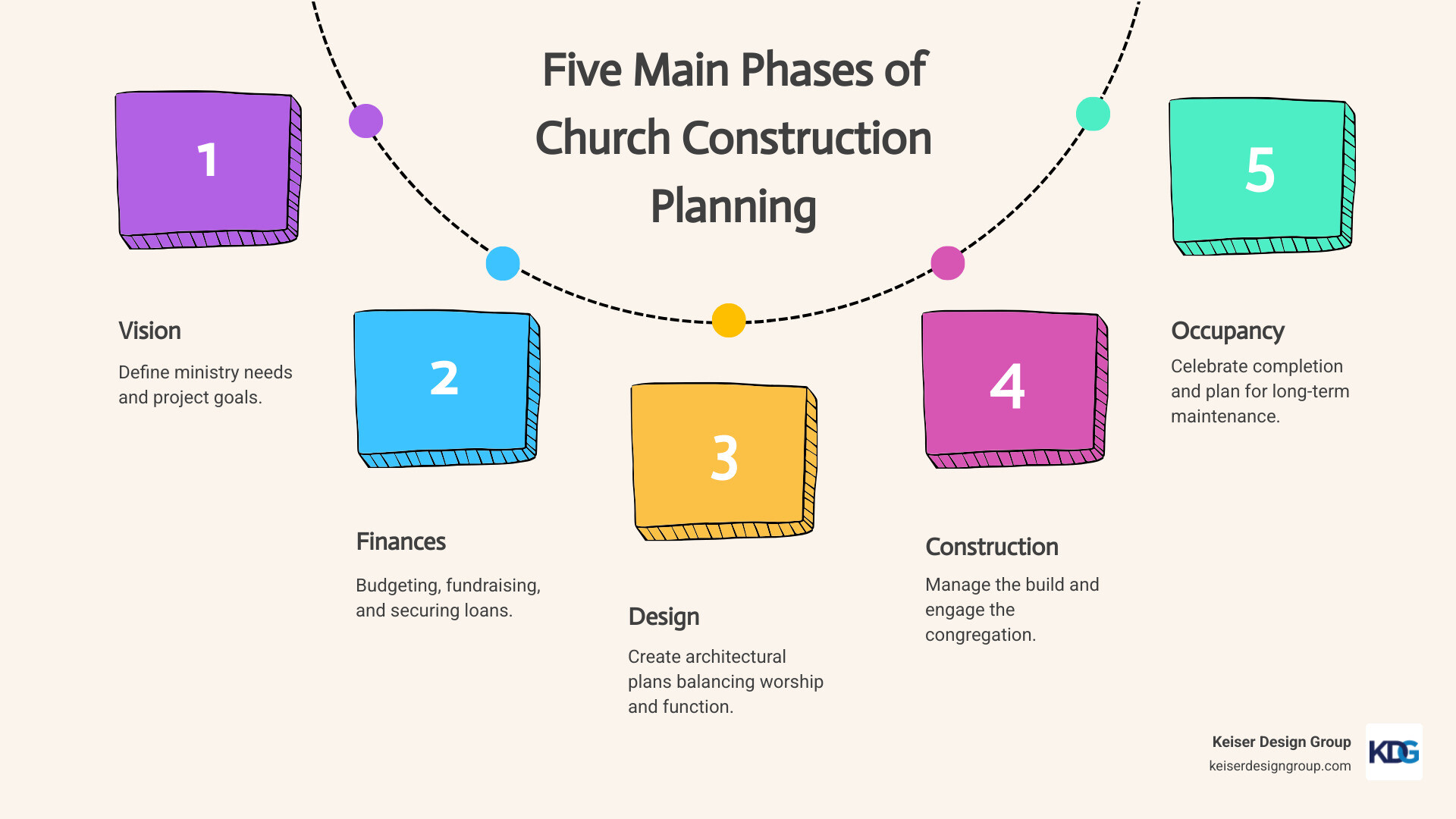
- Define Your Vision – Clarify why you’re building and what ministry needs the project will address
- Form a Building Committee – Assemble a diverse team to guide decisions and represent the congregation
- Create a Financial Plan – Develop a realistic budget (including 7-15% contingency for renovations) and fundraising strategy
- Select Your Team – Choose experienced architects and contractors who understand church projects
- Design Your Space – Balance spiritual atmosphere with functional needs like worship areas, classrooms, and fellowship spaces
- Steer Regulations – Secure permits, address zoning requirements, and plan for site-specific challenges
- Manage Construction – Maintain clear communication with your congregation and celebrate milestones along the way
Whether your congregation has outgrown its current space, you’re facing essential repairs, or you’re envisioning new community facilities, the path from initial idea to finished building can feel overwhelming. The average church construction project takes 12-24 months from planning to completion, and up to 70% of projects exceed their initial budget. But with the right preparation and partners, your building project can become a defining moment that strengthens your ministry for generations.
I’m Dan Keiser, founder of Keiser Design Group, and I’ve spent over three decades guiding mission-minded organizations through successful building projects across Ohio and beyond. Our firm specializes in church construction planning that honors your vision while keeping the process simple and stress-free.
Laying the Foundation: Vision, Mission, and Needs
A church construction project is more than bricks and mortar; it’s about creating a physical space that improves your spiritual mission. The primary drivers are typically growth, essential repairs, or a desire to expand ministry impact.
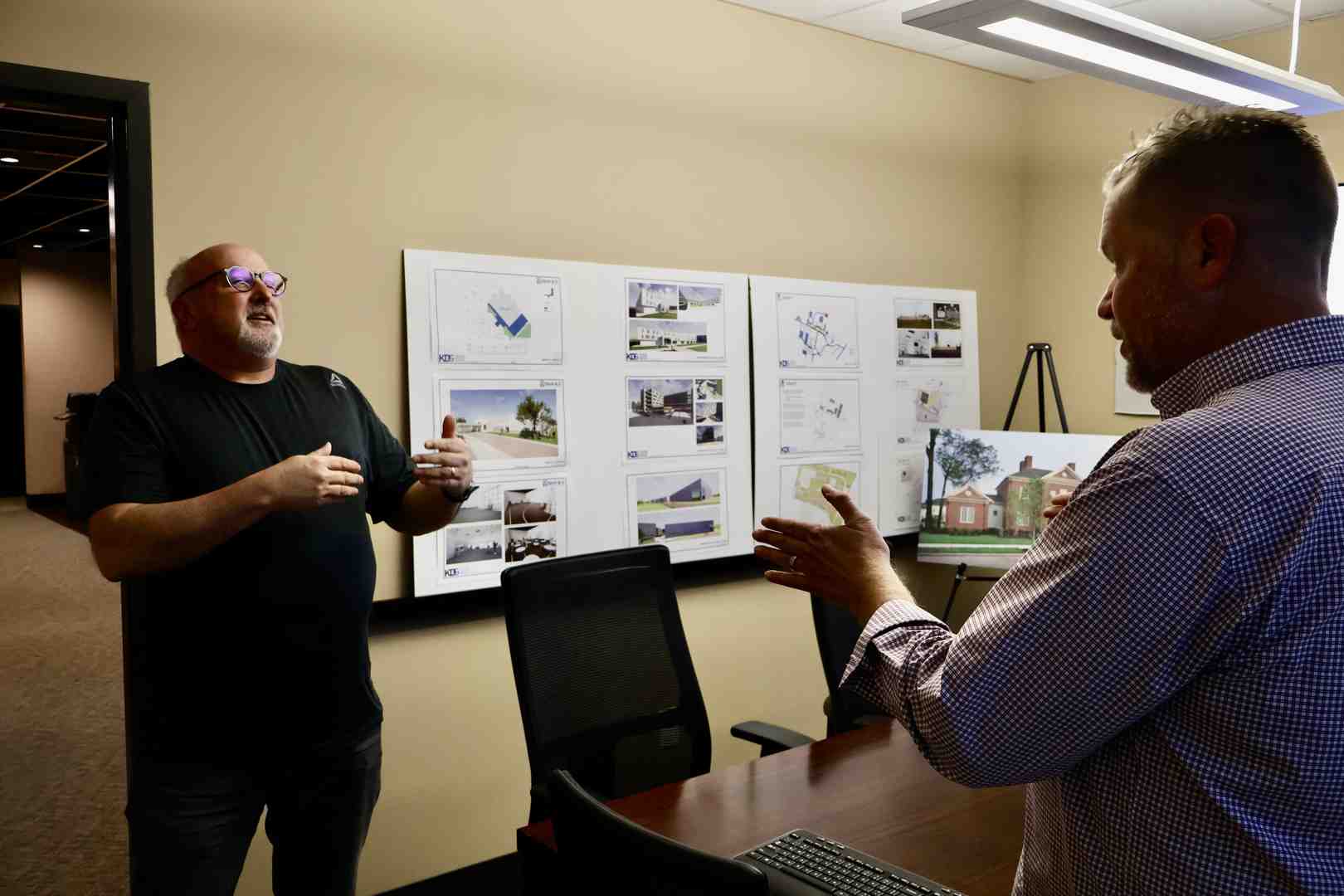
Roughly 80% of churches build to address growth. This may mean an overflowing sanctuary, a children’s ministry that’s bursting at the seams, or multiple services straining resources. Beyond growth, essential repairs are another frequent driver. Older buildings often need significant maintenance—from roof repairs to HVAC updates—to remain safe, functional, and accessible. Finally, many churches build to add community facilities. Modern churches often act as community hubs, requiring flexible spaces like kitchens and multi-purpose rooms for activities like food banks or daycare. These facilities serve the community and can generate income for long-term sustainability.
Defining your project’s scope is paramount. It involves assessing your needs and articulating your ministry goals. What specific problems will this project solve? Asking “why” a space is needed pushes the conversation from functional requirements to deeper, missional insights. This clarity ensures the project truly serves your vision. Our goal at Keiser Design Group is to help you create Mission-Minded Worship Spaces that empower your ministry.
Essential First Steps in Church Construction Planning
The journey of church construction planning begins with introspection and a clear understanding of your church’s calling. The first step is always prayer and spiritual discernment to align the project with your purpose.
Next, conduct a needs versus wants analysis, focusing on the impact of deficiencies on your ministry. For example, is a packed auditorium a space problem or a sign of growth better served by multiple services? We help you poll key ministry leaders to gather focused insights, which is often more effective than broad congregational surveys.
Finally, project future growth. How will your community’s growth impact facility needs in 5, 10, or 20 years? This prevents building a solution for today that is inadequate tomorrow. We’ll assess current facility limitations, from accessibility to structural conditions. For an example of how a church tackled growth, explore A look at a church expansion project.
Forming a Dedicated Building Committee
A dedicated building committee is the backbone of a successful project, acting as the church’s primary representative. The committee serves as the liaison between the congregation, leadership, and the design and construction teams. It makes key decisions and ensures the project stays true to the church’s vision and budget.
When selecting members, aim for diversity in skills and church interests. Include individuals with expertise in finance, construction, and law, alongside representatives from key ministries like youth or music. This ensures all aspects of the church’s ministry are considered.
Effective leadership is essential for facilitating discussions and keeping the committee focused. The committee is also responsible for transparent communication, relaying information to the congregation and representing their interests. This engagement is vital for maintaining support throughout the project. The committee holds significant decision-making authority, in alignment with church leadership, to move the project forward efficiently.
The Core of Church Construction Planning: Assembling Your Team and Finances
With a clear vision and committee, the next phase of church construction planning is assembling your project team and financial strategy. This turns aspirations into actionable plans. Successful projects rely on strong financial stewardship, creative fundraising, and choosing partners who align with your values. Investing in your facilities is an investment in your community, creating opportunities for Community Investment that extends far beyond your walls.
Key Financial Considerations for Your Church Construction Planning
A realistic budget is the most crucial and challenging part of planning. With up to 70% of projects exceeding initial projections, a comprehensive budget is essential. Costs are divided into “hard costs” (physical construction) and “soft costs” (architectural fees, permits, etc.). A separate budget for Furniture, Fixtures, & Equipment (FF&E)—from pews to sound systems—is also necessary.
A substantial contingency fund is non-negotiable. We recommend 2-5% for new builds, 4-8% for additions, and 7-15% for renovations, which carry more unpredictability. Fundraising efforts like capital campaigns are a cornerstone of church projects.
For financing, lenders typically require three years of financial statements and a property appraisal. A good lender advises on what you should borrow, not just what you can. Finally, plan for long-term operational and maintenance costs, which can be 2-4% of the construction budget annually. For more on financial aspects, especially land, see A guide to land acquisition.
Selecting the Right Architect and Construction Partners
Selecting the right architect and construction partners is critical. They will translate your vision into reality, steer complexities, and ensure a smooth process. The architect is pivotal, providing technical guidance from design to cost estimation. We recommend architects who specialize in church design, as they understand the unique requirements of sacred spaces—from liturgical flow to A/V needs—unlike general commercial architects.
When evaluating partners, issue Request for Proposals (RFPs), check references with past church clients, and verify licensing and insurance. Ask about their experience with similar projects and how they protect timelines and budgets.
| Feature | Design-Bid-Build (Traditional) | Design-Build (Integrated) |
|---|---|---|
| Process | Separate design and construction contracts | Single contract for design and construction |
| Responsibility | Church manages architect and contractor separately | Single point of contact (Design-Build firm) |
| Timeline | Longer, sequential phases | Shorter (10-20% reduction), overlapping phases |
| Cost Control | Potential for change orders, less budget certainty early | Greater budget certainty, value engineering focus |
| Collaboration | Limited between designer and builder during design | High collaboration from project start |
| Risk | Church bears risk of design/construction coordination | Design-Build firm bears risk of design/construction |
| Suitability | Complex, highly customized projects with clear scope | Projects needing efficiency, cost control, faster delivery |
The design-build method is gaining popularity for its efficiency. It consolidates design and construction under one firm, offering a single point of responsibility. This can streamline the project, minimize change orders, and reduce timelines by 10-20%. Choose partners whose values align with your church’s mission.
The Blueprint for Ministry: Design, Development, and Due Diligence
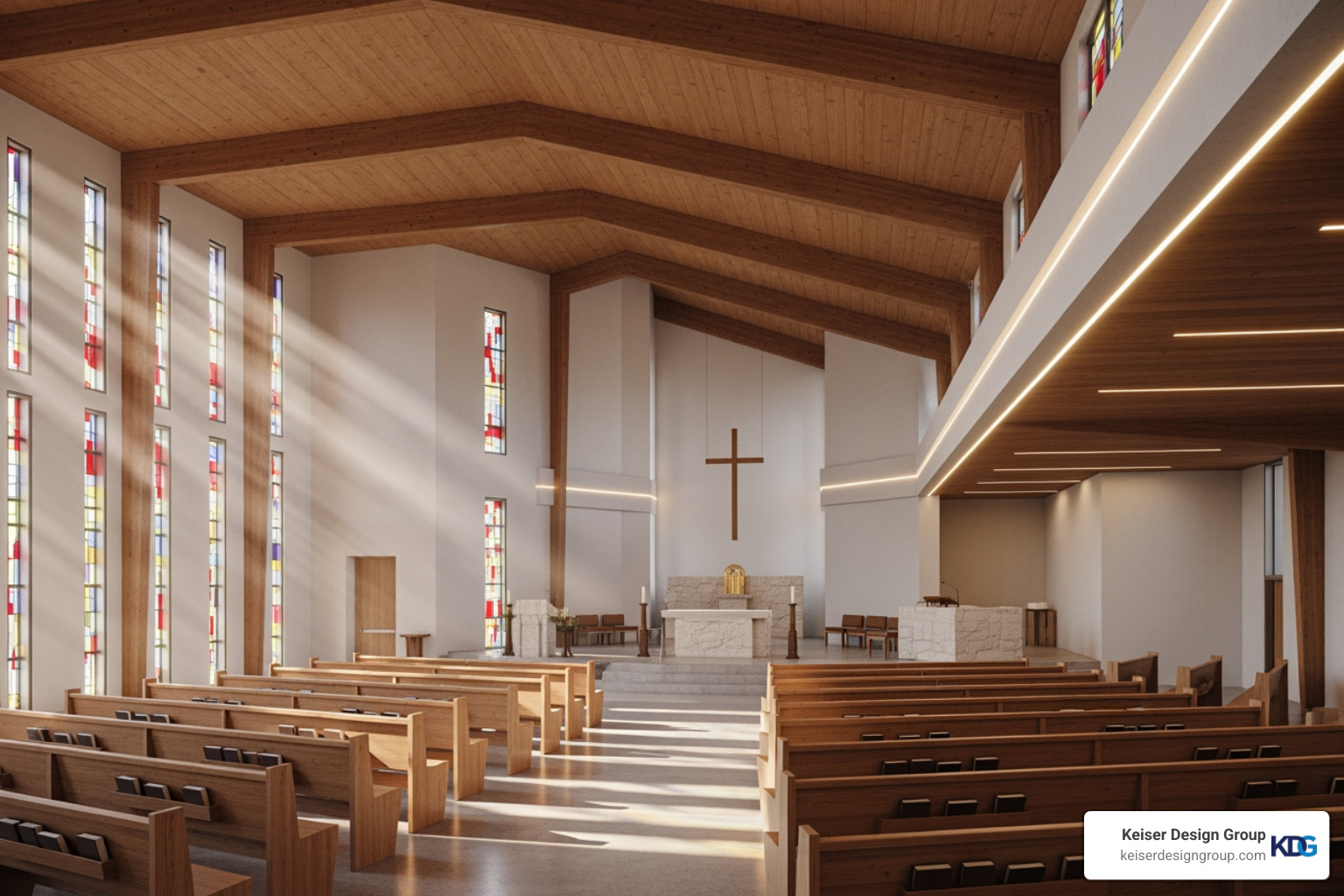
This phase of church construction planning translates your vision into a tangible design, balancing architectural creativity with practical functionality. It’s about creating a space that inspires worship and fosters community while being efficient, sustainable, and compliant. Our work at Keiser Design Group focuses on creating thoughtful designs that embody your mission, ensuring that your Church Architecture Shapes Worship effectively.
Critical Aspects of the Church Design Phase
The design phase is a collaborative process where your church’s purpose takes physical form. The worship space is the heart of the design, with considerations for seating, altar placement, acoustics, and lighting. Beyond the sanctuary, we design safe and engaging areas for children and youth, as well as fellowship spaces like lobbies and cafes to foster community. Modern A/V integration is crucial for worship and is planned from the start.
We also design with long-term sustainability in mind, using durable materials and energy-efficient systems to reduce ongoing operational costs. For a glimpse into a contemporary worship facility design, take a look at our modern worship facility design.
Site Selection and Navigating Regulations
Choosing the right site has long-term implications for visibility, accessibility, and growth. Land costs can account for 10-20% of the total project budget. Key factors to evaluate for potential sites include:
- Location and Visibility: Is the site accessible and visible to the community?
- Property Size: Is there enough space for current needs and future expansion?
- Zoning and Permits: The property must be zoned for religious use, and the permit process can be complex.
- Site Assessments: Conduct environmental assessments to identify potential challenges before purchasing.
- Parking: Ensure the site meets local parking requirements.
- Utilities: Connecting utilities on new lots can be a major expense; an engineer should assess this beforehand.
Security is also a crucial design consideration. Incorporating defensive strategies like controlled access points and clear sightlines is a necessary reality. Our approach to Designing for Safety integrates these concerns from the start. For renovations, regulatory issues like historic preservation, building codes, and ADA compliance must be addressed.
From Groundbreaking to Grand Opening: Execution and Engagement
With designs finalized and permits secured, the project moves into construction. This exciting phase requires diligent management and continuous communication to keep your congregation engaged and maintain momentum.
Engaging the Congregation and Managing the Project
Effective communication is vital, as breakdowns are a leading cause of delays and cost overruns. Best practices for engaging your congregation include:
- Regular Updates: Provide consistent, transparent updates via bulletins, newsletters, and social media.
- Prayer Meetings: Organize prayer meetings for the project, workers, and future ministry.
- Website Progress Section: Create a dedicated web page with photos and milestone descriptions.
- Town Halls/Q&A Sessions: Host meetings for the committee to present updates and answer questions.
- Gratitude and Appreciation: Regularly communicate gratitude to donors, volunteers, and construction crews.
Ongoing risk management is essential. This means identifying potential risks (like material delays), assessing their impact, and developing mitigation strategies. A risk register is a key tool, and your contingency fund provides the financial safety net. Celebrating milestones like a groundbreaking or topping-out ceremony is vital for maintaining enthusiasm and reinforcing the missional purpose behind the build.
Common Pitfalls and How to Avoid Them
Awareness of common pitfalls helps you proactively avoid them.
- Poor Initial Planning: Rushing into construction without a clear vision leads to delays and cost overruns. Solution: Invest heavily in the pre-construction planning phase, clarifying your “why” before “what.”
- Inadequate Budgeting: Underestimating total costs is a major problem. Solution: Create a comprehensive budget with experts, including contingency and long-term operating costs.
- Lack of Communication: This can derail a project and erode support. Solution: Implement a transparent communication plan from the start.
- Scope Creep: Adding unvetted features impacts budget and timeline. Solution: Use a strict change order process, vetting all changes with the committee and design team.
- Not Hiring Specialized Partners: Generalists may not understand ministry needs. Solution: Hire partners with proven experience in church construction.
- Underestimating Long-Term Operational Costs: This can cause financial strain after completion. Solution: Plan for long-term costs by using sustainable design and durable materials.
By addressing these issues during church construction planning, you significantly increase the likelihood of a successful project.
Frequently Asked Questions about Church Construction
How long does a church construction project typically take?
The average project takes 12 to 24 months from planning to completion, but the timeline varies based on several factors:
- Project Scope: A small renovation is faster than a new, large-scale facility.
- Planning & Fundraising: The initial visioning and fundraising can take many months.
- Design & Permitting: Complex designs and navigating local permits can add significant time.
- Construction Method: Design-build methods can reduce timelines by 10-20%.
- Unforeseen Delays: Weather, material shortages, or site conditions can impact the schedule.
We establish a realistic timeline early in the church construction planning process to keep the project on track.
What is the most important factor for a successful church building project?
The most important factor is a clear, unified, and mission-driven vision. This vision acts as the guiding star for every decision. It’s crucial because it:
- Unifies Leadership: Aligns the church leadership and building committee, reducing conflict.
- Inspires the Congregation: Encourages prayer, financial support, and participation.
- Guides Partners: Helps your design partner translate your needs into a functional and spiritual space.
- Drives Fundraising: Provides the compelling “why” that motivates donors.
A successful project not only meets budget and schedule but also improves the church’s ability to fulfill its mission.
Should we renovate our existing church or build a new one?
This key question in church construction planning depends on your unique circumstances.
Renovating can be excellent for historic structures or to maintain community presence. It can improve functionality, aesthetics, and accessibility. However, you must consider if the existing structure has limitations that make renovation cost-prohibitive.
Building new offers a blank slate to design a facility precisely for your ministry needs, optimize for efficiency, and choose a strategic site. However, it typically involves higher costs and the complexities of land acquisition.
To decide, we recommend you:
- Assess Current Space: Analyze your existing building’s condition and limitations.
- Analyze Costs: Compare the estimated costs of renovation versus new construction.
- Evaluate Land Availability: Determine if suitable land is available and affordable.
- Consider Phased Options: Explore if the project can be done in phases to be more manageable.
The choice should align with your long-term vision, financial capacity, and mission.
Conclusion: Building a Legacy for Your Ministry
Starting on a church construction planning project is a profound act of faith and stewardship. It’s an opportunity to build a legacy, creating a space that not only meets the practical needs of your growing ministry but also inspires spiritual growth and serves as a guide of hope in your community. From the initial spark of an idea to the grand opening, every step is a chance to deepen your church’s impact.
At Keiser Design Group, we understand that your church building is more than just a structure; it’s a tool for ministry. With decades of experience guiding churches through this transformative process across Ohio, Indiana, and Kentucky, we are committed to providing custom designs and a simple, worry-free process. We believe in creating spaces that are purpose-driven, beautiful, and sustainable, ensuring your facility serves your mission for generations to come.
Let us help you translate your vision into a reality. Start your church construction planning journey with a trusted partner today.