What Are Mid Century Modern Homes?
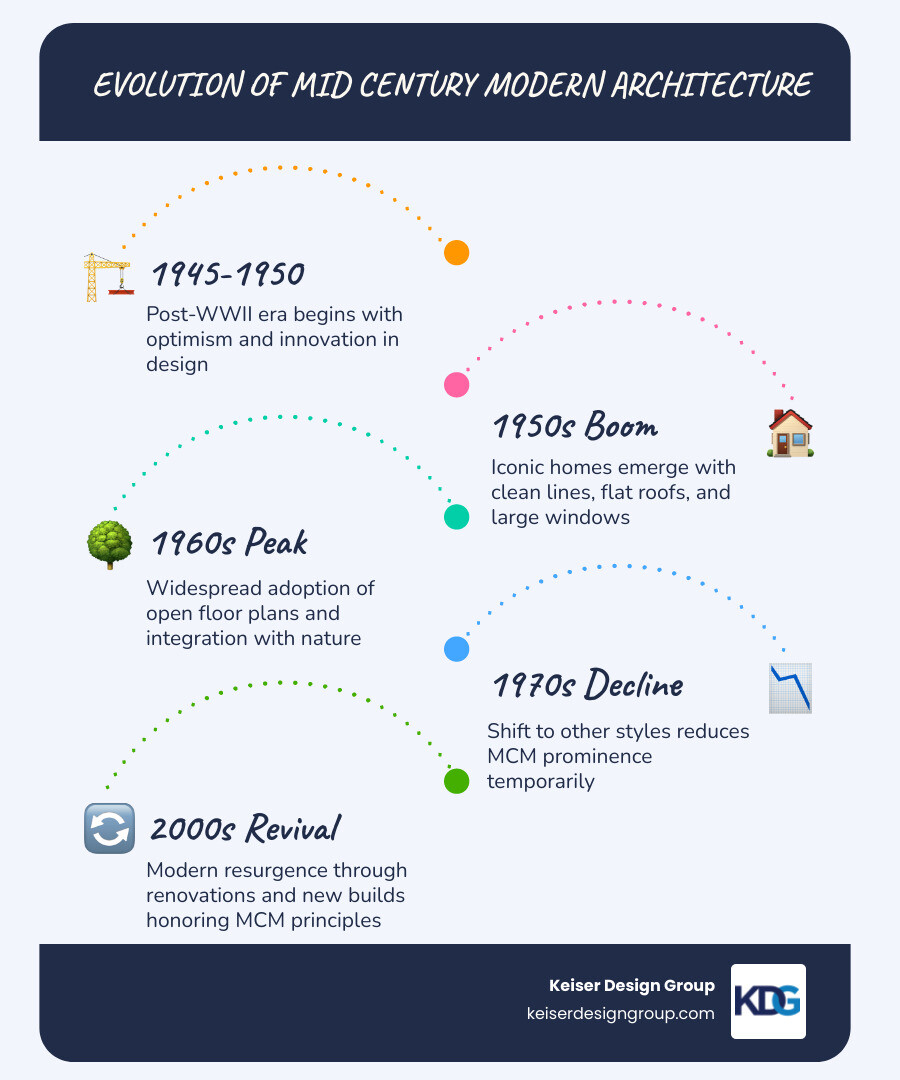
Mid Century Modern homes are residential designs built roughly between 1945 and 1970, defined by clean lines, open floor plans, large windows, and a strong connection between indoor and outdoor spaces.
Here’s a quick snapshot of what makes them distinct:
- Era: Post-World War II, approximately 1945–1970
- Key features: Flat or low-sloping rooflines, floor-to-ceiling windows, open layouts, minimal ornamentation
- Core materials: Wood, stone, glass, steel, and concrete
- Design philosophy: Function-first, nature-integrated, clutter-free
- Notable architects: Frank Lloyd Wright, Richard Neutra, Mies van der Rohe, Craig Ellwood, Pierre Koenig
Whether you are planning a custom build or thoughtful renovation, mid century modern homes remain one of the most enduring residential architectural styles — and for good reason.
Few architectural movements have aged as gracefully as Mid Century Modern. Born out of post-war optimism and a cultural push toward simplicity and progress, these homes replaced heavy ornamentation with honest materials, open space, and a seamless relationship with nature. Today, their appeal hasn’t faded — if anything, it’s grown stronger as homeowners seek designs that feel both timeless and livable.
I’m Dan Keiser, founder and principal architect of Keiser Design Group, and with over 30 years of residential design experience across Ohio and beyond, I’ve seen how the principles behind Mid Century Modern homes translate beautifully into contemporary living. In the sections ahead, I’ll walk you through the defining characteristics, influential architects, preservation considerations, and design principles behind mid century modern homes.
Defining the Aesthetic of Mid Century Modern Homes
The aesthetic of Mid Century Modern homes didn’t emerge in a vacuum. It was a perfect storm of post-WWII technological advances and a cultural shift away from the “fussy” traditional styles of the past. Influenced heavily by the Bauhaus movement in Germany and the International Style, this era of architecture prioritized the idea that “form follows function.”
In our work at Keiser Design Group, we often look at how these Mid-Century Modern House Designs utilized new construction methods to create something entirely different. The movement also leaned into Scandinavian design, which brought a sense of democratic, functional beauty and a “cozy” minimalism that used natural materials to soften the industrial edges.
One of the most famous examples of this era is the Farnsworth House in Plano, Illinois, designed by Mies van der Rohe. It stripped the home down to its barest essentials: glass and steel. This “less is more” approach is the heartbeat of the mid century modern aesthetic. We also see a heavy lean toward biophilic elements—designing with nature in mind—where the home doesn’t just sit on a lot but feels like an organic extension of it.
The Enduring Appeal of Mid Century Modern Homes
Why are we still obsessed with these homes seventy years later? Much of it comes down to post-war optimism. After the war, America was looking toward a futuristic, space-age horizon. This era gave us geometric shapes, “butterfly” rooflines, and experimental floor plans that felt like they were reaching for the stars.
The functionalism of these Architectural Styles Modern means they are incredibly easy to live in. There’s no wasted space, no “parlor” that nobody uses, and no dark hallways. It’s about light, air, and movement. The style also carries a distinct sense of nostalgia, from sunken living rooms to warm wood finishes and carefully composed gathering spaces. The style evokes a certain “Kodachrome” glamour that feels both nostalgic and incredibly fresh.
Identifying Authentic Mid Century Modern Homes
When evaluating or renovating mid century modern homes, there are several architectural details that signal authenticity:
- Clerestory Windows: These are narrow windows placed high on the wall, often just below the roofline. They let in natural light while maintaining privacy from the street.
- Low-sloping or Flat Rooflines: You won’t find many steep gables here. These homes favor deep horizontal overhangs that protect the glass from the sun.
- Post-and-Beam Construction: This structural method allows for walls made almost entirely of glass because the roof is supported by beams rather than the exterior walls themselves.
- Honest Materials: Architects of this era loved showing off what materials could do. Expect to see unpainted wood siding, stacked stone fireplaces, and exposed concrete.
For a deeper look at how this compares to other looks, check out our guide on Popular Residential Architectural Styles.
Core Architectural Characteristics and Features
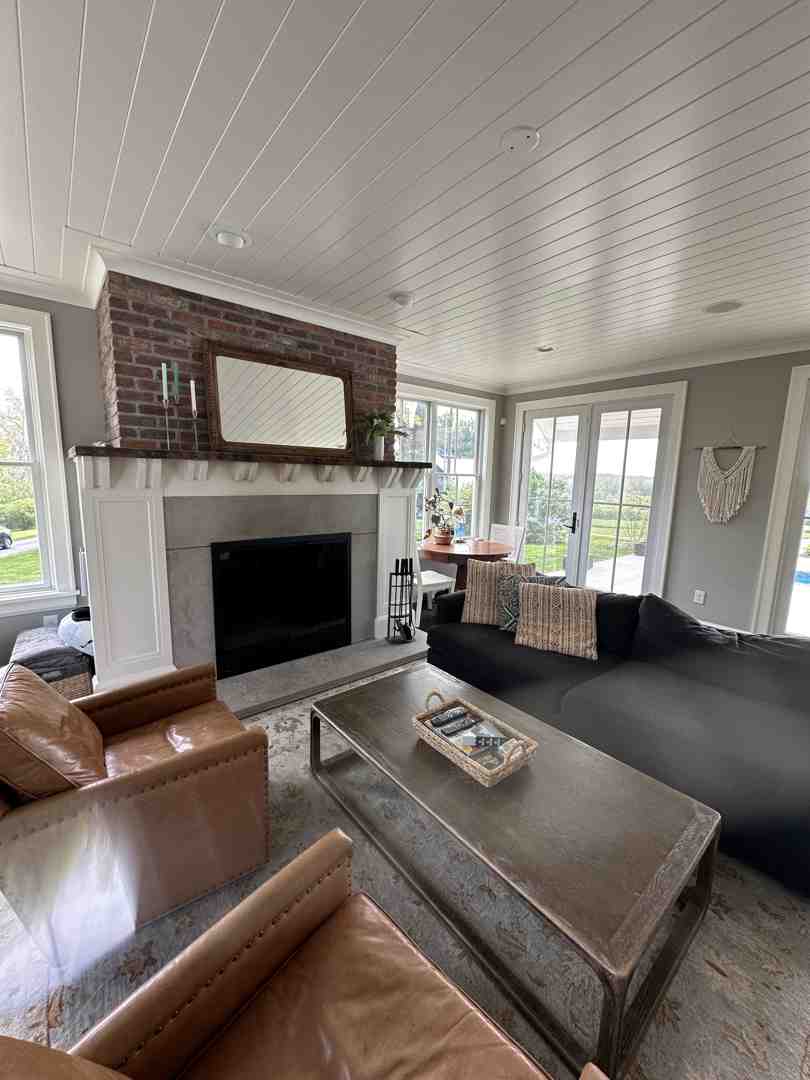
When we design or renovate Mid Century Modern homes, we focus on three pillars: openness, light, and connection. These homes were among the first to popularize the “open floor plan,” where the kitchen, dining, and living areas flow together without the interruption of heavy walls.
This layout wasn’t just about looking modern; it was about the way families lived. It allowed for easier entertaining and a sense of togetherness. Coupled with this is the legendary indoor-outdoor connection. By using floor-to-ceiling windows and sliding glass panels, the backyard becomes a literal extension of the living room. It’s a hallmark of Modern Residential Architecture.
Structural Innovation and Materials
The post-war era brought industrial materials into the residential sphere. Steel frames and reinforced concrete allowed architects to push boundaries, creating cantilevered structures that looked like they were floating over the landscape.
One feature we particularly love in these homes is radiant floor heating. TRadiant floor heating is a comfort feature often associated with modern living, yet its use aligns naturally with the design priorities of mid century modern homes. Because these homes often have large expanses of glass, traditional forced-air systems can struggle. Radiant heat keeps the home comfortable at cooler ambient temperatures, making it both cozy and efficient.
We also see a rise in passive solar design. By using those deep roof overhangs, architects could block the high summer sun while allowing the low winter sun to penetrate deep into the home, naturally heating the space. For more on high-end structural features, see our Modern Architectural Luxury Homes Guide.
Integration with the Landscape
A true Mid Century Modern home is site-specific. It doesn’t fight the topography; it follows it. If a lot has a gentle slope, the home might be a split-level design that steps down with the land.
Privacy is also handled brilliantly. Many mid century modern homes appear quite “closed” to the street—perhaps showing just a brick wall and a few clerestory windows—but they open up completely at the back. Entry courtyards are another favorite feature, acting as a “buffer zone” between the public world and the private sanctuary of the home.
| Feature | Mid-Century Modern | Traditional Residential |
|---|---|---|
| Floor Plan | Open, flexible, flowing | Segmented, formal rooms |
| Windows | Floor-to-ceiling, glass walls | Small, symmetrical, shuttered |
| Materials | Steel, glass, concrete, plywood | Brick, wood siding, plaster |
| Connection | Blurs indoor/outdoor lines | Clearly defined boundaries |
| Roofline | Flat, shed, or low-pitch | Gabled or hipped |
Iconic Architects and Historic Masterpieces
To understand mid century modern homes, it helps to study the architects who shaped the movement. Frank Lloyd Wright’s “Usonian” homes were the precursors to the movement, emphasizing simple, affordable, and nature-integrated living.
Richard Neutra brought a sharp, crisp European modernism to the US, while architects like Craig Ellwood and Pierre Koenig became famous for their work in the “Case Study” program. If you’re in the Midwest, you’ll find that cincinnati modern – good design never goes out of style is a great resource for exploring how these masters influenced our local landscapes in Ohio and Kentucky.
Case Study Houses and Experimental Design
Sponsored by Arts & Architecture magazine, the Case Study House program (1945–1966) was an incredible experiment in post-war housing. The goal was to design and build efficient, modern homes using industrial materials.
The Stahl House (Case Study House #22) is perhaps the most famous. Perched on a cliff with views of the city, its glass walls make it look like a glowing box in the sky. Another masterpiece is the Smith House, designed by Craig Ellwood. It utilized a T-shaped plan to separate the living and sleeping quarters, a layout that many modern floor plans still use today. These homes were more than residential prototypes; they helped define how modern design could support daily life, creativity, and connection.
Regional Adaptations in the Midwest and Beyond
While many people associate mid century modern with California, the style also has meaningful roots throughout the Midwest. In Ohio, we have incredible examples of “Midwest Modernism.” For instance, in Granville, Ohio, you can find ridge-top residences that use timber-framed roofs and indigenous rock walls to blend into the wooded rolling hills.
Columbus itself is a hidden gem for mid century modern enthusiasts. From the ranch-style homes in Clintonville to the custom masterpieces in Upper Arlington, the style was adapted to handle our four seasons—using broader overhangs for snow protection and more robust insulation. In Texas, cities like Austin and Dallas have seen a massive resurgence in mid century modern homes and similar markets, where homeowners are snapping up 1950s “AD Stenger” designs and restoring them to their former glory.
Modern Living: Advantages of Mid Century Modern House Plans
Choosing a Mid Century Modern floor plan for a new build or a major renovation—which requires the expertise of a professional architect—offers several distinct advantages for today’s lifestyle. One of the biggest is flexibility. Because the structural weight is often carried by a few posts and beams, the interior walls are often non-load-bearing. This means you can easily reconfigure the layout as your family grows or changes.
These homes are also excellent for multi-generational living or “aging in place.” Most are single-story or split-level with minimal stairs, and the open layouts make it easy to navigate. We often incorporate sustainable updates into our mid century modern-inspired projects, such as Structural Insulated Panels (SIPs) for roofing, which offer much better thermal performance than traditional framing. You can learn more about the roots of these sleek designs in our post on Art Deco and Streamline Moderne.
Enhancing the Indoor-Outdoor Connection
In our modern, screen-heavy world, the biophilic benefits of an mid century modern home are more important than ever. Features like atrium entries—where you walk through a garden before even entering the front door—set a peaceful tone for the entire house.
Pocketing glass doors allow you to literally “disappear” a wall, turning your living room into an outdoor pavilion. This isn’t just about aesthetics; it’s about wellness. Natural ventilation and views of greenery have been proven to reduce stress. A great example of this “nature-first” approach is the Timeless Mid Century Retreat by John Hans Ostwald | 1947 Gem, which uses a U-shaped plan to frame a central pool and terrace, creating a private oasis.
Frequently Asked Questions about Mid Century Modern Properties
Where can I find Mid-Century Modern homes for sale?
Availability varies by region, but homeowners interested in mid century modern homes should look for properties with original architectural details, thoughtful site placement, and strong renovation potential.
We recommend working with specialized real estate agents and professional architects who understand architectural value. Sites like Atomic Ranch often feature curated listings, and local niche sites like Cincinnati Modern are invaluable for finding those hidden architectural gems that might not be labeled correctly on the big national search engines.
What should homeowners consider before renovating a mid century modern home?
Renovating mid century modern homes requires careful attention to original materials, structural logic, and the relationship between interior spaces and the surrounding landscape. Some homes may need sensitive restoration, while others may already retain many of their original architectural features.
With these properties, architectural provenance, original details, and design integrity often play an important role in long-term satisfaction. A home designed by a known architect or one that retains original features often carries added architectural significance.
How do I preserve the authenticity of an mid century modern home during renovation?
Preserving an mid century modern home is a delicate balance. You want modern comforts like high-efficiency HVAC and updated kitchens, but you don’t want to lose the “soul” of the house.
- Keep the Mahogany: Many of these homes featured stunning mahogany or walnut paneling. Instead of painting it white, consider having it professionally restored.
- Save the Slate: If you have original slate or terrazzo floors, keep them! They are incredibly durable and are a hallmark of the style.
- Consult a Professional Architect: Before you knock down a wall or change a window, it is necessary to consult an architect who understands the structural logic of mid century modern homes. We can help you integrate modern needs—like an EV charging station or a home gym—without ruining the clean lines of the original design.
Conclusion
At Keiser Design Group, we believe that a home should be more than just a place to sleep—it should be a reflection of a life well-lived. Whether you are in Columbus, Ohio, or any of our service areas from Austin, Texas to Nashville, Tennessee, the principles of Mid Century Modern homes offer a timeless blueprint for a beautiful, functional life.
Our team specializes in taking these classic concepts and tailoring them to your specific needs through professional architectural services, ensuring a simple, worry-free process from the first sketch to the final walk-through. Because of the unique structural requirements of these designs, professional architectural oversight is a necessity. If you’re ready to build your own modern masterpiece or breathe new life into a historic gem, we’d love to help.
Contact Keiser Design Group today to discuss how our architectural team can help you design, renovate, or reimagine a home inspired by the timeless principles of mid century modern homes.