Why Modern Rooftops Are Changing Home Design
Modern house rooftop design is revolutionizing how homeowners think about their homes, turning underused roof space into valuable outdoor living areas, energy-efficient features, and stunning architectural statements. Whether you’re looking to add a rooftop deck, install solar panels, or create a lush garden oasis, today’s rooftop designs offer solutions that combine style, function, and sustainability.
Key Modern Rooftop Design Options:
- Flat Roofs – Clean lines, rooftop decks, and garden spaces
- Shed Roofs – High ceilings with clerestory windows for natural light
- Gable Roofs – Traditional shape reimagined with modern detailing
- Multi-Dimensional Roofs – Combining multiple roof types for visual interest
- Functional Spaces – Entertainment terraces, outdoor kitchens, and green roofs
- Sustainable Features – Solar panels and green roofs that reduce energy costs by up to 75%
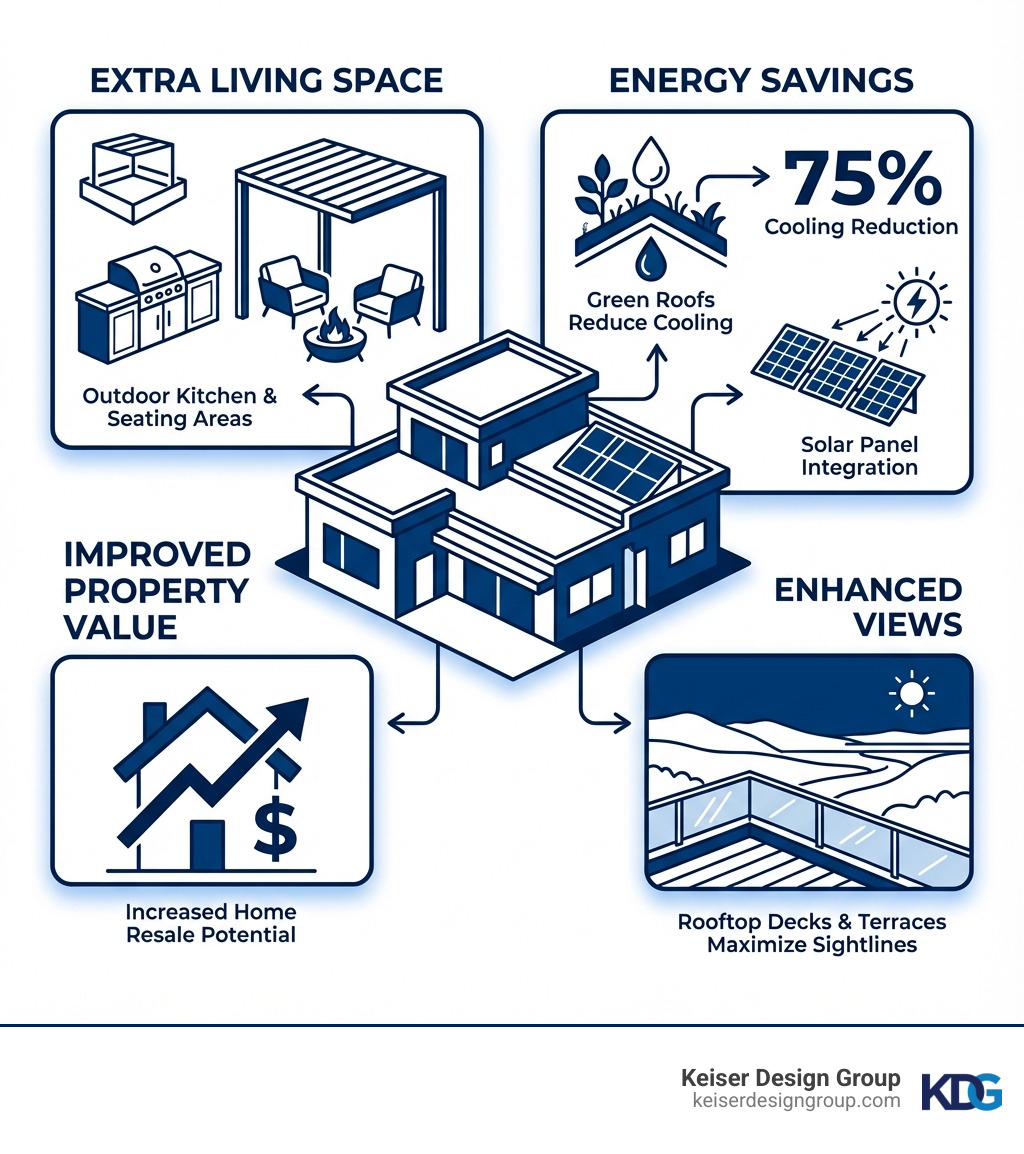
The benefits are tangible: rooftop gardens can slash your cooling costs by three-quarters, the green roof market is projected to reach $40.2 billion by 2032, and a well-designed rooftop can significantly boost your property value. More importantly, these spaces give you room to breathe—literally expanding your living area upward when your lot size is fixed.
As Dan Keiser, Founder and Principal Architect of Keiser Design Group, I’ve spent over three decades helping homeowners across Ohio and the Midwest transform their properties through thoughtful architectural design, including modern house rooftop design that maximizes both function and beauty. My hands-on approach ensures your rooftop project integrates seamlessly with your home’s existing structure while meeting your specific needs and vision.
Why Go Up? The Best Benefits of a Modern Rooftop
Going up with your design offers a wealth of advantages, changing a functional necessity into a dynamic asset for your home. When we approach modern house rooftop design, we’re not just adding a roof; we’re opening up new dimensions of living.
Increased Living Area
Perhaps the most immediate benefit of a thoughtfully designed modern rooftop is the significant increase in usable living space. In urban and suburban areas across Ohio, Indiana, and Kentucky, where yard space might be at a premium, expanding vertically is an ingenious solution. A rooftop can become an extension of your home, offering valuable square footage for relaxation, entertainment, or even a quiet retreat. This effectively turns an otherwise unused surface into a vibrant part of your daily life.
Creating an Urban Oasis
Imagine stepping out onto your private rooftop garden or lounge, far removed from the hustle and bustle below. Modern rooftops provide the perfect canvas for creating a serene urban oasis. Whether it’s a tranquil spot for morning coffee or a sophisticated area for evening gatherings, these liftd spaces offer a unique sense of escape and tranquility.
Maximizing Views
One of the most compelling reasons to invest in a modern house rooftop design is the unparalleled access to views. From the rolling hills of Kentucky to the cityscapes of Columbus or Indianapolis, a rooftop deck or terrace can offer breathtaking panoramas that are simply not possible from ground level. This liftd perspective not only improves your daily living experience but also becomes a standout feature of your home.
Improved Energy Efficiency
Beyond aesthetics, modern rooftops play a crucial role in enhancing your home’s energy performance. Green roofs, for instance, are natural insulators. They help keep your home cooler in the sweltering summers of the Midwest and warmer during our chilly winters. This can lead to substantial savings on your utility bills. In fact, research from sources like the U.S. Environmental Protection Agency indicates that rooftop gardens can reduce a building’s energy consumption for cooling by up to 75% in the summer months.
The integration of solar panels is another powerful way modern rooftops contribute to energy efficiency. The U.S. saw a record 6.4 gigawatts of solar capacity added in 2023, reflecting a growing trend of homeowners using renewable energy directly from their roofs. We’re seeing this trend take hold across our service areas, from Toledo to Louisville, as homeowners seek sustainable solutions.
Increased Home Value
A well-executed modern rooftop design is a significant investment that pays dividends in increased property value. Homes with appealing and functional outdoor living spaces, especially those that offer unique features like rooftop gardens or entertainment areas, command higher prices in the market. It’s an architectural improvement that signals luxury, thoughtful design, and an liftd lifestyle.
Improved Modern Curb Appeal
Your roof is a prominent feature of your home’s exterior, significantly impacting its curb appeal. A striking modern house rooftop design can transform an ordinary house into an architectural marvel, making a lasting impression on neighbors and guests. It showcases a commitment to contemporary aesthetics and innovative living, setting your home apart in any neighborhood.
Sustainable Living Options
The move towards sustainable living is more than a trend; it’s a necessity. Modern rooftops offer multiple avenues for eco-friendly living. The global green roof market, valued at $16.5 billion in 2022, is projected to reach $40.2 billion by 2032, demonstrating a clear global commitment to these environmentally beneficial structures. Beyond green roofs, the increasing adoption of rooftop solar is changing homes into self-sufficient powerhouses. The global rooftop solar market was estimated at over $100 billion in 2023, underscoring the substantial growth and potential in this sector. These sustainable features not only benefit the planet but also align with a forward-thinking lifestyle accepted by many homeowners today.
Defining the Skyline: Popular Styles in Modern House Rooftop Design
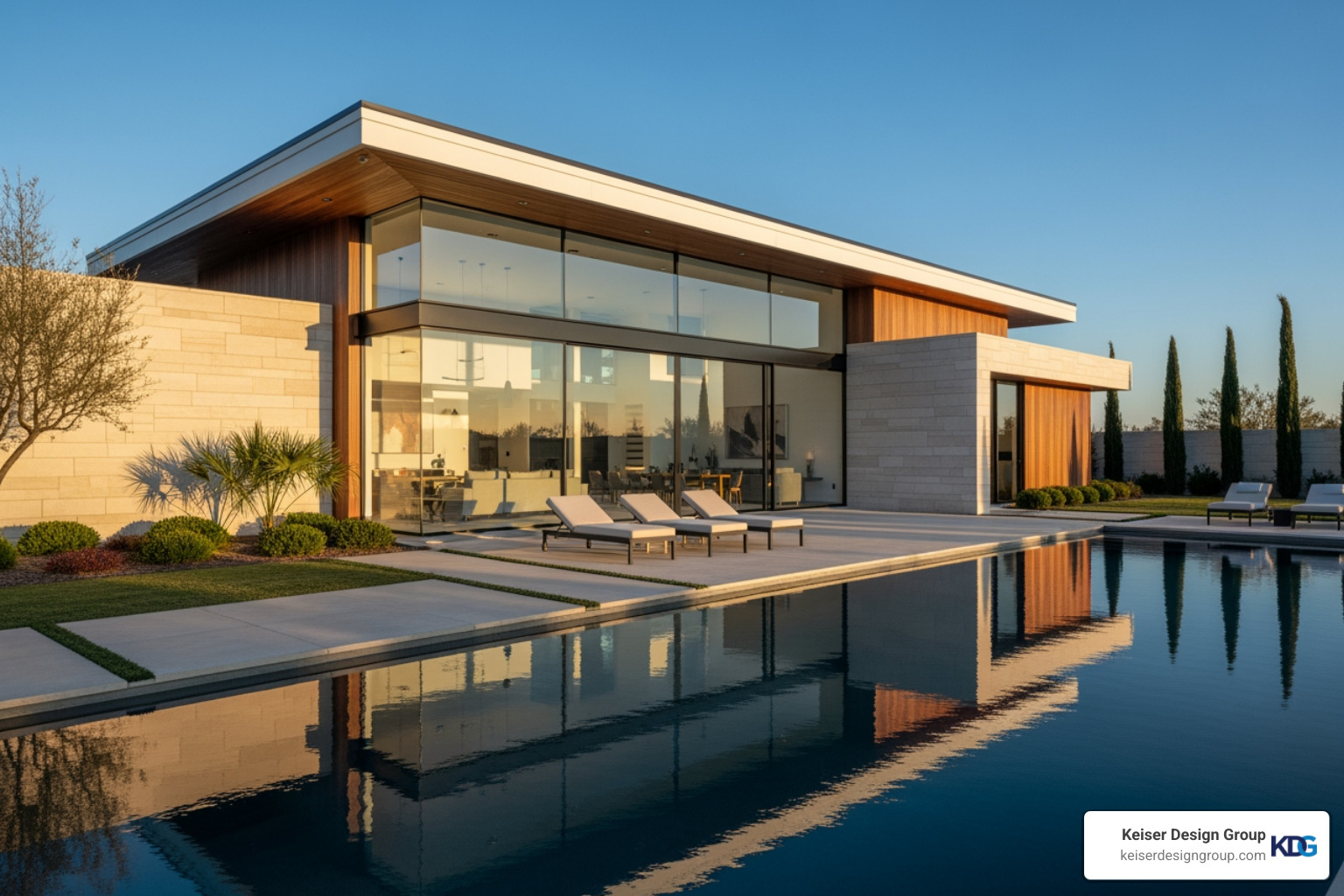
This section explores how different roof shapes are adapted for modern aesthetics, a key part of residential architecture in Ohio and the Midwest. When we design a home, the roof is not just a cap; it’s an integral part of the overall architectural statement, influencing both the exterior and interior spaces.
The Modern Flat Roof
Often associated with commercial buildings in the past, the flat roof has been brilliantly reinterpreted for modern house rooftop design. We love its ability to create clean lines and long, horizontal planes that define a contemporary aesthetic. While called “flat,” these roofs are actually built with a slight pitch—at least 1/8 inch per foot—to ensure proper drainage. This subtle slope is often concealed by parapet walls, giving the roof its characteristic sleek, level appearance.
Modern flat roofs are ideal for changing into functional spaces like rooftop decks, gardens, or accessible viewing platforms. They also allow for daring cantilevered overhangs, which provide excellent shade and add to the home’s distinctive geometric profile. From Cincinnati to Fort Wayne, we’ve seen how a well-designed flat roof can perfectly complement a modern home’s minimalist aesthetic.
The Modern Shed Roof
The shed roof is another favorite in our repertoire for modern homes. Characterized by a single, continuous sloping plane, it offers a dynamic and asymmetrical profile. This design is not only visually appealing but also highly functional. The varying height of the slope allows for higher ceilings on one side of the house, creating a sense of spaciousness.
Crucially, modern shed roofs are perfect for incorporating clerestory windows along the higher wall. These windows flood the interior with natural light, reducing the need for artificial lighting and enhancing the home’s connection to the outdoors. The pronounced slope of a shed roof also ensures excellent water runoff, making it a practical choice for areas that experience significant rainfall, like many parts of Ohio, Indiana, and Kentucky.
The Modern Gable Roof Reimagined
When you think of a traditional house, a gable roof often comes to mind. But in modern architecture, we’ve reimagined this classic shape to fit contemporary aesthetics. The key lies in the detailing. We often eliminate traditional rake and eave overhangs, opting instead for thin profile lines that give the roof a sharp, clean edge.
This modern interpretation of the gable roof can be a stunning feature, especially when combined with vaulted interior ceilings that echo the roof’s form, adding dramatic volume to living spaces. It’s a versatile design that can stand alone or be combined with other roof forms to create a more complex and interesting silhouette. For a testament to how traditional forms can be given a fresh, modern twist, see a bold new look on a classic home in Ohio.
The Multi-Dimensional Roof
For those seeking architectural complexity and striking visual interest, the multi-dimensional roof is an exceptional choice in modern house rooftop design. This style involves combining multiple roof types—flat, shed, or gable—into a cohesive design. The result is a dynamic interplay of layers, angles, and shapes that sets a home apart.
A multi-dimensional roof can define different zones of the house, with varying rooflines signaling distinct functional areas or architectural elements below. Examples include butterfly roofs, which are essentially two shed roofs sloping inward, creating a dramatic V-shape. This intricate design becomes a signature element in custom home architecture, offering both improved exterior aesthetics and influencing the interior architecture with varied ceiling heights and light patterns.
From Roof to Retreat: Creating Your Ultimate Outdoor Living Space

This is where design transforms a roof into a functional extension of your home, a concept central to how residential architecture design shapes our lives. A modern rooftop isn’t just a covering; it’s an opportunity to craft an immersive outdoor experience.
The Rooftop Garden and Green Roof
Imagine a vibrant garden blooming high above the city streets of Columbus or the quiet suburbs of Carmel. Rooftop gardens and green roofs are not only beautiful but also incredibly beneficial. For homeowners in Ohio, Indiana, and Kentucky, container gardening and raised beds are excellent solutions, allowing for flexibility and easier maintenance. We often recommend low-maintenance plants that can thrive in direct sunlight and withstand varying weather conditions.
The environmental impact of green roofs is substantial. They act as natural insulators, reducing cooling costs by up to 75% in summer. They also contribute to stormwater management by absorbing rainfall, easing the burden on municipal drainage systems. The sheer growth of this sector is impressive: the global green roof market is projected to reach $40.2 billion by 2032, indicating a strong move towards sustainable urban living.
Here are some popular rooftop plants we’ve found thrive in the Midwest climate:
- Ornamental Grasses: Hardy and drought-tolerant, providing texture and movement.
- Purple Coneflowers (Echinacea): Native perennials that attract pollinators and tolerate full sun.
- Knockout Roses: Extremely resilient and low-maintenance, offering continuous blooms.
- Creeping Jenny: A beautiful groundcover that spills gracefully over container edges.
- Strawberries and Herbs: Edible plants like mint, thyme, and rosemary are easy to grow in pots, offering fresh produce right at your fingertips.
- Dwarf Red-Twig Dogwoods: Smaller varieties can be grown in large containers, providing winter interest with their vibrant red stems.
The Entertainment Terrace
For many of our clients, the ultimate goal of a modern house rooftop design is to create an unparalleled entertainment space. An entertainment terrace can be equipped with all the amenities of an indoor living area, but with the added allure of open skies. We’ve designed terraces with full outdoor kitchens, complete with grills, prep stations, and beverage centers, perfect for hosting gatherings in Fishers or Bowling Green.
Built-in seating, custom fire pits, and neat water features create inviting zones for conversation and relaxation. To extend usability into the evenings and cooler months, pergolas and other shade structures are essential. These can be fixed, louvered, or even retractable, offering protection from the sun or light rain. The integration of lighting, sound systems, and even mobile TV cabinets can further lift the experience, making your rooftop the go-to spot for any occasion.
Materials and Finishes for a Modern House Rooftop Design
The selection of materials is critical in achieving both the aesthetic and durability required for a modern rooftop. We typically recommend:
- Composite Decking: A practical and stylish choice, offering exceptional durability and low maintenance, perfect for the demanding Midwest climate.
- Natural Stone Pavers: For a luxurious and enduring surface, stone pavers provide a sophisticated look and excellent longevity.
- Glass Railings: These are a favorite for maximizing views, offering safety without obstructing your panoramic outlook.
- Metal Accents: From sleek aluminum to rich copper, metal accents in railings, planters, or decorative panels add a contemporary edge and industrial chic.
- Synthetic Cedar Shakes: For homeowners who desire a rustic or woodsy appearance without the upkeep of natural wood, synthetic cedar shakes are an excellent option. They mimic the look of real cedar but boast a 50+ year lifespan, elite durability, Class A fire resistance, and require virtually no maintenance, making them ideal for areas like Canton or Louisville where we value both aesthetics and longevity.
- Modern Glass Features: Large sliding glass doors or wall systems create a seamless transition between your indoor living space and the rooftop, blurring the lines and inviting the outside in.
Blueprint for Success: Essential Planning Considerations
Proper planning is the most critical step and highlights the value of professional residential architect services. When starting on a modern house rooftop design project, there are several key factors we carefully consider to ensure a successful, safe, and stunning outcome.
Structural Integrity and Safety
The foundation of any rooftop addition is structural integrity. Before any design work begins, we always consult with a structural engineer to assess your home’s existing load-bearing capacity. This is paramount, especially when planning features like large rooftop gardens, hot tubs, or even substantial furniture arrangements. For instance, a hot tub filled with water can exert a weight of at least 125 pounds per square foot with just 22 inches of water depth, requiring significant reinforcement.
Safety is equally non-negotiable. We adhere strictly to local building codes for railing heights and specifications to prevent falls, ensuring that your liftd space is secure for everyone. This rigorous attention to detail is a hallmark of our work at Keiser Design Group, guaranteeing peace of mind for our clients in places like Akron and Bloomington.
Climate, Drainage, and Maintenance
The Midwest climate presents unique challenges and opportunities for rooftop design. We carefully select materials that can withstand our region’s hot summers, snowy winters, and frequent freeze-thaw cycles. Durability and weather resistance are key considerations to ensure your rooftop remains beautiful and functional for years to come.
Proper waterproofing and drainage systems are absolutely critical to prevent leaks and water damage to your home. Flat roofs, though seemingly level, are carefully designed with a subtle pitch to direct water towards drains or scuppers. We ensure that every detail, from flashing to sealants, is expertly installed to protect your investment.
Furthermore, we advocate for choosing low-maintenance materials and plant selections wherever possible. This minimizes the ongoing effort required to keep your rooftop looking pristine. Accessibility for cleaning and upkeep is also factored into our designs, ensuring that tasks like sweeping, plant care, or snow removal are as straightforward as possible.
Budgeting and Working with an Architect
Starting on a modern house rooftop design project requires careful financial planning. While we don’t discuss specific pricing, we work closely with our clients to make cost-effective material choices without compromising on quality or aesthetics. Sometimes, a phased development approach can be beneficial, allowing you to build out your dream rooftop over time as your budget permits.
The role of an architect, such as those at Keiser Design Group, is invaluable throughout this process. We not only help maximize the value of your investment through thoughtful design but also steer complex local zoning and planning regulations that often govern rooftop modifications in cities like Toledo or Lexington. Our expertise ensures your project is compliant, efficient, and custom to your vision. For insights into how to best collaborate with us, it’s worth understanding what your residential architect wishes you knew before starting your project.
Frequently Asked Questions about Modern Rooftop Design
How do you make a flat roof functional?
A flat roof offers immense potential for functionality. We can transform it into a vibrant deck, a serene patio, or a lush garden. The key to making it functional lies in meticulous planning and execution. First, it’s crucial to ensure the roof’s structural integrity. An experienced architect and structural engineer must assess and potentially reinforce the roof to handle the additional weight (known as live load) of furniture, planters, people, or even a hot tub. Second, impeccable waterproofing and drainage systems are paramount to prevent any leaks. Once these foundational elements are in place, we can add features like composite or natural stone decking tiles, built-in planters for greenery, comfortable outdoor furniture, and even shade structures to create a truly usable and enjoyable outdoor space.
What are the most popular trends in modern house rooftop design?
Current trends in modern house rooftop design are heavily focused on creating “outdoor rooms” that extend the home’s living space. This includes fully-equipped outdoor kitchens with grilling stations and beverage centers, inviting fire pits for cozy evenings, and luxurious lounge areas. Sustainability is another major trend, with homeowners increasingly opting for green roofs to improve insulation and manage stormwater, and integrating solar panels to generate clean energy. Seamless indoor-outdoor transitions are also highly sought after, achieved through large sliding glass doors that blur the line between interior comfort and exterior expanse. Finally, adjustable shade solutions like louvered pergolas are popular for providing comfort in varying weather conditions across Ohio, Indiana, and Kentucky.
Can I add a rooftop deck to my existing home?
Yes, adding a rooftop deck to an existing home is often possible, but it requires careful and professional planning. The first step is always to have an architect and structural engineer assess your home’s current structure. They will determine if the existing framing can support the additional weight of the deck, furniture, and people. In many cases, modifications to the roof structure and framing will be necessary to ensure safety and stability. Beyond the structural considerations, obtaining the proper building permits from your local municipality (whether in Dayton, Evansville, or Georgetown) is a critical step. We guide our clients through this entire process, from initial assessment and design to navigating local regulations, ensuring a smooth and successful addition.
Conclusion
A modern rooftop is more than just a cover; it’s an opportunity to expand your living space, improve your lifestyle, and increase your home’s value. From a simple, neat flat roof to a fully-equipped entertainment terrace, the possibilities are endless. The key to a successful project lies in thoughtful design and expert execution. At Keiser Design Group, we specialize in creating bespoke residential designs that are both beautiful and functional, perfectly custom to your needs and the unique character of your home in Ohio, Indiana, or Kentucky. If you’re ready to explore the potential of your own sky-high retreat, let’s talk about how to design your dream home.