Why Commercial Architecture Design Matters for Your Business Success
Commercial architecture design is the specialized practice of creating buildings and spaces for business use, focusing on functionality, brand identity, and customer experience. Unlike residential design, commercial projects must balance aesthetics with operational efficiency and meet strict building codes and accessibility requirements.
Here are some key design options available for commercial spaces:
- Office Buildings – Open-plan layouts, private offices, collaboration zones, and employee wellness areas
- Retail Spaces – Customer flow optimization, product display areas, and brand-focused interiors
- Hospitality – Guest experience design, operational efficiency, and ambiance creation
- Mixed-Use Developments – Multi-functional spaces combining residential, retail, and office uses
- Sustainable Solutions – Energy-efficient systems, green materials, and LEED certification options
- Smart Building Technology – IoT integration, automated systems, and digital interfaces
- Flexible Spaces – Modular designs, movable partitions, and adaptable layouts
Well-designed commercial spaces can boost productivity, improve your brand, and create memorable customer experiences. The right architectural approach transforms your vision into a functional, engaging environment that supports your business goals.
I’m Dan Keiser, Founder and Principal Architect of Keiser Design Group. With over three decades of experience, my team and I use a client-first approach, blending creative vision with practical knowledge to deliver spaces that truly work for your business.
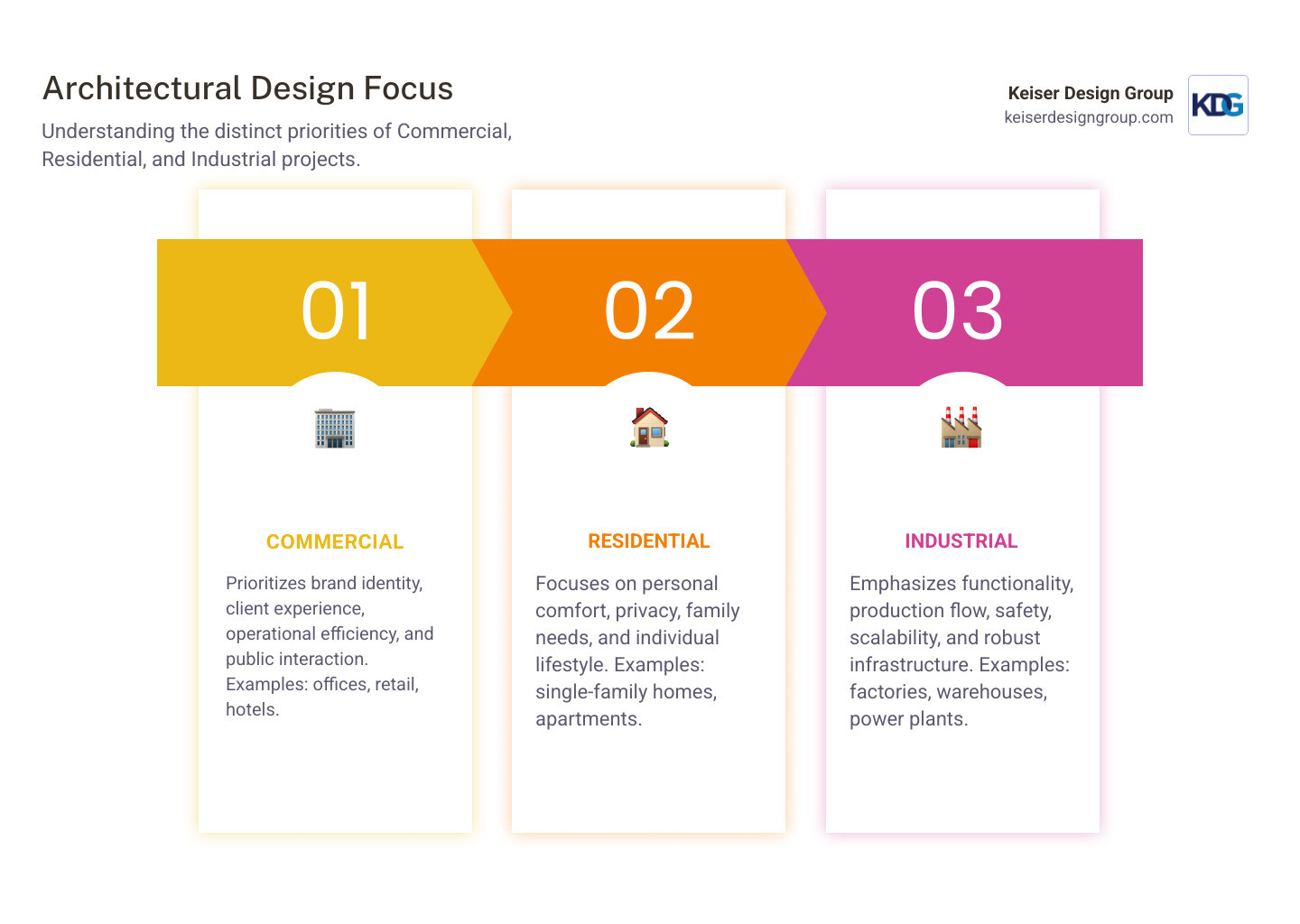
The Impact and Benefits of Strategic Commercial Design
Commercial architecture design is more than just constructing buildings; it’s about creating spaces that reflect a community’s identity and drive economic activity. From towering skyscrapers to local cafes, these structures shape our world.
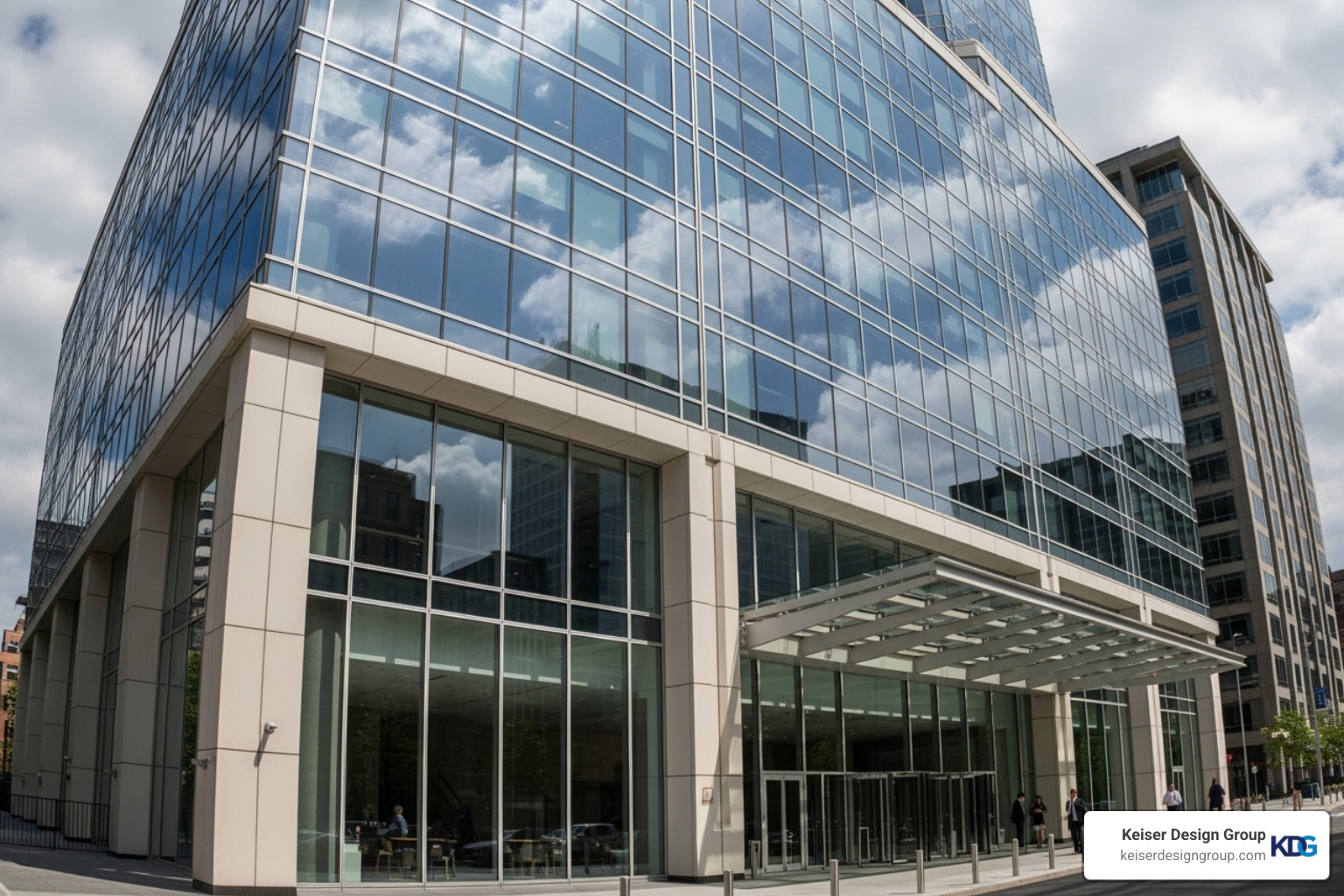
A well-executed commercial architecture design offers profound benefits:
- Improved Brand Visibility and Customer Satisfaction: An iconic building or a thoughtfully designed retail space can become synonymous with your brand, turning a simple visit into a memorable experience. A welcoming storefront or lobby is the result of strategic design that attracts and retains customers.
- Increased Employee Productivity and Morale: Office environments designed with employee well-being in mind—featuring natural light, open spaces, and collaborative areas—can significantly boost productivity and job satisfaction. A comfortable and inspiring workspace makes a tangible difference in a team’s performance.
- Positive Economic Impact: Quality commercial architecture design directly influences property value and business success. Well-designed properties attract more investment and can become community landmarks. They create vibrant spaces where people want to live, work, and spend their time, making them a crucial part of any strategic business plan.
Defining Spaces: What is Commercial Architecture and Why Does It Matter? Commercial Architectural Design: Creating Spaces for Businesses
Key Principles of Commercial Architecture Design
At the heart of every successful commercial architecture design project are several core principles:
- Client-Aimed Design: We start by understanding your unique needs, vision, and business goals. Our designs are customized to fit your operational requirements and brand identity.
- Space Optimization: We maximize the utility of every square foot, creating layouts that facilitate smooth traffic flow, efficient operations, and comfortable occupancy. This includes strategic placement of common areas like elevators, restrooms, and egress points.
- Accessibility (ADA Compliance): Our designs adhere to ADA standards, ensuring that all users can steer and use the space comfortably and safely. This includes clear pathways, appropriate door widths, and accessible fixtures.
- Safety and Building Codes: We ensure every design is safe, code-compliant, and meets all local, state, and federal requirements, including fire safety and structural integrity. Our team is expert at navigating the complex permitting process.
- Future-Proofing and Scalability: We design with an eye towards future growth and adaptability. This involves incorporating flexible layouts, modular components, and infrastructure that can accommodate technological upgrades, creating a space that grows with your business.
Understanding Commercial Architectural Services: A Comprehensive Guide
Common Commercial Building Types
The world of commercial architecture design is incredibly diverse, encompassing a wide array of building types, each with its own unique considerations and functional requirements. Here’s a look at some common types and their key design considerations:
| Building Type | Key Design Considerations |
|---|---|
| Office Buildings | Creating productive and collaborative environments with a mix of open-plan areas, private offices, meeting rooms, and breakout spaces. Prioritize natural light, good acoustics, ergonomic layouts, and flexibility to support changing work styles and future growth. |
| Retail Spaces | Improving customer experience and driving sales through strategic product placement, clear circulation paths, engaging displays, and a strong, consistent brand identity. Storefront design, visibility, and accessibility are critical for attracting and converting foot traffic. |
| Hospitality | Delivering a welcoming, memorable guest experience from the first impression in the lobby to the comfort and privacy of guest rooms or the ambiance of dining and social areas. Balance guest comfort with efficient back-of-house circulation and operations for staff. |
| Mixed-Use Developments | Combining residential, commercial, and/or retail spaces into a cohesive development. Design should support a strong sense of community, safe and intuitive pedestrian flow, well-planned public spaces, and clear separation of uses where needed so each component functions effectively on its own. |
Exploring Modern Commercial Architecture Design Options
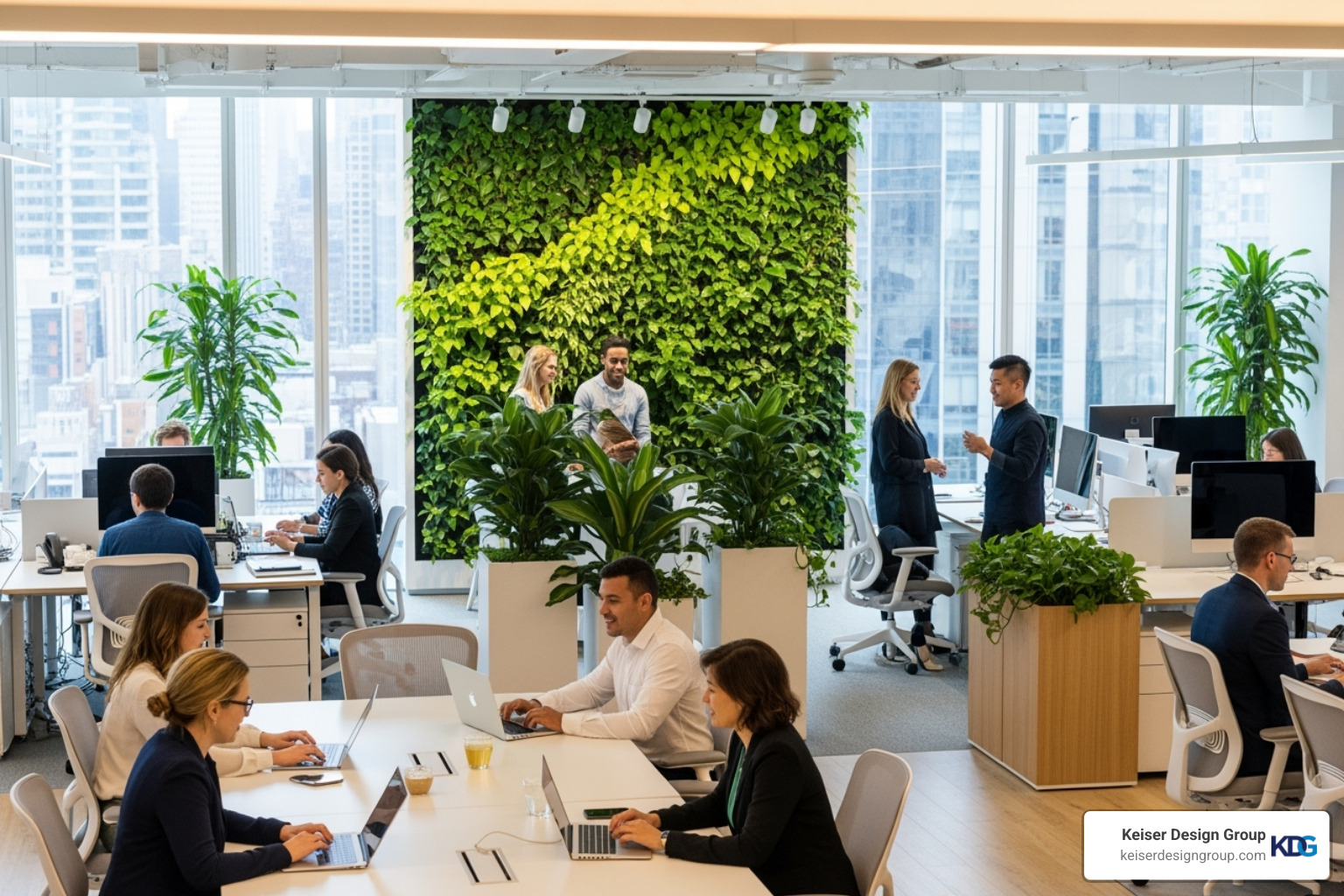
The world of commercial architecture design is constantly evolving with innovations in materials, changing workplace needs, and a greater focus on environmental responsibility. Modern commercial buildings are more than just structures; they are intelligent environments designed to improve user experience and promote sustainability. This shift reflects our changing world and the need for our built environments to adapt.
Top 7 Design Trends for a Modern Commercial Building
Sustainable and Eco-Friendly Design
Sustainability is now a core principle of commercial architecture design, especially since buildings account for nearly 40% of global carbon emissions. Our approach focuses on several key areas:
- Energy Efficiency: We use superior insulation, high-performance windows, and smart systems to significantly reduce energy consumption, sometimes by up to 90%.
- Green Materials: We incorporate sustainable materials like reclaimed wood and recycled steel to minimize environmental impact and improve indoor air quality.
- LEED Certification: We guide clients through green building certifications like LEED, which validates a building’s environmental performance and can increase its market value.
- Net-Zero Buildings: The ultimate goal is creating buildings that produce as much energy as they consume, often through solar panels and other renewable sources.
- Biophilic Design: Integrating natural elements like living walls and abundant daylight boosts productivity, creativity, and well-being.
- Water Conservation: We use green roofs, rainwater harvesting, and efficient fixtures to reduce water usage.
Explore sustainable practices and certifications like LEED for commercial buildings.
Technology-Integrated and Smart Buildings
Modern commercial architecture design integrates technology to create intelligent, responsive environments.
- IoT Integration: Smart systems for lighting and HVAC adjust automatically based on occupancy and usage patterns, optimizing comfort and efficiency.
- AI-Driven Energy Management: Artificial intelligence analyzes data to predict energy needs, reduce waste, and lower operational costs.
- Smart Security: Advanced, non-intrusive security systems with automated access control and real-time monitoring provide peace of mind.
- Digital Signage: Integrated digital displays offer dynamic wayfinding and communication, enhancing the user experience.
These technologies work together to create a seamless, comfortable, and efficient environment for everyone in the building.
optimize building operations BIMsmith Market
Flexible and Adaptive Spaces
As work evolves, commercial architecture design must create flexible and adaptive spaces. The rise of hybrid work models demands environments that support both focused individual tasks and collaborative team efforts.
Key elements of flexible design include:
- Modular Construction: Using pre-fabricated components allows for faster construction, less waste, and easier future modifications.
- Movable Partition Walls: Partitions can be reconfigured to transform large open areas into smaller, private spaces as needed.
- Multi-functional Areas: Designing spaces that can serve multiple purposes—like a café that becomes an event space—maximizes utility.
- Balanced Layouts: We create a mix of open-plan zones for collaboration and quiet, private areas for concentration, giving employees the choice of how and where they work best.
This approach ensures your building can adapt to your business’s changing needs, making it a long-term, valuable asset.
Adapting to Change: The Rise of Flexible Spaces in Commercial Architecture Design
The Architect’s Role and the Design Process
As commercial architects, our role extends beyond just drawing blueprints. We are your partners and problem-solvers, guiding you through the entire design and construction process. Our goal for your commercial architecture design project is to ensure it’s completed on time, within budget, and to your exact specifications.

We achieve this through:
- Collaboration: We work closely with you to understand your vision and business goals, translating them into a functional and inspiring design.
- Project Management: We coordinate with all stakeholders, from engineers to contractors, to ensure a smooth and stress-free process for you.
- Regulatory Navigation: We handle the complexities of zoning laws, building codes, and permits to prevent delays and ensure compliance.
- Budget Management: We provide clear cost estimates and manage expenses diligently to deliver exceptional results without financial surprises.
Five Phases of Commercial Building Design
The Five Phases of Architectural Design
Every commercial architecture design project follows a structured, five-phase process to ensure a smooth and efficient outcome.
- Schematic Design (SD): We begin by exploring your project’s needs, site, and budget. We create initial sketches and floor plans to establish the overall size, layout, and character of the building.
- Design Development (DD): In this phase, we refine the initial concepts. We select materials, finishes, and building systems, and collaborate with engineers to ensure all elements work together seamlessly.
- Construction Documents (CD): We create a comprehensive set of detailed drawings and specifications. These documents serve as the blueprint for construction and are used for obtaining building permits.
- Bidding/Negotiation: We assist you in selecting the right contractor for your project. This involves managing the bidding process, answering questions, and helping you choose the best team.
- Construction Administration (CA): During construction, we act as your representative on-site. We conduct regular site visits, monitor progress, and address any issues to ensure the project is built according to plan.
7 Must-Know Steps in the Creative Process of Top Commercial Architecture Firms
How to Choose the Right Architecture Firm
Choosing the right architecture firm for your commercial architecture design project is crucial for its success. Here are key factors to consider:
- Portfolio: Review their past work. Do they have experience with projects similar to yours? Does their design style align with your vision?
- Industry Specialization: A firm with expertise in your specific industry will better understand your unique needs and regulatory requirements.
- Client Testimonials: Ask for references. Hearing from past clients provides insight into their process, communication, and results.
- Understanding Your Vision: A good architect listens carefully and asks insightful questions to fully grasp your goals.
- Communication: Look for a firm that is responsive, transparent, and keeps you informed throughout the project.
- Local Knowledge: A firm familiar with local zoning laws, building codes, and permitting processes can prevent costly delays and complications.
Frequently Asked Questions about Commercial Architecture
We often get questions about the nuances of commercial architecture design. It’s a specialized field, and we’re always happy to clear things up! Here are some of the most common questions we hear:
What is the difference between an architect and a commercial architect?
While all commercial architects are architects, not all architects specialize in commercial projects. A commercial architect has specialized expertise in designing for business needs. The key differences are:
- Business Focus: We design with your return on investment (ROI), operational efficiency, brand identity, and customer experience in mind.
- Code Expertise: We have in-depth knowledge of complex commercial building codes, accessibility standards (ADA), and zoning laws, which differ significantly from residential codes.
- Scale and Complexity: Commercial projects are typically larger and involve more complex structural and mechanical systems than residential buildings.
- User Experience: We focus on how design influences consumer behavior and employee productivity, creating spaces that are both functional and engaging.
How long does a typical commercial design project take?
The timeline for a commercial architecture design project varies significantly based on its scope. A small interior renovation might take a few months, while a new, large-scale building can take several years.
Key factors influencing the timeline include:
- Project Size and Complexity: Larger, more intricate designs require more time for planning and construction.
- Permitting and Approvals: Securing permits from local authorities can be a lengthy process, depending on the jurisdiction and project complexity.
- Client Responsiveness: Timely feedback and decisions from you are crucial for keeping the project on schedule.
We provide realistic timelines from the outset and maintain open communication throughout the process to manage expectations and avoid unnecessary delays.
How does commercial architecture impact a business’s ROI?
Strategic commercial architecture design is an investment that delivers a strong return on investment (ROI) in several key ways:
- Reduced Operating Costs: Energy-efficient designs can lower utility bills by up to 90%, providing significant long-term savings.
- Increased Productivity: A well-designed workspace that prioritizes employee well-being can boost morale and productivity, directly impacting your bottom line.
- Improved Brand Value: A thoughtfully designed building acts as a powerful marketing tool, attracting customers, clients, and top talent.
- Higher Revenue: For retail or hospitality businesses, an inviting and functional space can increase customer traffic, dwell time, and sales.
- Increased Property Value: Quality architecture with modern, sustainable, and flexible features increases the long-term value of your property, making it a more attractive asset.
Build Your Business’s Future with Expert Design
From sustainable practices that cut energy costs to smart technologies that create responsive spaces, modern commercial architecture design offers remarkable possibilities. It’s about more than just buildings; it’s about crafting environments that tell your story, support your team, and welcome your customers. Every design choice, from biophilic design elements to flexible layouts, directly impacts your success.
Having spent three decades in this field, I’ve seen how the right architectural approach can transform a business. A well-designed space can increase foot traffic, boost productivity, and create a community landmark.
At Keiser Design Group, we know that a commercial project can seem daunting. That’s why we offer custom design solutions and a worry-free process. We handle the complexities of codes, permits, and construction management so you can focus on your business. Our approach is simple: we listen to your vision and then bring it to life with professional guidance and clear communication.
Your vision deserves a partner who understands that every square foot is an opportunity for growth. At Keiser Design Group, we are ready to translate your goals into a high-performing physical reality. Contact us today to start your commercial architecture design consultation and discover how strategic design can transform your business success.