Why Architectural Design of Schools Shapes the Future of Learning
Architectural design of schools is the process of planning and building educational spaces that support how students learn, grow, and connect with their community. Here’s a quick overview of what it involves:
- Layout types: Traditional classrooms, open-plan spaces, and flexible “learning landscape” models
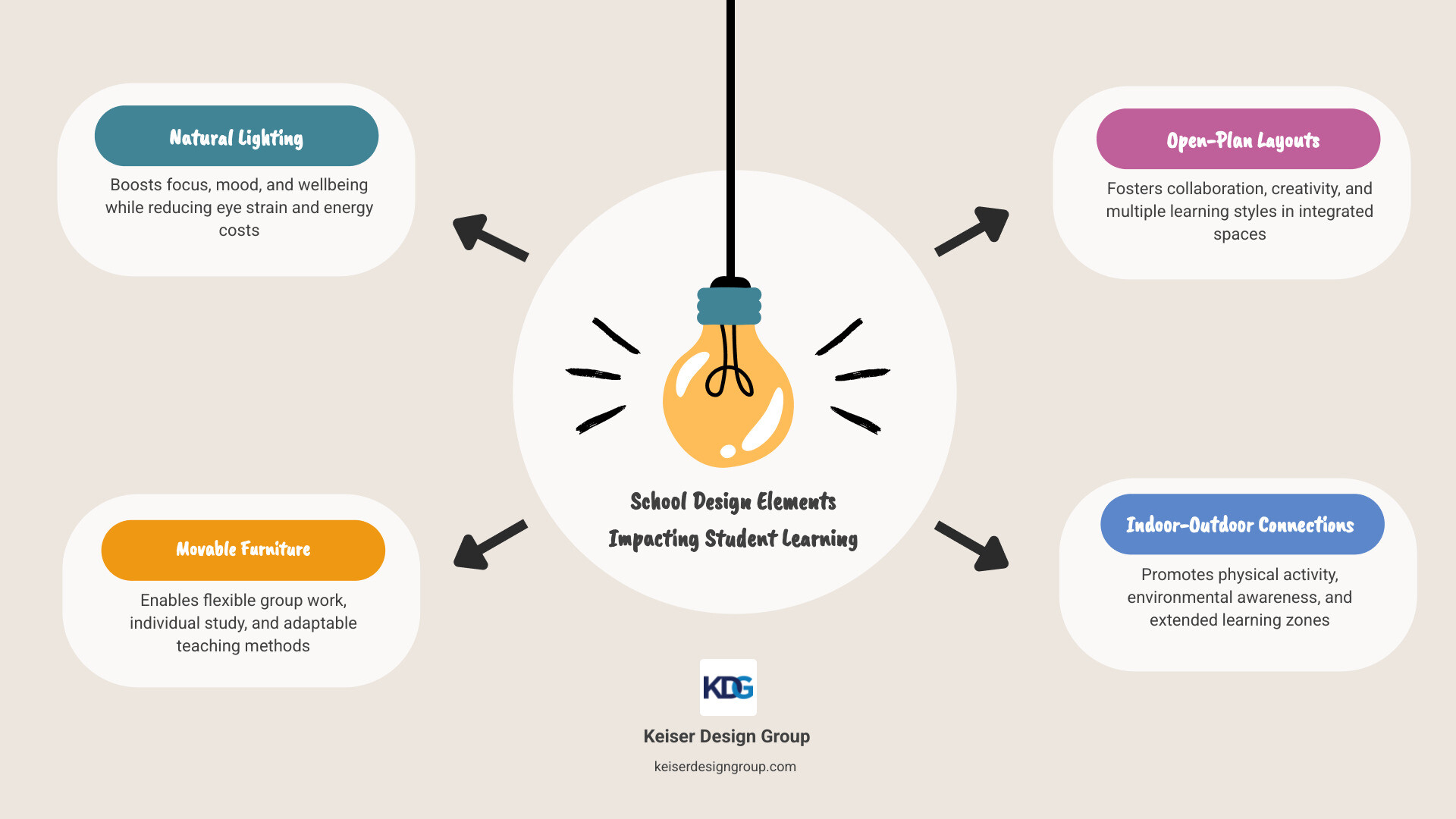
- Key elements: Natural lighting, movable furniture, adaptable rooms, and indoor-outdoor connections
- Sustainability: Low-carbon materials, energy-efficient systems, and certifications like LEED
- Community focus: Culturally responsive design, multi-use spaces, and student-informed planning
- Goal: Create safe, inclusive environments that improve student engagement and academic outcomes
In the architectural design of schools, a building is more than four walls and a roof—it’s a learning tool. Research and real-world outcomes suggest the architectural design of schools can influence student focus, comfort, and engagement. From the way natural light fills a classroom to whether furniture can be rearranged for group work, every design choice sends a message to students about how they are expected to think, collaborate, and grow.
As the NSW Design Guide for Schools puts it, schools are “the heart of our communities, fostering learning, creativity, growth, and connection.” That idea drives every decision a thoughtful architect makes on an educational project.
I’m Dan Keiser, Founder and Principal Architect of Keiser Design Group, with over 30 years of experience guiding property owners through every phase of the architectural process — including the architectural design of schools across Ohio and beyond. In this guide, I’ll walk you through the key principles, trends, and real-world examples that define great school design today.
Modern Layouts and Learning Landscapes
The architectural design of schools is shifting away from the traditional ‘cells and bells’ approach (isolated rooms and rigid schedules) toward more flexible learning models. The goal of architectural design of schools today is flexibility: spaces that support direct instruction, collaboration, and quiet focus on the same day. In this approach, the entire building acts as a pedagogical tool, offering a variety of zones that cater to different types of intelligence and learning styles.
In the architectural design of schools, three layout types come up most often:
- Traditional Classrooms: Self-contained rooms that offer high levels of acoustic privacy but can sometimes feel isolated.
- Open-Plan Layouts: Large, shared spaces that encourage cross-pollination between different age groups and subjects.
- Learning Landscapes: A hybrid model using movable dividers and varied “topography”—like stepped seating or quiet alcoves—to create a “village” feel within the school.
| Feature | Traditional Classroom | Activity-Based Learning Landscape |
|---|---|---|
| Primary Focus | Teacher-led instruction | Student-led exploration |
| Furniture | Fixed desks/chairs | Movable, ergonomic modules |
| Flexibility | Low (fixed walls) | High (operable partitions) |
| Social Interaction | Controlled/Scheduled | Spontaneous/Collaborative |
| Technology | Front-of-room focused | Integrated throughout the “landscape” |
Advantages of Collaborative Spaces
In the architectural design of schools, collaborative zones support student ownership—an important goal in educational building design. When students have the freedom to choose where they work—whether it’s a high-top table for a group brainstorm or a quiet “niche” for deep reading—they become more engaged in the process. This autonomy is a cornerstone of exploring the best school architecture ideas, as it mirrors the modern workplace and prepares students for future professional environments where teamwork and creativity are paramount.
Challenges of Breaking Traditional Setups
While open environments are inspiring, they aren’t without hurdles. Acoustics are often the biggest challenge in open plans, so the architectural design of schools should pair collaboration zones with quieter ‘nested’ spaces. Successful architectural design of schools addresses this by creating “nested” spaces—smaller, quieter zones within the larger footprint. By maximizing learning potential, we use design to minimize distractions while maintaining the benefits of an open, airy feel.
Key Elements of Architectural Design of Schools
The architectural design of schools works best when it prioritizes the human experience—light, air, comfort, and intuitive movement. This means looking closely at how light, air, and movement affect the brain. Modern school architecture isn’t just about square footage; it’s about the quality of that footage. We focus on blurring the boundaries between indoor and outdoor spaces to ensure students feel connected to the world around them.
Institutions like the Cleveland School of Architecture & Design serve as living examples of how thoughtful spatial organization can inspire the next generation of creators. By shaping learning environments with intention, we can turn a simple hallway into a gallery or a stairwell into a social hub.
The Role of Flexible Furniture in Architectural Design of Schools
Furniture is no longer an afterthought; it is a structural component of the learning experience. Movable desks, modular seating, and “flip-top” tables allow a single room to transform from a lecture hall into a collaborative workshop in minutes. This adaptability is one of the four ways school design improves learning, as it allows teachers to pivot their instruction style without being hindered by the physical environment.
Impact of Natural Light on Student Performance
Natural light is one of the most practical design moves in the architectural design of schools, supporting comfort, mood, and daily focus. Multiple studies associate daylight access with improved learning conditions, which is why architectural design of schools often prioritizes daylighting strategies. Beyond academic scores, natural light regulates circadian rhythms, improving mood and well-being. In our work, we prioritize high-performance glazing and strategic building orientation because we know building design plays a crucial role in education.
Sustainability and Safety in Modern Education

Today’s schools are being built to last a century, which requires a deep commitment to sustainability and safety. In the architectural design of schools, more teams are considering mass timber and lower-carbon material strategies where appropriate. Using renewable resources like wood not only reduces the carbon footprint but also creates a “biophilic” environment—one that uses natural elements to reduce student stress levels.
When designing for school choice, we look at certifications like LEED (Leadership in Energy and Environmental Design) as a baseline. Many districts are setting ambitious performance targets, and the architectural design of schools increasingly integrates high-performance envelopes and on-site renewables.
Safety and Inclusivity Principles
Safety in school design has evolved to include “trauma-informed” principles. This means creating environments that feel secure and predictable, with clear sightlines and easy navigation. Universal accessibility ensures that every student, regardless of physical ability, can navigate the campus with dignity. Furthermore, exploring new school building designs often involves integrating biodiversity—like school gardens or green roofs—which serve as both a safety buffer and an outdoor classroom.
Energy Efficiency and High-Performance Materials
High-performance goals vary by district and climate, but the architectural design of schools often emphasizes efficient envelopes, right-sized HVAC, and smart controls. Achieving this requires a combination of durable materials, such as polished concrete and high-thermal-mass masonry, and smart technology. For example, the Patriot Preparatory Academy Addition & Renovation project demonstrates how adding modern, energy-efficient wings to existing structures can revitalize a campus while improving long-term building performance and maintainability.
Community Integration and Culturally Responsive Design
A school should be a “beacon of excellence” for its neighborhood. Large campuses can still feel personal when the architectural design of schools uses smaller learning communities, clear wayfinding, and welcoming shared spaces. These schools serve as community hubs, providing spaces that are used long after the final bell rings.
By moving from classroom to community, school architecture can help heal and unify neighborhoods. Whether it’s through a public library branch located on-site or athletic facilities open to local residents, these buildings are vital social infrastructure.
Culturally Responsive Architectural Design of Schools
Culturally responsive design starts with listening. This involves ‘student-informed design,’ an architectural design of schools approach that brings students and educators into key planning decisions. For schools with high minority enrollment or significant language diversity, the architecture should reflect the community’s heritage. This might mean including prayer rooms, multi-lingual signage, or “Academic Neighborhoods” that focus on local industry needs. The Knowlton School at The Ohio State University is a prime example of how architecture can facilitate a culture of constant critique and dialogue, reflecting the values of the students within.
Multi-Use Spaces and Community Connection
Multi-use spaces extend a school’s community impact by supporting events, programs, and shared resources beyond the school day. An auditorium with movable seating can host a school play on Friday and a community town hall on Saturday. At Grace Christian School, we see how specialized facilities can serve dual purposes, acting as both a rigorous learning environment and a gathering place for the broader community.
Frequently Asked Questions
How does school architecture impact student learning?
Architecture impacts learning by influencing the “ABCs” of the classroom: Air quality, Brightness, and Comfort. Good design reduces cognitive load by managing noise and providing clear wayfinding, allowing students to focus their energy on their studies. It also fosters social-emotional learning by providing spaces for both collaboration and quiet reflection.
What are the benefits of flexible learning landscapes?
Flexible landscapes allow for “differentiated instruction.” This means a teacher can work with a small group in a glass-walled breakout room while the rest of the class works independently in a central hub. This model increases student engagement because the environment can be tailored to the specific task at hand, rather than forcing the task to fit a rigid room.
How is sustainability integrated into modern school buildings?
Sustainability is integrated through “passive” and “active” strategies. Passive strategies include orienting the building to maximize sunlight and using mass timber to lock away carbon. Active strategies include high-efficiency HVAC systems, LED lighting with occupancy sensors, and solar panels. Many modern schools now aim for LEED Platinum or “Net Zero” status.
Conclusion
At Keiser Design Group, we believe the architectural design of schools is one of the most meaningful ways a community can support learning and belonging. Based in Columbus, Ohio, our team specializes in creating tailored designs that meet the unique needs of students and educators while providing a simple, worry-free process for our clients. Whether you are looking to build a new facility or renovate an existing one, we are here to help you navigate the complexities of modern educational architecture.
If you’re ready to see how thoughtful design can transform your educational space, we invite you to explore our Schools Service Page or browse our School Images Gallery for inspiration.
Let’s build a brighter future for our students together. Contact Keiser Design Group today to start the conversation.