Safety is the non-negotiable foundation of any church nursery design. Parents are entrusting your ministry with their children, and they need clear evidence that safety is built into every part of the church nursery design. Beyond simple childproofing, a safe nursery requires a combination of strict operational policies and thoughtful architectural choices.
Caregiver Ratios and Supervision
Adequate supervision is the primary deterrent against accidents. Every church nursery design should be planned around clearly defined staff-to-child ratios that align with local licensing guidance, room layout, and supervision needs.
Many churches adopt a two-adult, background-checked supervision policy to strengthen accountability and reduce risk.
Physical Safety Features
When planning your Church Construction Planning Guide, consider these specific safety elements:
- Electrical Outlets: Use tamper-resistant outlets or high-quality sliding outlet covers.
- Finger Guards: Install shields on the hinge side of doors to prevent pinched fingers.
- Non-Toxic Materials: Use zero-VOC (Volatile Organic Compound) paints and Greenguard-certified flooring to ensure high indoor air quality.
- Furniture: Choose items with rounded edges and avoid anything with small parts that could pose a choking hazard.
Strategic Layout and Space Planning for Growing Ministries

A successful church nursery design balances open play areas with quiet, functional zones. If a room is just one big open space, it often leads to chaos. Instead, we use “zoning” to create a sense of order and calm.
Calculating Square Footage
In church nursery design, square footage planning should be based on furniture, circulation, sightlines, and applicable childcare and building requirements; in Ohio licensed childcare settings, usable indoor floor space requirements are higher than the range cited here.
Designing Effective Zones
When we consult on Church Design Children’s Ministry projects, we prioritize these specific zones:
- Safe Infant Sleep Zone: A quiet area for cribs, ideally separated from the main play area by a low wall or sound-dampening divider so caregivers can keep the children in view.
- Toddler Play Area: A central space for fine and gross motor activities.
- Feeding Station: A dedicated area for bottle feeding and high chairs.
- Diapering Station: This should be ergonomically designed for volunteers and located directly next to a handwashing sink to maintain hygiene.
Ensuring Clear Visibility
Architecturally, the layout must allow a single adult to see every corner of the room at once. Avoid “L-shaped” rooms or deep alcoves that create blind spots. Open floor plans with low-profile furniture are best for safety and supervision.
Optimizing Layouts for Small Church Nursery Design
Not every church has the luxury of a dedicated, purpose-built nursery wing. Many churches work with older buildings, limited footprints, or multi-purpose rooms that require flexible nursery planning. In these cases, we focus on Mission-Minded Worship Spaces that prioritize flexibility.
- Multi-purpose Space: If the nursery doubles as a meeting room, use rolling storage carts that can be locked or moved.
- Portable Dividers: Use toddler-height fences or “pipe and drape” systems to section off age groups in a fellowship hall.
- Flexible Flooring: Carpet tiles are a practical flooring option for small church nursery design because damaged sections can be replaced without disrupting the full room. If a child spills juice or has a diaper accident, you can replace a single tile rather than the entire carpet.
Creative Decor and Thematic Elements for Modern Nurseries
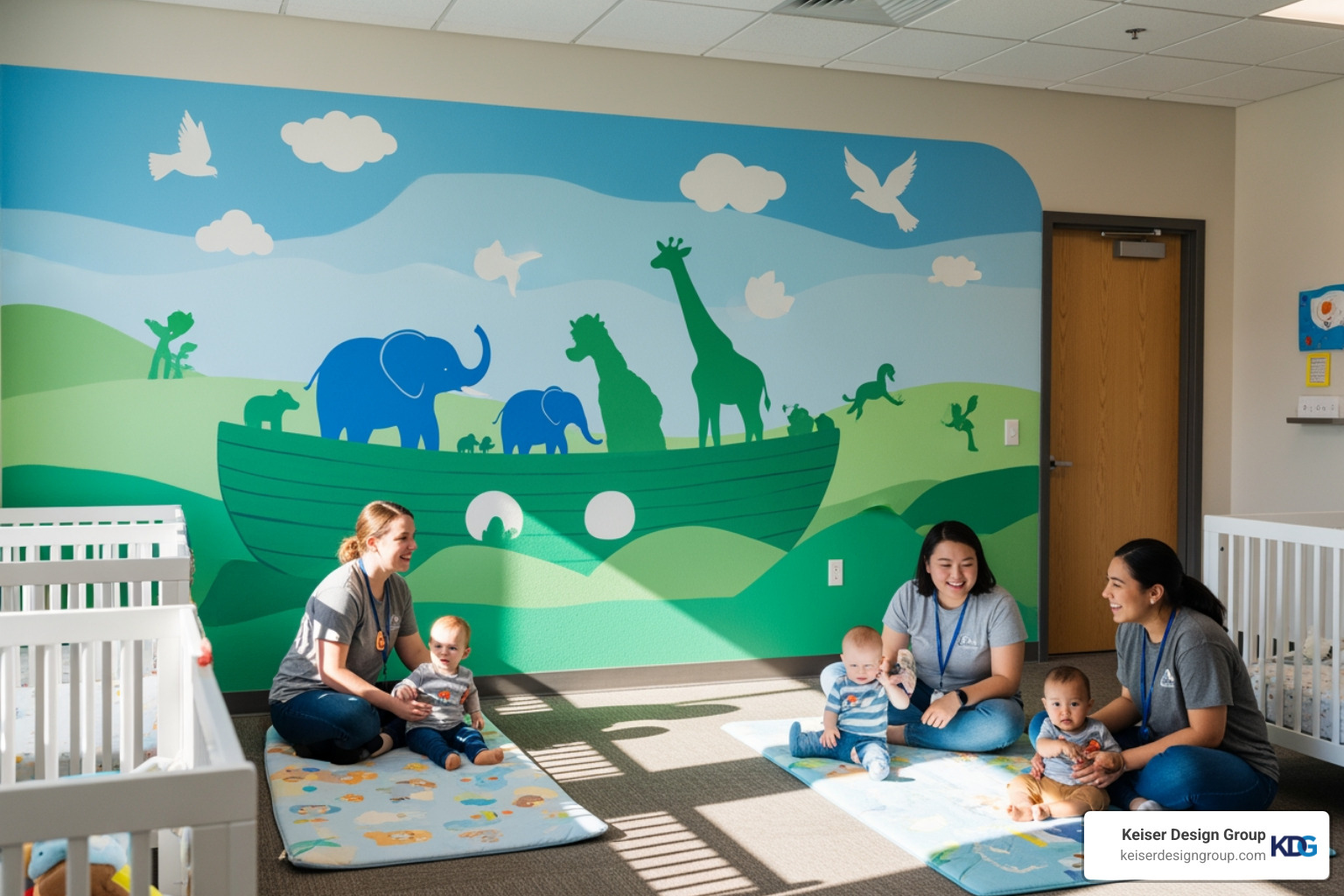
The aesthetics of your nursery communicate your church’s values. A dark, cluttered basement room says “childcare is an afterthought.” A bright, intentional space says “we value your family.”
Color Psychology and Themes
We recommend a palette of soft pastels or “nature-neutral” tones. While it’s tempting to use primary colors, they can often be overstimulating for infants. Soft blues, sage greens, and warm grays create a soothing environment.
For murals, modern silhouettes are often more effective (and easier to execute) than complex, literal illustrations. Popular themes include:
- Noah’s Ark: A classic that emphasizes God’s protection.
- Nature/Garden: Using trees and clouds to create a “peaceful meadow” feel.
- Sky/Stars: Highlighting the vastness of creation.
Interactive Elements
Modern church nursery design incorporates sensory experiences:
- Sensory Walls: Attach different textures (faux grass, smooth wood, corrugated metal) to a wall at toddler height.
- Sound-Absorbing Panels: These can be cut into fun shapes like clouds or sheep to dampen noise while adding to the decor. Check out our thoughts on Architectural Design Churches for more on balancing form and function.
Incorporating Spiritual Nurturing into Church Nursery Design
The nursery is not just a childcare room; it is an early ministry environment where families begin to experience care, trust, and belonging. Even infants can begin to associate the church with love and peace.
- Bible Story Corners: A cozy nook with plush seating and a library of age-appropriate board books.
- Verse Wall Art: Use tools like Canva to design modern, minimalist scripture prints.
- Prayer Walls: A space where parents can leave prayer requests during drop-off, which volunteers can pray over during the service.
- Family Photo Displays: Posting photos of the children and their families can help reduce “drop-off anxiety” by providing a familiar face to look at.
Efficient Operations: Security, Supplies, and Maintenance
Behind the beautiful colors and soft mats, a nursery must run like a well-oiled machine. This is where a “functional layout” meets architecture.
Check-In and Security
In church nursery design, the check-in station sets the tone for both security and parent confidence. It should be located at the entrance of the nursery wing, acting as a security gate.
| Feature | Analog (Paper) | Digital (Software) |
|---|---|---|
| Best For | Church plants/Small groups | Growing and large churches |
| Security | Manual matching of tags | Encrypted barcodes/QR codes |
| Data | Hard to track attendance | Automatic reporting and alerts |
Digital nursery check-in systems can support parent alerts, attendance records, and allergy documentation in one centralized workflow.
Essential Supplies and Support Rooms
A high-functioning nursery requires support spaces that parents might never see, but volunteers will appreciate every week. As an Architect for Churches, we often recommend:
- Toy Sanitization: A dedicated dishwasher or deep sink for cleaning toys.
- Laundry Facilities: A small stackable washer/dryer for linens and “blow-out” emergencies.
- Nursing Room Integration: A private, comfortable space for mothers, ideally equipped with a video feed or audio stream of the worship service so they don’t feel disconnected from the congregation.
Frequently Asked Questions about Church Nursery Design
How much square footage is required per child in a church nursery?
Standard guidelines recommend 25-30 square feet per child to ensure adequate room for play, sleep, and caregiving activities. This allows for furniture, equipment, and enough “buffer” space to prevent the room from feeling overcrowded.
What are the recommended child-to-caregiver ratios for safety?
To maintain high safety standards, churches should aim for a 1:3 ratio for infants (0-18 months) and a 1:5 ratio for toddlers (18 months – 3 years). Always ensure at least two background-checked adults are in the room at all times.
What are the most durable flooring options for high-traffic nurseries?
Commercial-grade carpet tiles and luxury vinyl plank (LVP) are preferred for their durability, ease of cleaning, and simple replacement if damaged. Carpet tiles are particularly useful because individual soiled squares can be replaced without moving all the furniture.
Conclusion
At Keiser Design Group, we believe that every square foot of your church should serve your mission — and that starts with the youngest members of your flock. From our headquarters in Columbus, Ohio, to our projects across the Midwest, we specialize in creating tailored architectural solutions that make ministry easier and more effective.
Designing a nursery doesn’t have to be a stressful or overwhelming process. Whether your church is renovating one nursery room or planning a larger children’s ministry expansion, we provide a clear, collaborative process that helps move the project forward with confidence.
Ready to create a church nursery design that supports safety, ministry, and long-term growth? Start your nursery project with Keiser Design Group today.