Mid century modern ranch homes are single-story residences built primarily between 1945 and 1970, defined by low-slung rooflines, horizontal lines, open floor plans, and a strong connection between indoor and outdoor living.
Here’s a quick look at what makes them distinctive:
| Feature | Mid Century Modern Ranch |
|---|---|
| Stories | Single-story |
| Roofline | Low-pitched, flat, or butterfly |
| Windows | Large picture windows, clerestory, floor-to-ceiling glass |
| Layout | Open-concept, L- or U-shaped |
| Materials | Wood, stone, brick, stucco |
| Defining trait | Seamless indoor-outdoor flow |
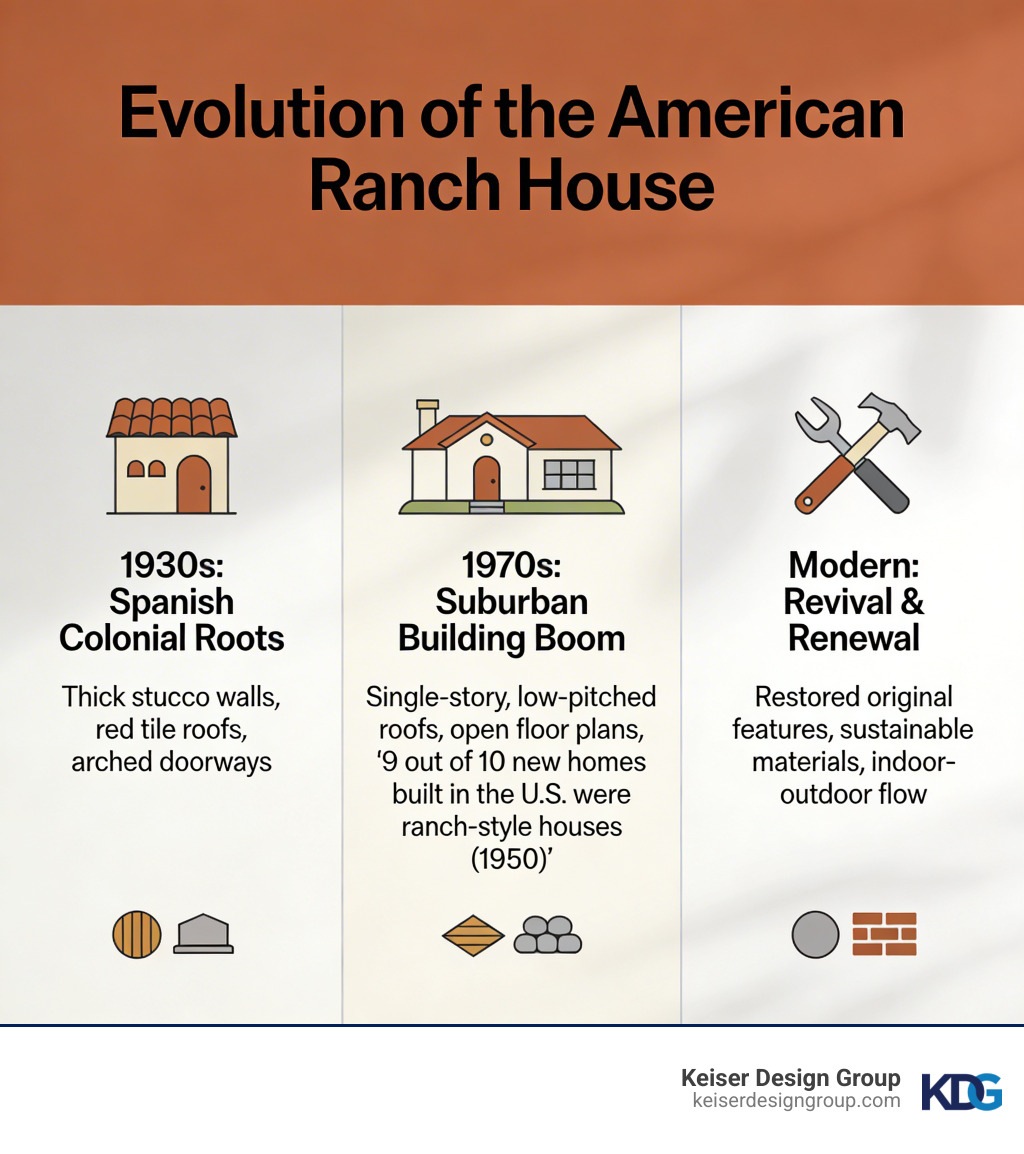
These homes exploded in popularity after World War II. Veterans returning home needed affordable, practical housing fast. The result? A suburban building boom unlike anything the country had seen before. By 1950, 9 out of 10 new homes built in the U.S. were ranch-style houses. Between 1950 and 1970, roughly 20 million homes were built — and about 70% of them were ranches.
Today, interest in these homes is surging again. Buyers love their accessibility, their clean aesthetic, and the way they blur the line between inside and outside.
I’m Dan Keiser, founder and principal architect of Keiser Design Group, with over 3 decades of experience designing and renovating residential spaces – including mid century modern ranch homes – across Ohio and beyond. Below, I’ll walk you through 10 design elements worth stealing from this iconic style.
Defining the Mid Century Modern Ranch Home
Mid-century modern ranch homes are characterized by their horizontal orientation, low-slung rooflines, and seamless integration with the outdoors, distinguishing them from traditional ranches through minimalist ornamentation and expansive use of glass. While a standard ranch can read as a straightforward suburban form, the mid-century modern version—often called the Atomic Ranch—offers a more design-forward expression of the style.
The Ranch-style house history and development shows that these homes have deep roots in the Spanish Colonial “ranchos” of California. In the 1930s, architect Cliff May began “rebelling” against the boxy, formal houses of the era. He wanted homes that felt like a California summer—informal, level with the ground, and full of cross-ventilation.
Later, builders like Joseph Eichler took this vision to the next level. Eichler was inspired by Frank Lloyd Wright’s Usonian designs and began mass-producing tract homes that featured post-and-beam construction and walls of glass. These weren’t just houses; they were a lifestyle. They utilized mid century modern house designs to create privacy from the street while opening up completely to the backyard.
Key hallmarks include:
- Horizontal Lines: Everything about these homes emphasizes the horizon, helping the structure hug the earth.
- Low-Slung Roofs: Usually flat or very low-pitched gables with deep overhanging eaves.
- Open Floor Plans: Walls were removed between the kitchen, dining, and living areas to foster a sense of togetherness.
- Indoor-Outdoor Connection: Large sliding glass doors and floor-to-ceiling windows make the backyard feel like an extra room.

10 Design Elements to Steal for Your Mid Century Modern Ranch
Incorporating these ten elements—ranging from butterfly rooflines to clerestory windows—allows homeowners to capture the “atomic” aesthetic while improving the functionality and light flow of a single-level residence. Whether you are building from scratch or looking for a modern house design guide to refresh an existing property, these features are the “must-haves” of the style.
- Clerestory Windows: These are small, horizontal windows placed high on the wall, often right under the roofline. They provide natural light and views of the sky while maintaining total privacy from neighbors.
- Butterfly Roofs: This V-shaped roofline mimics the wings of a butterfly in flight. It’s a bold, “Googie” style choice that allows for higher windows at the edges of the home.
- Floor-to-Ceiling Glass: To truly achieve that “rambling pavilion” feel, replace solid rear walls with glass. This brings the outside in and makes a small footprint feel massive.
- Natural Materials: Use a mix of wood siding, brick, and stacked stone. The goal is to use materials that feel organic and grounded.
- Exposed Post-and-Beam: Instead of hiding the “bones” of the house behind drywall, let the structural beams show. This adds a sense of rhythm and height to the interior.
- Recessed Entries: A protected, tucked-away front door creates a sense of mystery and mid-century sophistication.
- Attached Carports: Unlike a heavy, enclosed garage, a carport maintains the light, airy aesthetic of the home while showcasing the family vehicle as a piece of “modern machinery.”
- L-Shaped or U-Shaped Layouts: These shapes create a natural courtyard, perfect for a private pool or garden that is protected from the wind and street noise.
- Stacked Stone Fireplaces: A massive, floor-to-ceiling fireplace in the center of the living room acts as the “anchor” for the entire open floor plan.
- Linear Simplicity: Avoid “fussy” trim or ornate moldings. Every line should be clean, purposeful, and horizontal.
| Feature | Traditional Ranch | Atomic/MCM Ranch |
|---|---|---|
| Roof Style | Standard Gable/Hip | Flat, Butterfly, or Low-Slope |
| Windows | Small/Double-hung | Large Picture/Clerestory/Glass Walls |
| Floor Plan | Divided/Formal | Open-Concept/Informal |
| Materials | Uniform (all brick/siding) | Mixed (Stone, Wood, Glass) |
Exploring popular residential architectural styles reveals that the Atomic Ranch is about more than just looks—it’s about a functional, linear simplicity that still feels warm and inviting.
Modernizing Your Mid Century Modern Ranch Home
Updating mid century modern ranch homes requires a careful balance between preserving defining architectural elements, such as exposed beams and walnut cabinetry, and introducing modern performance upgrades. In our residential service work at Keiser Design Group, we often see clients who love the vibe of their 1950s home but struggle with the 1950s functionality.
Modernization often starts in the kitchen. In the mid-20th century, kitchens were often small, U-shaped rooms tucked away from the guests. Today, we open those spaces up, adding large peninsulas with casual seating. We also look for ways to add “modern luxuries” like walk-in pantries and master suites—features that were rarely prioritized in original tract homes.
Preserving the Bones of Mid Century Modern Ranch Homes
Maintaining the structural integrity and aesthetic hallmarks of mid century modern ranch homes involves restoring original wood ceilings and stone veneers while carefully hiding modern electrical and HVAC upgrades. If your home has original tongue-and-groove wood ceilings, do everything you can to save them! These are the soul of the house.
When we talk about mid-century-modern-house-designs, preservation is key. If you have a stone veneer fireplace, don’t paint it! Clean it and ensure it is properly sealed to prevent water intrusion. Authentic restoration means honoring the materials that made the home special in the first place, like horizontal-grain walnut cabinetry and slate flooring.
Interior Layouts for the Modern Lifestyle
Modern interior layouts for ranch homes prioritize the removal of non-load-bearing walls to create a “rambling pavilion” feel. This is where the kitchen, dining, and living areas flow together and open directly onto rear patios through sliding glass doors.
We often suggest:
- Removing “dead-end” hallways: Reconfigure space to improve the flow.
- Widening entries: Make the transition between rooms feel seamless.
- Accessible Design: Because ranches are single-story, they are perfect for “aging-in-place.” We can design wider hallways and walk-in showers that look sleek and modern while being easy for everyone to use.
If you are unsure where to start, you can always contact us for guidance on which walls are safe to move and how to maximize your natural light.
Overcoming Challenges in Mid Century Modern Ranch Designs
The primary challenges of owning a mid-century ranch, such as poor thermal performance and limited storage, can be addressed through the installation of rigid foam roof insulation, triple-pane windows, and the creative reconfiguration of underutilized spaces.
Many original MCM homes were built with “thermal bridging” in mind—the aesthetic of exposed beams often meant less insulation. Additionally, the massive glass walls that we love can be a major source of heat loss in the winter and heat gain in the summer. However, with modern technology, these issues are easily solved.
Improving Efficiency in Mid Century Modern Ranch Homes
Improving the energy efficiency of mid century modern ranch homes is best achieved by replacing original single-pane picture windows with insulated frames and adding thick, high-quality insulation to the roof.
In our residential service projects, we recommend:
- Triple Glazing: Modern triple-pane windows can look exactly like the originals but offer incredible insulation.
- Rigid Foam Insulation: Since many ranches have flat or low-slope roofs, adding a thick layer of rigid foam on top of the roof deck (under the new membrane) is the best way to keep the house comfortable.
- Radiant Floor Heating: This is a classic MCM feature that is still one of the most efficient ways to heat a home today, especially if you have concrete or stone floors.
Addressing Maintenance and Space Constraints
Addressing space constraints in older ranch models often involves converting original carports into living space or reallocating square footage from oversized hallways. Original MCM closets were notoriously small—usually just a 6-foot wide reach-in. By reconfiguring an adjacent breakfast nook or an oversized laundry room, we can create the walk-in closets and pantries that modern families need.
Maintenance is also a factor. Stone veneer and brick require periodic sealing to prevent moisture control issues. If your home has a flat roof, ensuring proper drainage is the most important thing you can do to protect your investment.
Frequently Asked Questions about MCM Ranches
What is the difference between a traditional ranch and an atomic ranch?
A traditional ranch often features more conservative, boxy designs with smaller windows and a focus on being “economical.” An atomic ranch is a specific subset of mid-century modern design. It incorporates progressive modernist elements like butterfly roofs, floor-to-ceiling glass, and open-concept “atomic age” motifs. While all atomic ranches are ranches, not all ranches are “atomic.”
Why are mid-century modern ranch homes popular again today?
Their popularity has surged because the single-story, open-concept layout is incredibly versatile. It is ideal for young families who want to keep an eye on the kids while cooking dinner, and it’s equally perfect for older adults who want to avoid stairs. Plus, the modern residential architecture aesthetic fits perfectly with today’s minimalist interior design trends.
How can I improve the curb appeal of a standard ranch to look more mid-century modern?
You can enhance the mid-century aesthetic by:
- Adding clerestory windows to a high-pitched wall.
- Replacing old vinyl siding with horizontal lap siding or smooth panels.
- Using a bold pop of color (like turquoise, orange, or lime green) on a recessed front door.
- Incorporating geometric, minimalist landscaping with ornamental grasses and river rock.
Conclusion
At Keiser Design Group, we believe that mid century modern ranch homes represent the perfect blend of historical charm and modern livability. Whether you are in Columbus, Indianapolis, or Nashville, these homes offer a unique opportunity to live in a space that is both stylish and grounded.
Our team specializes in preserving the defining character of mid century modern ranch homes while adapting them to support your goals, lifestyle, and long-term use. We guide clients through a clear, collaborative process that brings confidence to every phase of design and renovation.
Ready to modernize or restore your mid century modern ranch home? Contact Keiser Design Group to start a conversation about a residential design approach that respects the character of your home while improving how you live in it.