Why Knoxville TN Planning Architects Matter Right Now
Knoxville TN planning architects help clients turn growth, zoning requirements, infrastructure needs, and community priorities into practical architectural planning decisions. As Knoxville continues to grow, skilled Knoxville TN planning architects are increasingly important for responsible site planning, adaptive reuse, housing, and infrastructure-aligned development.
Here are the leading types of firms to look for:
- Full-service architecture and planning firms with public sector experience
- Firms with local Knoxville roots and knowledge of neighborhoods, zoning, and historic districts
- Teams with sustainable design and professional licensing credentials for code-compliant design
- Firms experienced in community engagement and large-scale land use planning
- Practices with a track record in housing, transportation, and infrastructure projects
Knoxville’s long-range planning efforts create a clear need for Knoxville TN planning architects who can align private development goals with public planning priorities.
I’m Dan Keiser, Principal Architect at Keiser Design Group, and I’ve spent more than 30 years helping clients move from early planning questions to clear, buildable design solutions. My hands-on approach to every project phase gives clients a clear, stress-free path from vision to finished space.
The Role of Knoxville TN planning architects in Modern Urbanism
Professional architects connect long-range community goals with the buildings, sites, and public spaces people use every day. In a city like Knoxville, which has seen a dramatic turnaround from decades of slow population change to adding 16,000 new residents in the last ten years, the stakes for smart urbanism have never been higher.
When we look at modern urbanism, we aren’t just talking about individual buildings. We are talking about the integration of land use, transportation, and infrastructure. Knoxville TN planning architects must ensure that new developments accommodate this influx of people while preserving the unique, historic character that makes East Tennessee special. This involves a deep understanding of the urban context—knowing how a new commercial hub affects the traffic flow of a neighboring residential street or how a public park can serve as a catalyst for economic revitalization.
Sustainable Growth and Infrastructure
For Knoxville TN planning architects, sustainable growth means designing spaces that respond to long-term infrastructure, environmental, and community needs. Architects today are tasked with creating infrastructure frameworks that are resilient to environmental changes and aging systems. This includes addressing the shrinking urban tree canopy and finding innovative ways to utilize underutilized commercial corridors.
One of the most effective strategies we employ is adaptive reuse. IInstead of replacing Knoxville’s historic fabric, planning architects can evaluate existing buildings for thoughtful reuse, preservation-sensitive upgrades, and renewed community purpose. This approach not only saves resources but also maintains the “soul” of the neighborhood. For those looking to revitalize existing spaces, our commercial services focus on creating functional, inspired environments that respect the local context while pushing for modern efficiency.
Strategic Alignment for Knoxville TN planning architects
To be successful in today’s regulatory environment, Knoxville TN planning architects must align their designs with a variety of city-led strategic initiatives. Knoxville is currently operating under several key frameworks that dictate how and where development should happen.
- Housing Strategy & Middle Housing Scan: With housing prices and rents reaching record highs, the city is focused on “middle housing”—think duplexes, townhomes, and courtyard apartments—that fill the gap between single-family homes and large apartment complexes.
- Advance Knox Priority Investment Areas: This initiative identifies where the county should focus its resources to encourage growth. You can learn more about these specific zones at Advance Knox Priority Investment Areas.
- Vision Zero Action Plan: A critical component of modern planning is public safety. This plan aims to eliminate traffic fatalities and severe injuries, meaning architects must design streets and site entrances that prioritize pedestrian and cyclist safety.
- Corridor Studies: These studies look at major thoroughfares to determine how they can be transformed from high-speed transit routes into vibrant, mixed-use spaces.
By staying aligned with these initiatives, Knoxville TN planning architects can help projects move through review more clearly while supporting the city’s long-term planning direction.
Community Impact of Knoxville TN planning architects
The work of Knoxville TN planning architects extends beyond drawings; it shapes how residents experience neighborhoods, transportation, housing, and public spaces. One of the most significant factors in Knoxville’s current planning landscape is the presence of the University of Tennessee. With Fall 2025 enrollment of 40,421 students, the University of Tennessee, Knoxville creates significant planning considerations for housing, mobility, and neighborhood connectivity. Knoxville TN planning architects must account for this massive student population when designing housing, transit, and retail spaces, ensuring that the “Town and Gown” relationship remains harmonious.
Connected Neighborhoods and Public Safety
A well-planned city is a connected city. We believe that architecture should foster a sense of community by creating walkable, safe environments. This means focusing on pedestrian connectivity—ensuring that a resident in South Knoxville can safely navigate to the Urban Wilderness or that a student can walk from a rental property to a grocery store without needing a car for every trip.
Our residential services are designed with these community impacts in mind. Whether we are working on a single-family home or a larger development, we prioritize how the building interacts with its surroundings. Does it encourage neighborly interaction? Does it provide adequate lighting for safety? These are the questions that drive impactful design.
Navigating the 2050 Comprehensive Plan Objectives
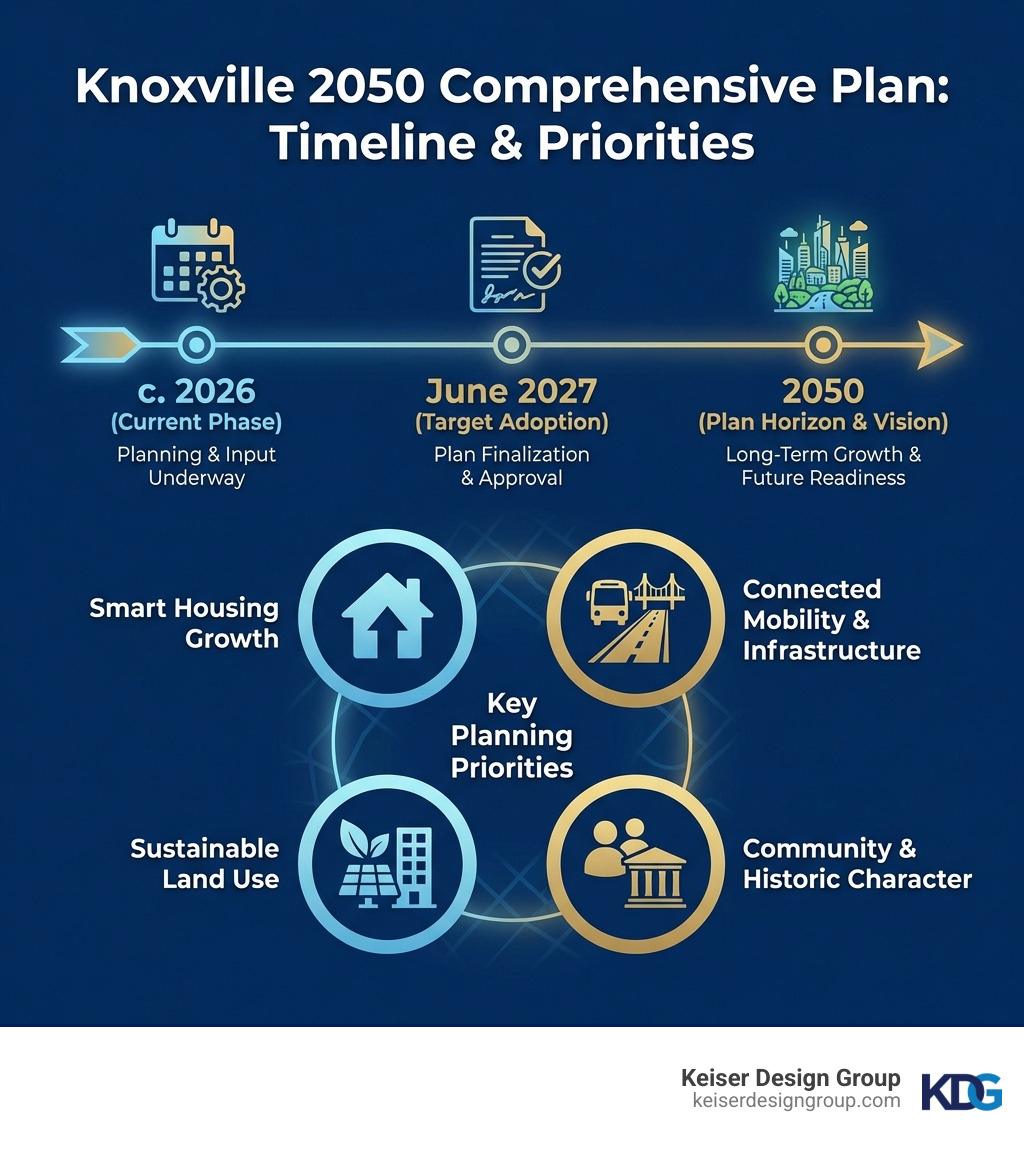
The City of Knoxville is currently in the process of developing a new Comprehensive Plan, a data-driven roadmap that will guide land use, transportation, and infrastructure through the year 2050. The plan should be framed as a practical roadmap for land use, transportation, infrastructure, and development decisions. With a target adoption date of June 2027, the plan seeks to address modern challenges head-on.
Key Objectives of the 2050 Plan
- Sustainable Development: Implementing green building practices and preserving natural resources to ensure Knoxville remains a healthy place to live for the next 25 years.
- Resilient Infrastructure: Upgrading aging systems to handle increased demand and environmental stressors.
- Transportation Planning: Transportation planning should consider roads, public transportation, sidewalks, bicycle routes, and freight movement as part of a connected regional system. A major part of this is the Draft Mobility Plan 2050, which outlines how people will move through the region.
- Capital Improvement Programs (CIP): Creating a clear framework for how the city will fund and prioritize major projects, from new bridges to public safety complexes.
- Implementation Roadmap: Providing a step-by-step guide for zoning updates and policy changes to turn the plan’s vision into reality.
Criteria for Selecting Top-Tier Architecture Firms
Public-sector planning work typically evaluates firms based on qualifications, approach, relevant experience, project management, and local understanding. They use a rigorous 100-point scoring system to ensure they are hiring the best-qualified teams. If you are a developer or a business owner looking for Knoxville TN planning architects, you should use similar criteria to evaluate your partners.
RFP Evaluation Criteria Breakdown
| Criteria | Points | What It Means |
|---|---|---|
| Project Approach | 30 pts | Does the firm have a clear, innovative strategy for the specific project? |
| Team Qualifications | 20 pts | Do the individuals have the right professional licenses and sustainable design certifications? |
| Experience | 20 pts | Has the firm successfully completed similar large-scale or public projects? |
| Project Management | 15 pts | Can they manage schedules, coordination, communication, and stakeholder expectations with consistency? |
| Local Knowledge | 15 pts | Do they understand Knoxville’s unique geography, history, and community needs? |
Technical expertise is a baseline. At Keiser Design Group, we pride ourselves on meeting these high standards, including maintaining national professional standards and emphasizing sustainable practices. You can explore the full range of our architectural services to see how we apply these professional standards to every project we touch.
The Importance of Local Knowledge in Neighborhood Development
Local knowledge matters because Knoxville’s geography, historic districts, neighborhoods, and development patterns require site-sensitive architectural planning. The physical constraints of East Tennessee—the ridges, the rivers, and the historic fabric—require a site-sensitive approach. A firm that doesn’t understand the nuances of the Fourth and Gill historic district or the strategic importance of the South Knoxville waterfront will struggle to create a design that the community actually supports.
Navigating Local Constraints
Firms with deep roots in the region understand the “Urban Wilderness” initiatives and how to integrate modern amenities like the new Covenant Health Park (home to the Knoxville Smokies) into the existing urban grid. They know how to work with the Historic Zoning Commission and the Design Review Board to ensure that a project moves forward without unnecessary delays.
At Keiser Design Group, we often engage in mission-minded design, which focuses on projects that serve a greater community purpose. This requires more than just technical skill; it requires empathy and a commitment to resilient design that benefits everyone, not just the property owner. By understanding local review processes, preservation priorities, and community expectations, local experts can help complex projects move from early vision to practical design direction.
Frequently Asked Questions
What is the deadline for the Knoxville Comprehensive Plan RFP?
Proposals for the new Comprehensive Plan must be submitted to Knoxville-Knox County Planning by 4:00 p.m. ET on Thursday, January 8, 2026. The city requires a thorough submission, including eight hard copies and one digital copy, delivered to their main office. This timeline ensures the city has ample time to review qualifications before the 2027 adoption target.
How does population growth affect Knoxville’s planning needs?
With 16,000 new residents joining the community over the last decade, Knoxville is facing unprecedented pressure on its housing market and infrastructure. This growth has led to record-high housing prices and increased traffic congestion. Planning architects can help evaluate middle housing options, such as townhomes and small apartments, while supporting transit-oriented and accessible neighborhood design.
What qualifications are required for planning architects in Tennessee?
Top-tier Knoxville TN planning architects typically hold several key credentials. This includes national professional certification, which demonstrates a high level of professional standards and allows for easier licensure across state lines. Additionally, recognized green building credentials are vital for firms focused on sustainability. For public sector work, experience with municipal projects—such as public safety complexes or university facilities—and a working knowledge of federal housing programs and historic tax credits are highly prioritized.
Conclusion
Successful architectural planning requires patience, clear communication, technical expertise, and a design process rooted in community context. It requires a partner who understands that great design starts with a great process—one that involves listening to the community, respecting the history of the land, and looking forward to the needs of the year 2050. Whether you are looking to develop a new commercial hub, revitalize a historic neighborhood, or build a custom residence, the right architectural guidance makes all the difference.
At Keiser Design Group, we provide a tailored approach to every project. We help clients navigate zoning, permits, planning reviews, and design decisions through a clear, collaborative process that keeps the project moving with confidence. We are proud to serve the Knoxville and Knox County area, helping to build a future that is as vibrant and resilient as the people who live here.
Ready to work with experienced Knoxville TN planning architects? Contact Keiser Design Group to start a clear, collaborative planning and design process.