The Strategic Process of Architectural Planning
Designing a house of worship is unlike any other commercial project. It requires a deep understanding of how a specific community gathers, prays, and serves. At Keiser Design Group, we believe the process must begin with a comprehensive needs assessment. This isn’t just about how many seats you need in the pews; it’s about how your ministry functions on a Tuesday morning just as much as a Sunday service.
Working with a building committee is a critical first step. This group acts as the bridge between the congregation’s vision and our architectural expertise. We often recommend starting with a feasibility study to determine if your current site can support your dreams or if a new location is necessary. This study looks at site constraints, local zoning laws in cities like Columbus or Indianapolis, and preliminary budget alignments.
A well-executed Church Construction Planning Guide serves as the roadmap for the entire project. This guide helps committees navigate the transition from “what we want” to “what we can build.” By hiring a specialized Architect for Churches, you ensure that the person drawing the lines understands the liturgical flow and the unique building codes that apply to religious assemblies.
Planning for Future Growth and Phased Construction
One of the most common mistakes in Church Building Design is building “just for today.” If your congregation is growing, your building should be an engine for that growth, not a bottleneck. We advocate for master planning that incorporates scalability from day one.
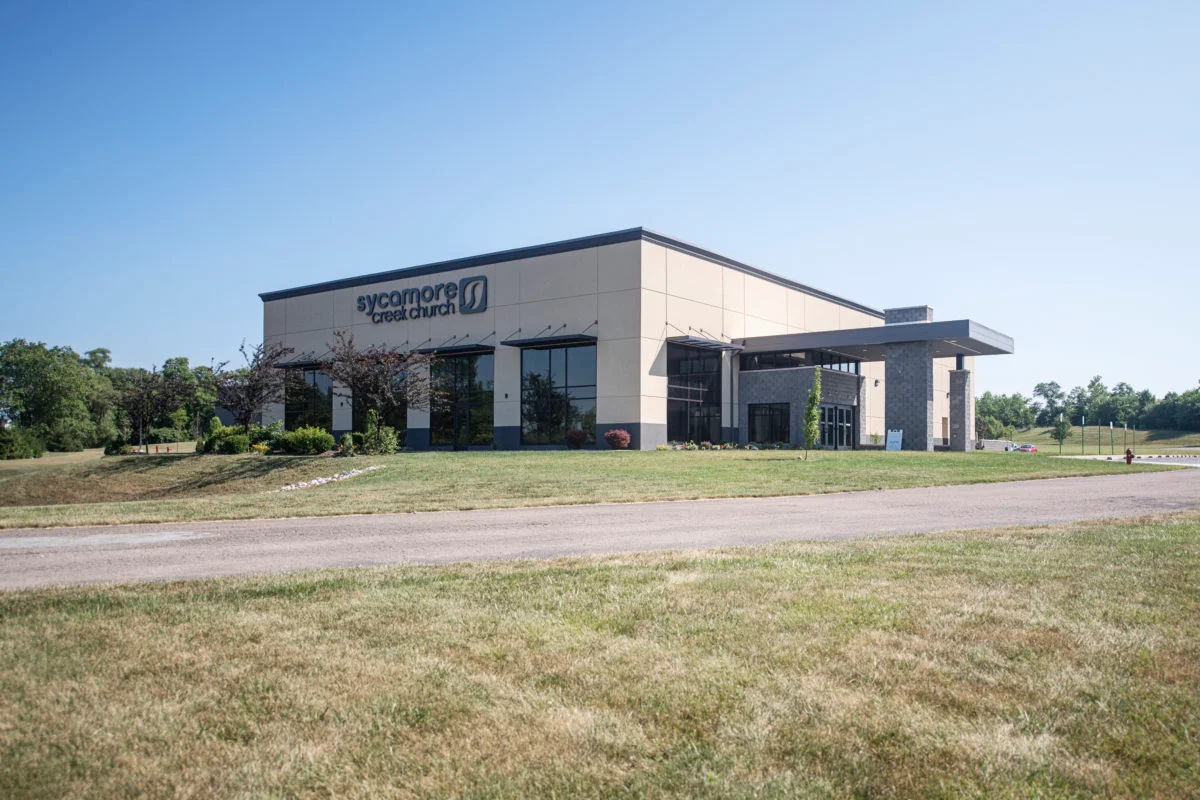
Phased construction allows a church to expand as funding becomes available. For example, Phase One might focus on the sanctuary and essential restrooms, while Phase Two adds a dedicated Sycamore Creek Church Worship Addition for youth ministries or a fellowship hall. This approach maintains financial stewardship while providing immediate utility. By planning the full build-out early—such as utility routing, drainage strategy, and future circulation patterns—churches can preserve design continuity and avoid fragmented expansions.
Core Spaces and Functional Requirements for Modern Church Building Design
Modern ministry requires more than just a sanctuary. Today’s church buildings are community hubs that often operate seven days a week. In many modern churches, the lobby functions as a primary point of welcome, connection, and orientation before people ever enter the sanctuary.
A spacious, naturally lit lobby can serve as a flexible gathering space where connection happens before, between, and after services. It should be designed for high traffic flow and easy navigation. Beyond the lobby, we focus on several core areas:
- Sanctuary Capacity: Balancing intimacy with growth potential. Sightlines are paramount; no one should feel “left out” of the service due to a poorly placed column.
- Children’s Ministry: Security and engagement are the priorities here. Modern Church Design Childrens Ministry spaces require secure check-in points and durable, vibrant environments.
- Administrative Offices: These should be accessible but provide enough privacy for counseling and focused work.
- Fellowship Halls: These multi-purpose spaces are the workhorses of the facility, hosting everything from potlucks to community meetings.
By creating Mission Minded Worship Spaces, we ensure that the architecture serves the people, rather than forcing the people to adapt to a rigid building.
Integrating Technology and AV Systems in Church Building Design
In the 21st century, technology is an integral part of the liturgy. Whether you are in Nashville or Cleveland, your congregation expects clear audio and visible media. Church Building Design must account for these systems during the structural phase, not as an afterthought.
Acoustics are the most critical technical factor. A room designed for a pipe organ requires a very different sound resonance than a room designed for a contemporary worship band. We look at sound reinforcement and the placement of digital screens to ensure visual connectivity from every seat. General facility guidelines can be useful, but each worship environment still needs design decisions tailored to its congregation, liturgy, acoustics, and ministry priorities. Lighting control is another essential; the ability to dim house lights while highlighting the altar or stage helps direct the congregation’s focus and enhances the spiritual atmosphere.
Balancing Aesthetics and Budget in Church Building Design
Every church needs a building that reflects its mission, supports its ministry, and uses design decisions responsibly. Achieving high-end Architectural Design Churches without breaking the bank requires strategic material choices.
Pre-engineered metal buildings can be one option for churches that need clear-span worship areas, efficient structural planning, and adaptable interior layouts. They offer speed and cost-efficiency. However, the “metal building” look can be softened with masonry veneers, glass, and creative rooflines to ensure it looks like a place of worship rather than a warehouse.
When budgeting, General Contractor (GC) fees typically range from 10-20% of the total project cost. This fee covers the complex task of coordinating sub-trades, managing timelines, and ensuring the project meets all safety standards. Prioritizing durable, welcoming finishes in high-touch spaces such as the lobby and sanctuary helps reinforce the church’s identity while supporting practical daily use.
Architectural Styles and the Worship Experience
The architecture of a church is a “sermon in stone.” It tells the world what you believe before a single word is preached. There is a wide spectrum of styles, and choosing the right one is about aligning the building with your congregation’s identity.
- Traditional: Often featuring cross-shaped layouts, high vaulted ceilings, and steeples. These designs emphasize the vertical focus of worship, pointing the mind toward heaven.
- Modern/Contemporary: These often focus on flexibility and community. They may look more like civic centers or theaters, prioritizing proximity to the stage and multi-functional use.
- Orthodox/Liturgical: These styles often follow strict On the Biblical Roots and Requirements of Church Design patterns, using domes to represent the unity of God’s Kingdom or specific altar placements to reflect heavenly worship.
Whether you are Reimagining Sacred Spaces or building a brand-new traditional cathedral, the goal is the same: Church Design: How Architecture Shapes Worship. The physical environment should remove distractions and facilitate a connection with the divine.

Architectural Interior Planning and Congregational Engagement
The “feel” of a room is dictated by its architectural interior elements. Our architectural team focuses on color psychology and material warmth to create an inviting atmosphere. For example, using natural wood can add a sense of tradition and organic beauty, while cooler tones and metals might feel more modern and sleek.
Seating arrangements are a major factor in engagement. While traditional pews offer a classic look, theater-style seating or interlocking chairs provide better sightlines and flexibility for other events. Natural light is perhaps our most powerful tool; it reduces energy costs and provides a sense of peace. We carefully place windows to avoid glare on screens while still allowing the congregation to feel connected to the world God created outside. For more in-depth insights, our Church Architecture Pastor Guide offers a deep dive into how these elements impact ministry.
Site Planning and Regulatory Compliance
Successful church building design depends on the site as much as the building itself. Site planning involves much more than just where to put the building. We must consider:
- Zoning and Permitting: Every city—from Austin to Columbus—has specific rules for “religious assembly” land use.
- Parking Ratios: Most municipalities require a specific number of parking spaces based on the sanctuary’s maximum occupancy.
- ADA Accessibility: This is not just a legal requirement; it’s a ministry requirement. Every part of your church should be accessible to everyone, regardless of physical ability.
- Drainage and Landscaping: Managing stormwater is a major part of modern construction.
| Factor | Consideration | Impact on Project |
|---|---|---|
| Drainage | Detention ponds vs. underground systems | Significant impact on site cost and usable land. |
| Traffic Flow | Entry and exit points | Affects neighbor relations and safety during peak times. |
| Zoning | Setbacks and height limits | Dictates the maximum size and shape of the building. |
| Landscaping | Buffers and aesthetics | Helps the building blend into the local community. |
Frequently Asked Questions about Church Building Design
What role does a General Contractor play in a church building project?
A General Contractor coordinates the construction process, manages trade partners, supports schedule alignment, and helps ensure the project is built according to approved plans and code requirements. A strong contractor relationship helps protect the integrity of the design, improve coordination, and support code-compliant execution.
How does phased construction benefit a growing congregation?
Phased construction is a practical tool for aligning current ministry needs with long-term facility growth. It allows a church to begin with essential ministry spaces while preserving a clear master plan for future expansion. This ensures that Phase One doesn’t have to be torn down or heavily remodeled when Phase Two begins. It provides immediate utility for the congregation while maintaining a long-term vision for expansion.
What role does natural light play in modern sanctuary design?
Natural light is essential for creating a welcoming, spiritual atmosphere. Architecturally, it helps define the “mood” of the space—whether it’s bright and energetic for contemporary worship or soft and diffused for traditional reflection. Practically, it improves energy efficiency and reduces the need for artificial lighting during daytime hours. We use specialized glass and strategic window placement to minimize glare and heat gain.
Conclusion
At Keiser Design Group, we understand that your church building is more than just a project; it is a tool for your mission. Whether you are in Ohio, Indiana, Kentucky, or beyond, our team is dedicated to creating tailored church building design solutions through a clear, collaborative process that honors your mission and vision.
From the first sketch to the final ribbon-cutting, we walk beside you to ensure your facility flourishes for years to come. Ready to create a worship space that supports your mission today and grows with your congregation tomorrow Contact our architectural team today to start a conversation about your Church Building Design.