What to Look for in a Texas Architecture Firm in 2026
Choosing a texas architecture firm starts with understanding which project sectors, design standards, and communication practices matter most for your goals. Here are the primary sectors and standards of excellence to look for:
| Sector | Primary Focus | Notable Standards |
|---|---|---|
| Institutional | K-12, Higher Ed, Sports | Safety, Bond Planning, Flexibility |
| Commercial | Office, Mixed-Use, Retail | ESG Standards, Brain-Healthy Design |
| Residential | Luxury Custom, Multi-Family | Site-Specific, Local Materiality |
| Civic | Historic Restoration, Public Space | Adaptive Reuse, Cultural Preservation |
| Healthcare | Clinical Workflows, Wellness | Evidence-Based Design, Patient Outcomes |
A texas architecture firm works within a fast-changing building environment shaped by population growth, climate demands, local codes, and regional design expectations. Texas growth continues to shape demand for thoughtful residential, commercial, civic, educational, and mission-minded design. Cities such as Austin, Dallas, Houston, and San Antonio continue to influence how owners evaluate architectural expertise, from code familiarity to climate-responsive planning.
Choosing the right firm isn’t just about aesthetics. It is about finding professionals who understand Texas-specific challenges: intense heat, complex zoning codes, diverse terrain, water management concerns, and a building culture that blends deep regional tradition with bold modernism. For owners, developers, schools, churches, and businesses, the right architectural partner helps reduce risk early, clarify priorities, and create a smoother path from concept to construction.
This guide gives you a clear, honest look at the standards shaping Texas architecture right now – covering specialties, philosophies, and what makes a firm worth considering. It is especially useful if you are comparing firms based on project type, design discipline, technical planning, and their ability to handle the realities of building in Texas rather than simply presenting attractive renderings.
When evaluating any texas architecture firm, focus on a few essentials:
- Relevant experience in your project sector
- Knowledge of local permitting and code requirements
- A clear design process with strong communication
- Climate-responsive design strategies for heat, sun, and storm events
- A portfolio that shows both creativity and technical discipline
Texas design conversations increasingly center on resilience, sustainability, heat response, and building performance, which makes authoritative standards important when evaluating a texas architecture firm. Resources such as the AIA 2030 Commitment help define measurable approaches to lower-carbon design and building performance.
I’m Dan Keiser, Founder and Principal Architect of Keiser Design Group. My experience guiding clients through design and construction decisions informs how I evaluate the qualities that matter in a texas architecture firm. I have spent decades guiding clients through complex design and construction decisions, so you can trust this review to cut through the noise and focus on what actually matters.
For clients in Texas and beyond, Keiser Design Group brings that same practical, client-first mindset to every engagement. Our team believes strong architecture should solve problems, support long-term goals, and make the process feel straightforward rather than overwhelming.
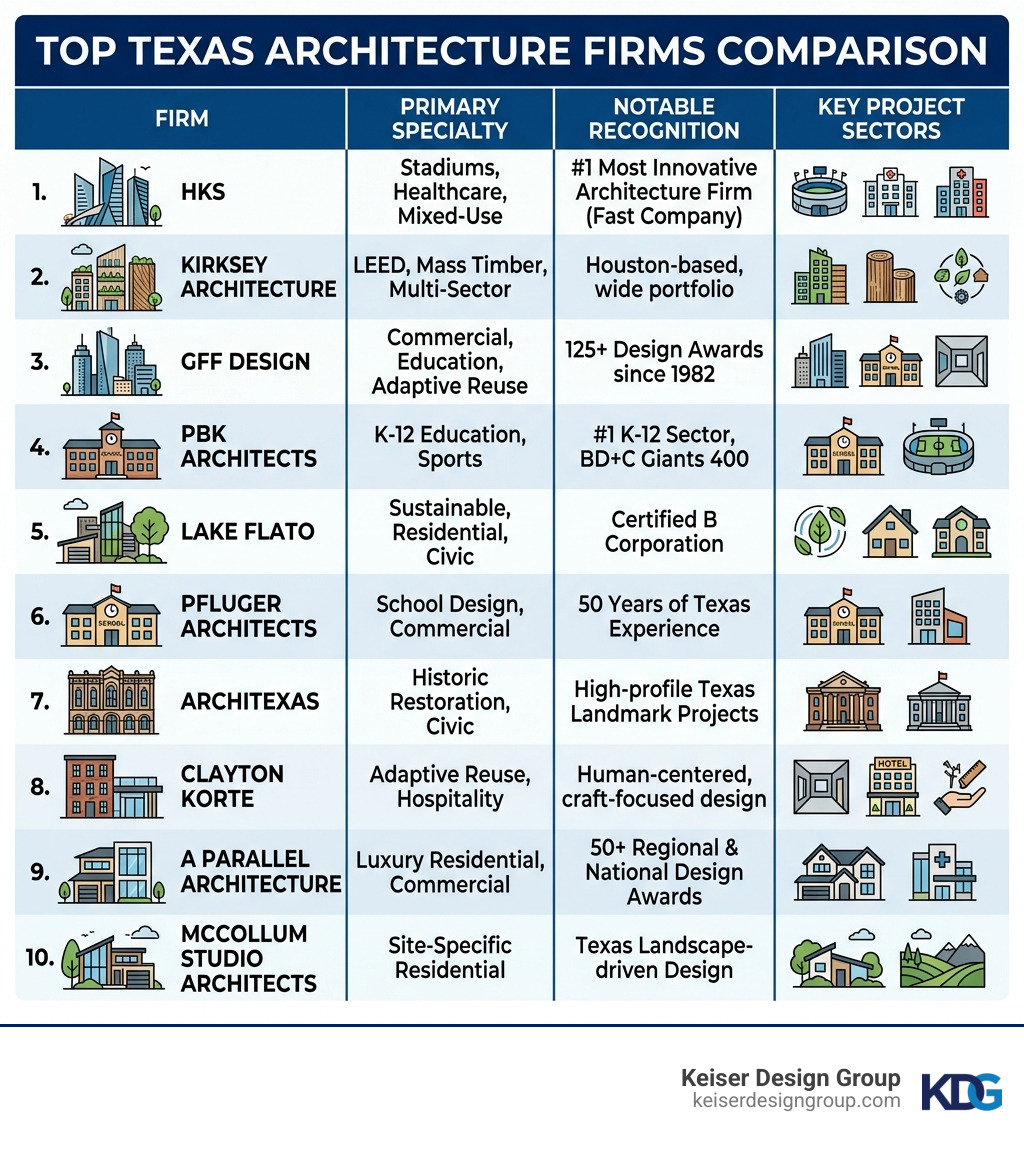
Leading Innovations in the Texas Architecture Firm Landscape
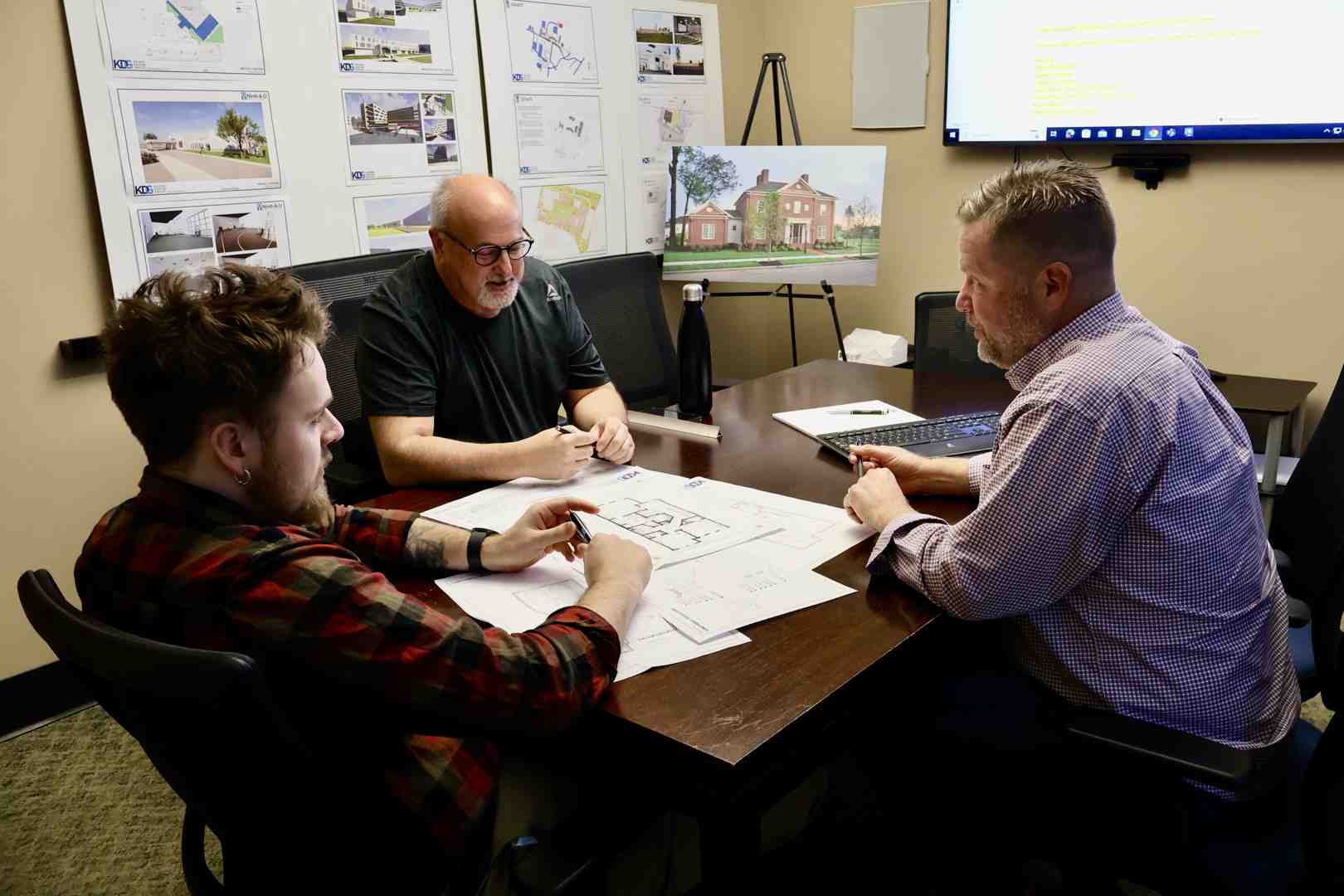
A leading texas architecture firm should be building smarter, not just bigger. In 2026, the architectural landscape in Texas is defined by performance, resilience, and practical outcomes for clients who need buildings that work well over time.
A major shift is the priority now placed on Environmental, Social, and Governance (ESG) standards. This is not just a trend; it is a practical commitment to creating buildings that support organizational goals, occupant well-being, and community impact. By aligning with initiatives like the AIA 2030 Commitment, leading firms are actively moving toward lower-carbon design and more accountable project outcomes.
One innovation shaping a modern texas architecture firm is research-informed design that considers how buildings affect focus, stress, comfort, and daily use. Research into how the built environment affects stress, focus, and cognitive performance is influencing how offices, schools, and healthcare spaces are planned. When we look at commercial services, this research-driven approach can improve employee experience, support retention, and make workplaces more functional for the people who use them every day.
Texas is also seeing a strong rise in the use of mass timber for select building types. This sustainable alternative to conventional structural systems is gaining attention because it can reduce embodied carbon while delivering a warm, durable aesthetic. In the right application, mass timber also complements the regional character many owners want from a project without sacrificing modern performance goals.
Another key innovation is urban heat response. In major metros like Dallas and Austin, architects are working to reduce the heat island effect through reflective roofing, shaded outdoor areas, better glazing strategies, and increased landscape integration. These strategies can support environmental responsibility while improving comfort for occupants and visitors.
Clients should also pay attention to how firms approach technology and planning. The strongest teams are using early-stage analysis to make smarter decisions about:
- Solar orientation and daylight control
- Envelope performance in extreme heat
- Flexible layouts that extend a building’s useful life
- Material durability under intense sun and weather exposure
- Site planning that supports drainage, access, and future growth
For Texas owners, innovation matters most when it translates into fewer surprises, stronger decision-making, and a building that performs well in real conditions. That is the standard sophisticated clients should expect from any firm under consideration.
Specialized Sectors for a Texas Architecture Firm
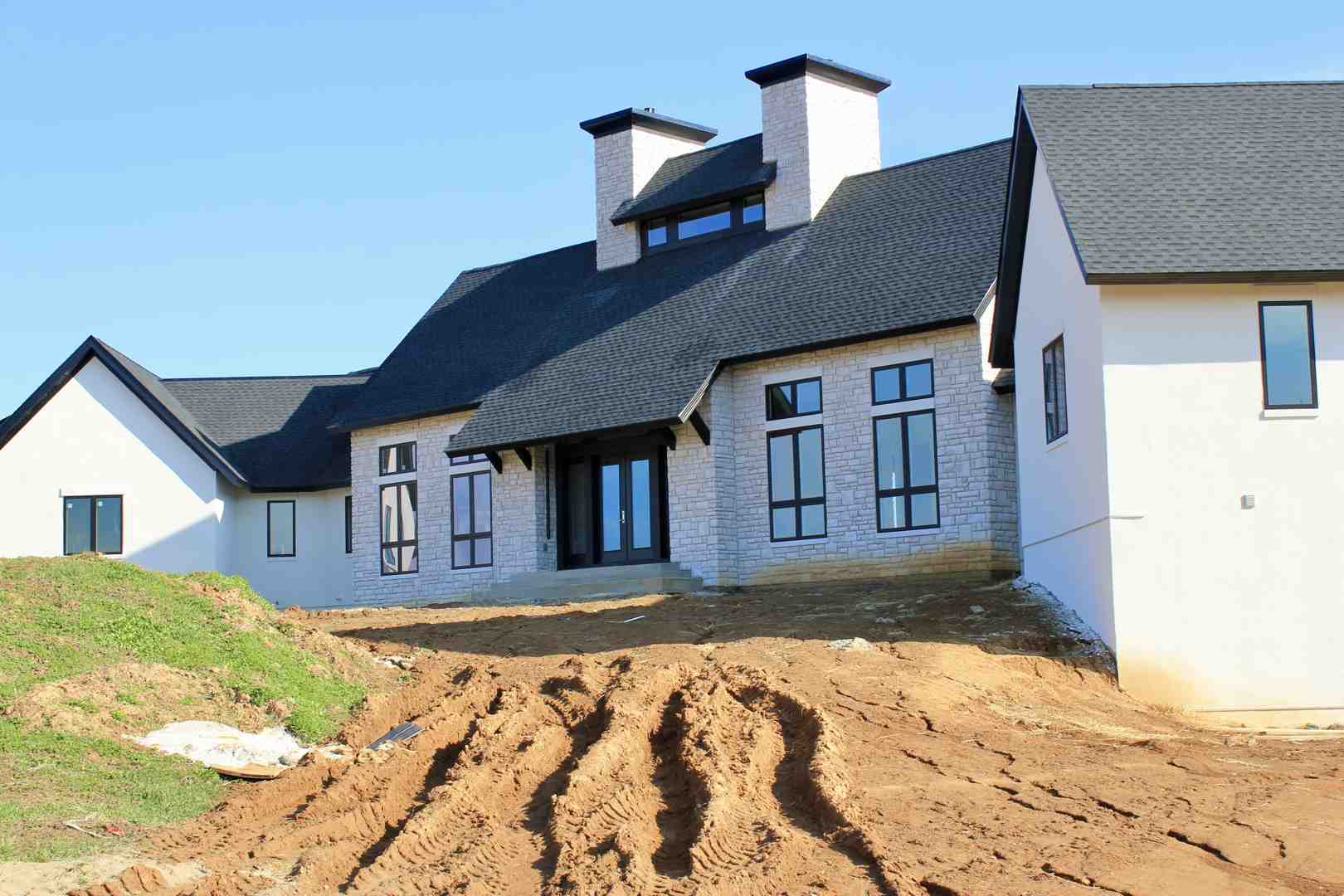
The diversity of the Texas economy often requires a texas architecture firm to understand multiple project types, user needs, and technical requirements. While some firms are generalists, the top players often have deep, specialized departments. For instance, the demand for high-performance school design has never been higher. Leading firms in this sector focus on creating flexible, safe, and inspiring environments that can adapt to changing educational needs.
Beyond education, the Texas market is a hub for mission-critical facilities. As technology-focused corridors expand, some firms are asked to support technically complex facilities such as data centers, laboratories, and specialized workplaces. These projects require precision, coordination, and technical discipline from an experienced texas architecture firm.
Healthcare is another sector where Texas firms shine. By using evidence-based design, architects are improving patient outcomes and streamlining clinical workflows. Whether it’s a massive hospital expansion in Houston or a specialized clinic in San Antonio, the focus remains on the human experience within the clinical setting.
Educational and Sports Excellence in a Texas Architecture Firm
Texas is famous for its commitment to education and its love for sports, and the architecture reflects that. Professional firms do more than just draw plans; they assist school districts with complex bond planning and long-term facility master planning. This helps each planning decision support a sustainable, long-term vision for the community.
Modern school designs have moved away from the “siloed” classrooms of the past. Instead, we see “neighborhood” prototypes that foster collaborative learning. By integrating biophilic design elements—like natural daylight and views of greenery—architects help students stay connected to the natural world, which has been shown to improve focus and academic performance. In the sports sector, Texas firms are redefining the fan experience with state-of-the-art stadiums that serve as year-round community hubs rather than just game-day venues.
Standout Project Philosophies and Design Standards
What separates a strong texas architecture firm is not only its portfolio, but also the philosophy that guides how it listens, plans, and collaborates. Many of the state’s top firms are masters of “place-making.” They do not impose a generic building on a site; they design spaces that respond to local culture, history, climate, and use. We often see this in mission-minded services, where the goal is to create a lasting positive impact on the community.
Historic restoration is another area of mastery. Texas has a rich architectural heritage, from 19th-century courthouses to mid-century modern landmarks. Specialized firms focus on preserving these stories while updating the structures with modern mechanical systems and energy-efficient windows. Adaptive reuse is a similar strategy, where architects might take an old industrial warehouse and transform it into a vibrant mixed-use development or a modern office space.
Residential and Mixed-Use Mastery by a Texas Architecture Firm
In residential services, a strong texas architecture firm should focus on site-responsive design, enduring craftsmanship, and daily livability. Texas residential architects are particularly skilled at site-responsive design. They study topography, solar orientation, and prevailing winds so the home can support natural light, shade, comfort, and long-term performance.
Materiality is key here. You’ll see a beautiful use of local Texas limestone, weathered steel, and native timbers. These materials don’t just look good; they are durable and ground the building in its specific geographic context. Whether it’s a ranch in the Hill Country or a high-rise condo in Dallas, the goal is to create a “quietly iconic” structure that feels timeless.
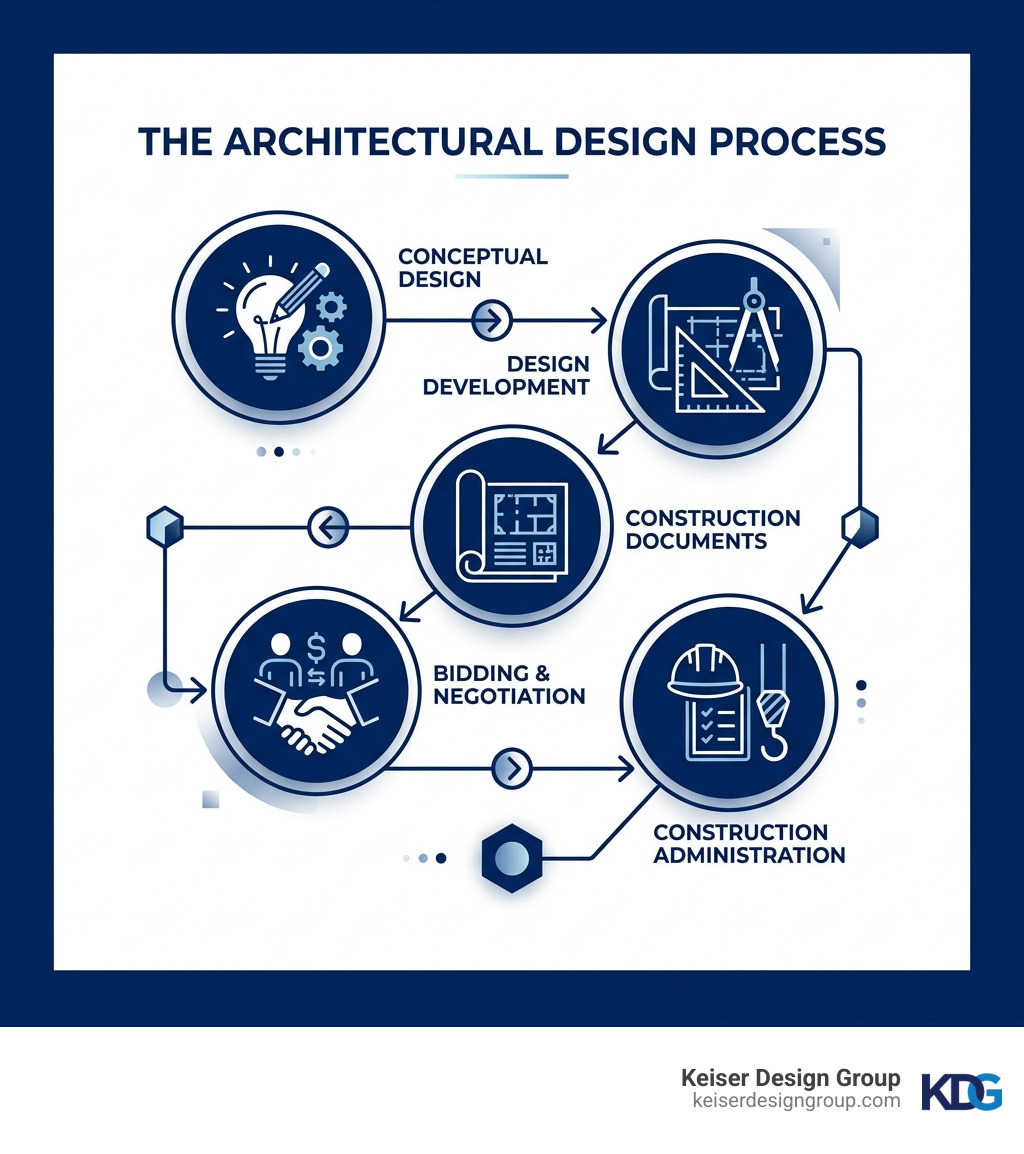
Frequently Asked Questions about Texas Architecture
What are the current trends in Texas architectural design?
As of 2026, the biggest trends include biophilic design (bringing nature indoors), the use of mass timber for sustainable mid-rise construction, and “brain-healthy” office spaces designed to improve mental clarity. We are also seeing a major push for adaptive reuse, where historic buildings are repurposed for modern living and working.
How do professional firms prioritize sustainability?
Many firms use frameworks such as LEED and carbon-reduction commitments to guide sustainability decisions. In Texas, this often means focusing on “passive” design strategies—like building orientation and natural ventilation—to reduce the need for heavy air conditioning. Some firms also document their social and environmental commitments through third-party accountability frameworks, but clients should verify each firm’s actual credentials.
What should clients look for when hiring a firm?
When hiring a texas architecture firm, look for a collaborative approach backed by relevant project experience, clear communication, and technical discipline. You want a partner who listens carefully, clarifies priorities, and shapes the design around the people who will use the space. Check their portfolio for projects similar to yours, and ensure they have a firm grasp of local Texas building codes and climate challenges. A “whatever it takes” attitude toward client service is often the hallmark of the best firms.
Conclusion
The Texas architectural landscape is a testament to innovation and resilience. From massive stadiums to sustainable, craft-focused homes, the talent in this state is world-class. Professional firms are not just building structures; they are designing the future of how we live, work, and learn in the Lone Star State.
At Keiser Design Group, we understand that choosing an architecture partner can feel overwhelming, especially when you are comparing firms, project types, and design priorities. That’s why we focus on tailored designs, clear communication, and a simple, worry-free process for clients who want a thoughtful architectural partner. We believe great architecture should feel clear, collaborative, and grounded in the client’s vision from the first conversation through the finished result.
If you are ready to start your next project with a team that prioritizes relationships, expertise, and integrity, we would be glad to connect. Contact Keiser Design Group today to discuss your vision, clarify your next steps, and begin a design process built around your goals.