What Is Commercial Architecture Design — and Why Does It Matter for Your Business?
Commercial architecture design is the specialized practice of designing buildings and spaces for business use — including offices, retail stores, restaurants, hotels, healthcare facilities, and more.
Here’s a quick overview of what it covers:
| Aspect | What It Means for You |
|---|---|
| Function | Spaces built around how your business actually operates |
| Brand Identity | Design that communicates who you are to customers |
| Customer Experience | Layouts that guide, engage, and retain visitors |
| Compliance | Meeting safety codes, zoning laws, and ADA requirements |
| Future-Proofing | Room to grow, adapt, and scale as your business evolves |
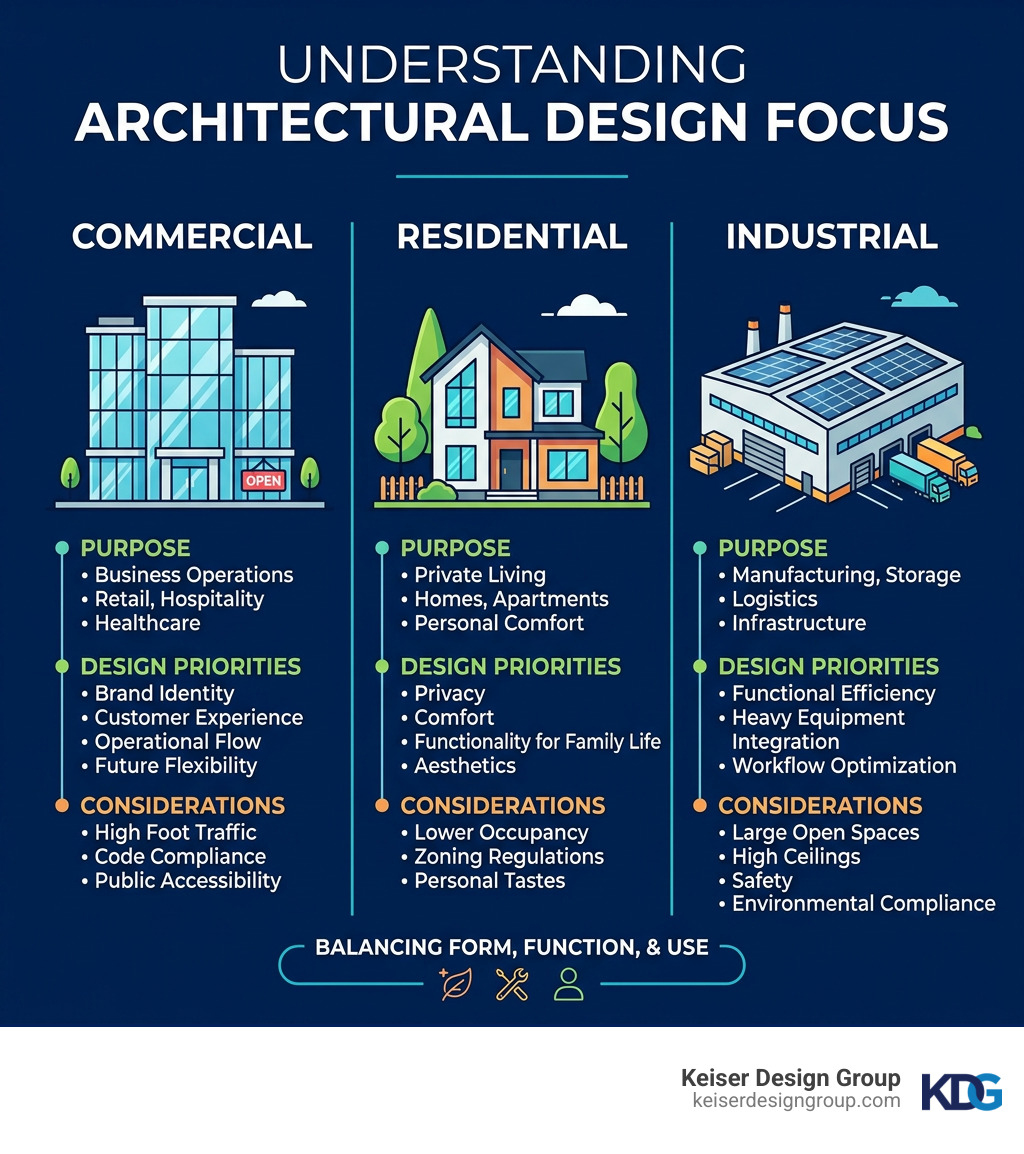
Commercial architecture design is different from residential or industrial work because it must balance brand, operations, and public-facing experience. In commercial architecture design, the goal is to balance aesthetics, operational performance, and user experience at scale.
The physical space your business occupies isn’t just a backdrop. It shapes how customers feel when they walk in, how productive your team is, and how strong your brand comes across. A well-designed commercial space can attract visitors, support team performance, and strengthen how your brand is perceived over time. A poorly designed space can introduce friction into daily operations and weaken the experience your brand intends to deliver.
As explored in our article Defining Spaces: What is Commercial Architecture and Why Does It Matter?, commercial architecture is, in many ways, the physical embodiment of your business goals and values.
I’m Dan Keiser, Founder and Principal Architect of Keiser Design Group, and I’ve spent more than 30 years guiding commercial architecture design from early concepts through construction administration. In this guide, I’ll walk you through your key design options so you can move forward with confidence.
The Impact and Benefits of Strategic Commercial Design
Strategic commercial architecture design supports day-to-day operations and long-term organizational resilience. When we design, we treat your building as a tool: it should improve workflow, reinforce your brand, and support the people who use it.
The benefits of a well-executed design include:
- Improved Brand Visibility: Your building is often the first “handshake” a customer has with your brand. Iconic or thoughtful structures become synonymous with success and recognition.
- Enhanced Customer Satisfaction: In retail or hospitality, the layout determines the experience. A thoughtful flow can transform a routine shopping trip into an enjoyable event, encouraging repeat visits.
- Increased Employee Productivity: In office environments, daylighting and thoughtful planning can support focus, comfort, and team well-being.
- Long-Term Stewardship: High-quality design helps a building remain functional, adaptable, and desirable over time.
- Shaping Cityscapes: Commercial architecture design also shapes cityscapes, contributing to the character and vibrancy of communities.
For a deeper dive into how these spaces serve your specific business goals, see our post on Commercial Architectural Design: Creating Spaces for Businesses.
Key Principles of Commercial Architecture Design
To achieve these benefits, we adhere to several core principles that differentiate commercial work from other disciplines. Every decision is rooted in client-focused design, so the building supports how you operate and serve people.
- Space Optimization: We optimize space planning so every area supports a purpose—public, staff, and service functions included. This includes planning for “invisible” functionality, such as ensuring service stock areas are accessible to employees but hidden from your customers.
- Accessibility (ADA Compliance): Inclusivity is a legal and ethical requirement. We ensure your space is welcoming to all users, regardless of mobility.
- Safety and Building Codes: We coordinate life-safety planning, egress, and code documentation to align with local reviews and approvals.
- Future-Proofing and Scalability: Your business won’t stay the same forever. We design with an eye toward future growth, allowing for easy transitions or expansions as your industry evolves.
For more on the professional standards involved, read our Understanding Commercial Architectural Services: A Comprehensive Guide.
Common Commercial Building Types
Different businesses require vastly different architectural solutions. A hospital needs heavy machinery clearance and sterile environments, while a boutique shop needs high-end finishes and intimate lighting.
| Building Type | Primary Design Focus | Key Consideration |
|---|---|---|
| Office Buildings | Productivity & Collaboration | Natural light, HVAC efficiency, and flexible layouts. |
| Retail Spaces | Consumer Psychology | Foot traffic patterns, window displays, and secure cash wraps. |
| Hospitality | Guest Experience | Ambiance, acoustic control, and seamless service flow. |
| Mixed-Use | Community Integration | Balancing residential privacy with commercial accessibility. |
You can see examples of these various types in our Gallery: Commercial.
Exploring Modern Commercial Architecture Design Options
Modern commercial architecture design helps your business stand out, operate efficiently, and stay adaptable as your needs change. Today’s best commercial architecture design supports your brand, improves operational performance, and elevates the day-to-day experience for teams and visitors.
To stay competitive, many owners start by aligning their goals with proven approaches like the Top 7 Design Trends for a Modern Commercial Building.
Sustainable and Eco-Friendly Design
Sustainable commercial architecture design supports comfort, durability, and responsible resource use across the building’s life. Commercial buildings are a major source of energy use, which means even small improvements can create meaningful performance gains.
Key options we commonly evaluate with clients include:
- Energy efficiency upgrades: High-performance insulation, better glazing, and heat recovery systems can reduce energy demand and improve comfort.”
- Biophilic design: Daylight, views, and natural materials can support comfort and well-being, especially in offices and healthcare settings.
- LEED-aligned strategies: Many clients pursue LEED certification to strengthen marketability and show measurable sustainability progress.
- Net-zero planning: Where site conditions allow, we explore options that offset energy use with on-site renewables.
Technology-Integrated and Smart Buildings
In commercial architecture design, smart building features can improve security, streamline operations, and support efficient building performance.
Common, owner-benefit-focused strategies include:
- IoT controls: Sensors that adjust lighting and HVAC based on occupancy.
- AI-informed energy management: Tools that identify trends and reduce waste over time.
- Smart security: Connected access and monitoring that helps protect staff and inventory.
- Integrated digital signage: When branding and signage are planned early, they look intentional rather than added on later.
We also use guidance like the AIA’s best practices to help clients optimize building operations with technology that supports real business goals.
Flexible and Adaptive Spaces
Flexible commercial architecture design helps your building keep up with staffing changes, growth, and evolving expectations. This is especially important for offices, medical practices, and retail environments that may need to reconfigure space without major downtime.
We often accomplish flexibility through modular planning and movable partition walls, which can help you:
- Convert one large room into smaller meeting or consult spaces.
- Create multi-use areas that shift throughout the day.
- Balance open collaboration areas with quieter, private zones.
For more on how this supports long-term value, see Adapting to Change: The Rise of Flexible Spaces in Commercial Architecture Design.
The Architect’s Role and the Design Process
A commercial architect should make your project easier, not harder. At Keiser Design Group, our role is to protect your priorities, timeline, and business goals while translating your vision into a buildable plan.
Commercial projects require coordinated decisions across ownership, contractors, engineers, and local reviewers. We manage that process so you can stay focused on running your business and still feel confident about what’s happening at every step.
Our approach follows the Five Phases of Commercial Building Design, so expectations are clear and progress is measurable.
The Five Phases of Architectural Design
Every phase is designed to reduce risk and prevent costly surprises later.
- Schematic Design: We define your priorities (operations, customer flow, brand goals) and explore layout options.
- Design Development: We refine the preferred direction, confirm key materials and systems, and align the design with the budget.
- Construction Documents: We produce detailed drawings for permitting and construction, so the scope and documentation are clear for permitting and construction.
- Bidding/Negotiation: We help you evaluate bids and choose a contractor based on qualifications, coordination, and a clear approach to delivery.
- Construction Administration: We stay involved during construction to help protect design intent, quality, and timely decision-making.
For a deeper look at what this process includes, read 7 Must-Know Steps in the Creative Process of Top Commercial Architecture Firms.
How to Choose the Right Architecture Firm
The right firm is a strategic partner who understands what success looks like for your business. When comparing options, consider:
- Relevant experience: Do they have examples in your industry (office, retail, medical, hospitality)?
- Regional permitting familiarity: Can they navigate approvals and reviewers across Ohio, Indiana, and Kentucky?
- Clear communication: Do they explain tradeoffs in plain language and document decisions?
- Proven client outcomes: Do testimonials show they deliver on schedule, budget, and functionality, not just aesthetics?
Frequently Asked Questions about Commercial Architecture
What is the difference between an architect and a commercial architect?
While all architects are trained in design, a commercial architect focuses specifically on the needs of businesses. This includes a deep understanding of commercial building codes (which are much stricter than residential ones), consumer behavior, and operational flow. We don’t just design for a family of four; we design for thousands of visitors, hundreds of employees, and complex machinery.
How long does a typical commercial design project take?
In commercial architecture design, timelines vary by scope, approvals, and complexity; renovations and ground-up projects follow different paths. Factors like local permitting approvals and the availability of materials play a huge role. We provide a phased approach, so you always know exactly where your project stands.
How does commercial architecture design impact business performance?
Efficient systems can improve comfort and building performance, while thoughtful layouts can support productivity and experience. Increased productivity from better layouts improves your output. Improved brand value and higher customer traffic directly impact your sales. Finally, high-quality architecture ensures your property maintains a high market value for decades.
Build Your Business’s Future with Expert Design
The right commercial architecture design decision supports revenue, strengthens your brand, and reduces long-term operating costs. If you’re planning a new facility, renovation, or expansion in Ohio, Indiana, or Kentucky, Keiser Design Group brings the experience to help you move forward with clarity.
Planning a new facility, renovation, or expansion? Keiser Design Group comes alongside you with a clear process and proven expertise in commercial architecture design. Contact Keiser Design Group to start a conversation, or explore our commercial services to see how we support building owners from concept through construction.