Defining the Core Principles of Modern Home Design
At its heart, Modern Home Design is governed by the concept that “form follows function.” Coined by architect Louis Sullivan, this principle suggests that the shape of a building should be primarily based upon its intended function or purpose. In our practice at Keiser Design Group, we apply this principle by favoring structural clarity, purposeful geometry, and residential architecture designed around how our clients live.
The hallmark of a modern home is its minimalist aesthetic. This isn’t just about having fewer “things”; it’s an architectural commitment to the elimination of ornament. Instead of decorative columns or ornate crown molding, modern homes celebrate the beauty of raw materials and precise craftsmanship. You will see sharp, clean lines—both horizontal and vertical—that create a sense of order and serenity.
Structural honesty is another defining feature of modern home design. Often, the bones of the house—such as steel beams or concrete floors—are left exposed rather than hidden behind drywall. This honesty in construction is a direct legacy of the history of modernism, which emerged in the early 20th century as architects like Le Corbusier and Walter Gropius sought to create a new language for the industrial age.
Modern vs. Contemporary Styles
While people often use these terms interchangeably, they represent different concepts in architecture. As we noted in our architectural styles modern guide, “Modern” refers to a specific design movement that peaked between the 1930s and 1970s. It is rooted in the Enlightenment and the industrial revolution, focusing on machine-age materials and rationalism.
“Contemporary” design, on the other hand, is fluid. It refers to the “here and now.” Today’s contemporary homes often borrow heavily from modernism—like large windows and open plans—but they might also include “warm” elements like farmhouse gables or traditional masonry that a strict modernist might have avoided. Understanding this distinction helps us help you decide if you want a “period-correct” modern home or a contemporary home with modern influences.
The Influence of Mid-Century Modern Home Design
You cannot discuss Modern Home Design without highlighting the massive impact of the post-war era. Mid-century modern house designs are perhaps the most beloved subset of the movement. This era introduced the “California-style” ranch and the idea that a home should be an integrated part of its natural surroundings.
Key characteristics of this era include:
- Open Layouts: Breaking down walls between the kitchen, dining, and living rooms to foster family togetherness.
- Organic Forms: Using natural materials like wood and stone to soften the “industrial” feel of steel and glass.
- Indoor-Outdoor Integration: The use of sliding glass doors and floor-to-ceiling windows to make the backyard feel like an extension of the living room.
Key Architectural Features and Materials
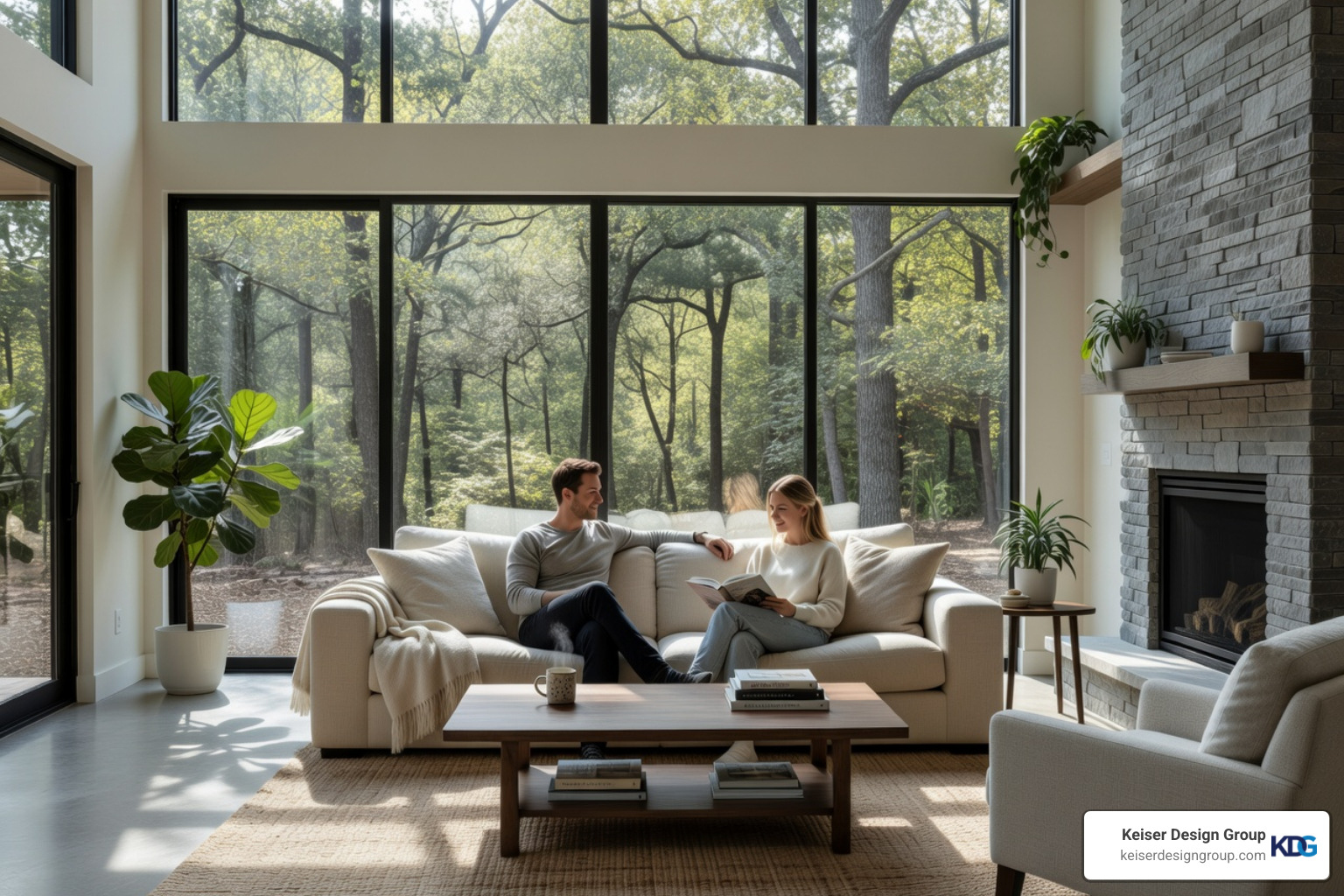
The visual identity of modern home design is shaped by rooflines, massing, and exterior material choices. Unlike traditional homes with gabled roofs and shingles, modern architecture often utilizes flat rooflines or dramatic, single-slope shed roofs. These shapes allow for soaring interior ceilings and clerestory windows that let in light while maintaining privacy.
Materials play a dual role in modern residential architecture: the eye candy of the 21st century. We often utilize a palette that includes:
- Steel Frames: Allowing for wide, open spans without the need for load-bearing interior walls.
- Exposed Concrete: Providing an industrial texture that is both durable and thermally efficient.
- Natural Wood Cladding: Often used in accents (like cedar or Shou Sugi Ban) to provide warmth and visual contrast against “cooler” materials like metal.
- Industrial Textures: Smooth stucco, metal panels, and large-format glass are staples of the modern aesthetic.
Maximizing Natural Light with Modern Home Design
Light is perhaps the most important “material” in a modern home. Large windows and glass walls aren’t just for show; they are functional tools used to improve the well-being of the inhabitants. By utilizing clerestory windows—small windows placed high on the wall—we can flood a room with natural light without sacrificing the privacy of a bedroom or bathroom.
As detailed in our residential design services ultimate guide, we also use glass to achieve passive solar heating. By orienting large windows toward the south (in our Midwestern climate), the home can naturally collect heat during the winter, reducing the load on your furnace.
Sustainable Materials and Energy Efficiency
Modern design and sustainability go hand-in-hand. Because the style prizes efficiency and “honesty,” it naturally lends itself to high-performance building techniques. Many modern homes today utilize Structural Insulated Panels (SIPs), which offer superior insulation compared to traditional stud framing.
According to NAHB construction cost data, while high-performance materials like triple-glazed windows or geothermal systems may require a higher initial investment, they significantly lower long-term operational costs. A modern home is a high-performance envelope designed to be as eco-friendly as it is beautiful.
Functional Layouts for Contemporary Living
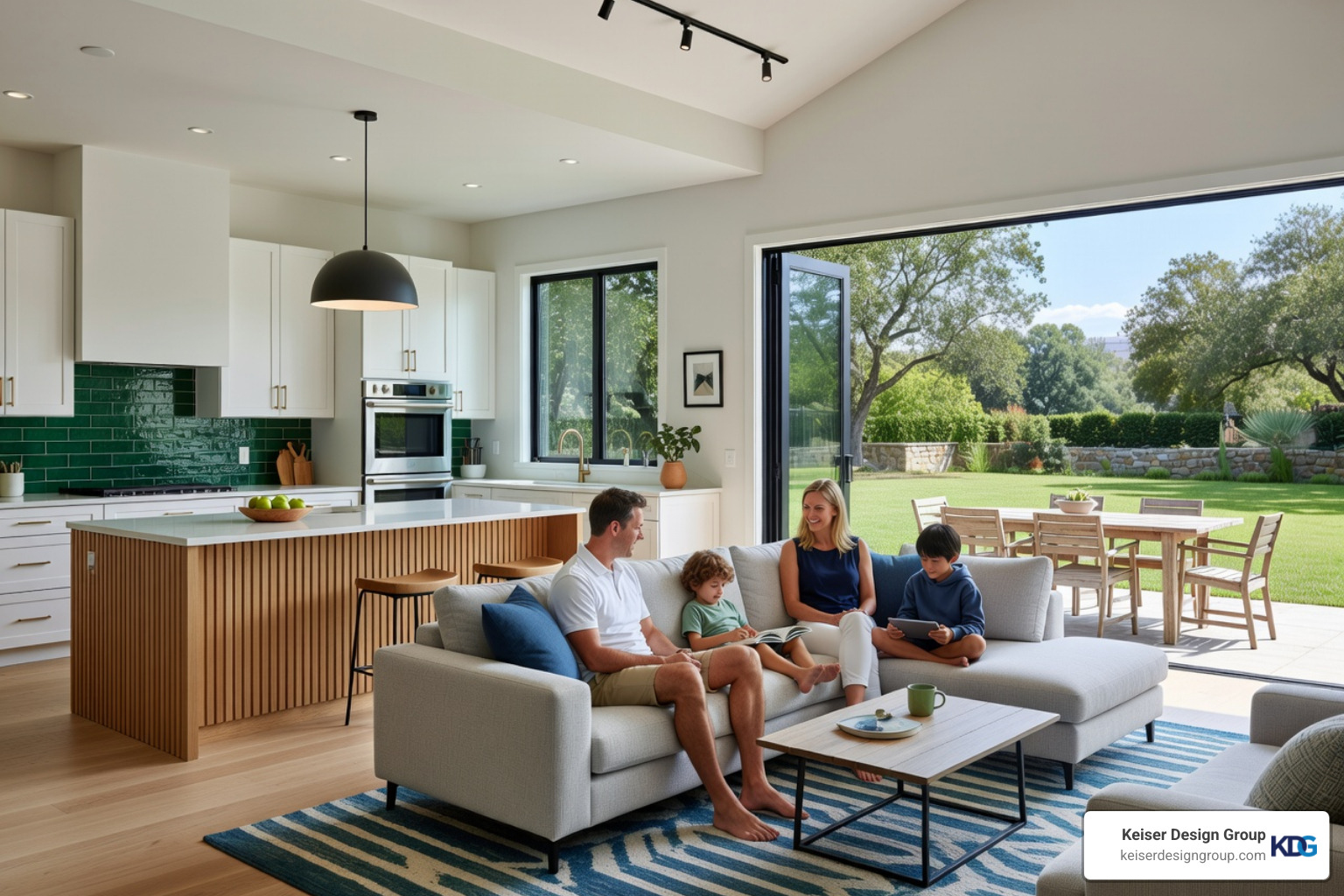
The floor plan of a modern home is designed for the way we live today, not the way people lived 100 years ago. We’ve moved away from formal parlors and closed-off kitchens. Today’s future ready homes focus on social connectivity.
The open floor plan is the heart of Modern Home Design. It allows the person cooking dinner to remain part of the conversation in the living room. It also creates a “flowing” sensation, where one space bleeds into the next, often culminating in a retreating glass wall that opens the entire house to a deck or patio. This seamless indoor-outdoor flow is a signature move for creating a home that feels twice as large as its actual square footage.
Adapting Modern Plans to Specific Lot Types
One of the greatest strengths of modern architecture is its flexibility. Because it doesn’t rely on symmetrical “boxes,” we can adapt the design to fit challenging sites.
- Narrow Lots: By building up rather than out, a three story home can provide ample living space on a tight urban infill lot in cities like Columbus or Nashville.
- Sloped Terrain: Modern homes often “step” down a hillside or use cantilevered structures to hang over a slope, preserving the natural topography while providing stunning views.
- Small Footprints: Modern design excels in small spaces by using high ceilings, built-in storage, and “borrowed” light to make a 1,500 sq ft home feel like a mansion.
Customizing Luxury Amenities in Modern Home Design
When we design custom luxury homes, we focus on “lifestyle” features that enhance daily routines. This often includes a main-level primary suite, which is a popular choice for homeowners looking to “age in place” without sacrificing style.
Other popular luxury additions we see include:
- Home Gyms and Spas: Featuring infrared saunas and walk-in showers with organic “wood-look” tile.
- Outdoor Kitchens: Designed to be an extension of the indoor kitchen for year-round entertaining.
- Smart Home Integration: Motorized shades, automated lighting, and hidden climate controls that maintain the “clutter-free” look of the home.
Frequently Asked Questions about Modern Home Design
What is the typical cost to build a modern home?
The complexity of a modern home depends on factors such as site conditions, structural spans, glazing strategy, and material selections. Custom modern homes often involve specialized detailing, larger spans, and material transitions that require careful coordination during design and construction.
| Factor | Impact on Pricing |
|---|---|
| Roofing | Flat/Shed roofs require specialized membranes that can be more expensive than shingles. |
| Windows | Large, high-performance glass walls are a significant investment. |
| Structure | Steel beams used for open spans are pricier than standard wood trusses. |
| Finish | Minimalist designs require “level 5” finishes because there is no trim to hide imperfections. |
How does modern design improve energy efficiency?
Modern homes are often more energy-efficient than traditional ones because they are designed with the site in mind. We use “passive solar orientation” to ensure the sun helps heat the home in winter while eaves and overhangs provide shade in the summer. Additionally, the preference for high-quality, sustainable materials like triple-pane glass and super-insulated envelopes ensures that the home stays comfortable with minimal mechanical help.
Can modern homes be built on challenging terrain?
Absolutely. In fact, modern design is often the best solution for challenging lots. Traditional layouts often depend on more conventional grading solutions, while modern architecture can adapt more flexibly to sloped or irregular sites. Modern architecture can use “pier” foundations or cantilevered designs to float over the land. This site-specific design approach allows us to build on sloped lots or rocky terrain while preserving the very landscape that makes the site special.
Conclusion
At Keiser Design Group, we believe that Modern Home Design is more than just a trend—it is a way to build a better life. By focusing on light, space, and functionality, we create homes that are not only beautiful but also deeply personal. Our mission is to provide you with a tailored design and a simple, worry-free process from the first sketch to the final walk-through.
Whether you are looking for a sleek urban retreat in Cincinnati or a sprawling modern farmhouse in Delaware, Ohio, our team has the expertise to bring your vision to life. Finding your fit is about finding a partner who listens to your needs and understands the unique constraints of your land.
Ready to start your journey? We invite you to explore our portfolio and see how we’ve helped families across the Midwest and beyond build their dream homes.
Contact Keiser Design Group to discuss a modern home design that fits your land, lifestyle, and long-term goals.