Why Choosing the Right Architect for Churches Matters
Architect for churches is not just a professional title—it’s a specialized calling that requires deep understanding of ministry needs, worship culture, and community impact. If you’re searching for the right architectural partner for your church building project, here’s what you need to know:
What to Look for in a Church Architect:
- Specialized Religious Architecture Firm – Proven track record with faith-based projects, not just general commercial buildings
- Ministry-First Philosophy – Architects who prioritize your mission and congregation’s needs over aesthetics alone
- Master Planning Expertise – Ability to plan for future growth, phased construction, and evolving ministry needs
- Collaborative Process – Partners who involve church leadership and congregations throughout the design journey
- Stewardship Focus – Commitment to delivering value, managing budgets wisely, and maximizing every dollar
- Technical Integration – Knowledge of modern worship technology, acoustics, and flexible multi-use spaces
A church building is far more than four walls and a roof. It’s where your congregation gathers for worship, where children find faith, where community happens, and where your ministry comes to life. The architect you choose will shape not just your facility, but how effectively you can serve your calling for decades to come.
I’m Dan Keiser, founder of Keiser Design Group, and I’ve spent over three decades helping churches, mission organizations, and faith-based institutions translate their vision into purposeful, ministry-enabling facilities. As an architect for churches, I’ve learned that the most successful projects begin with listening—understanding your unique culture, worship style, and community before the first line is drawn.
The Unique Calling of Church Architecture: More Than Just a Building
Church architecture presents unique challenges and opportunities that set it apart from other types of construction projects. Unlike a commercial office building, an architect for churches must design for a diverse set of functions—from sacred worship and spiritual formation to community outreach and administrative tasks. The ultimate goal is to create an environment that not only accommodates these activities but actively improves them. The right design supports ministry, fosters spiritual connection, and serves as a vibrant community hub.
We’ve learned that how people interact and experience a space is vital in church design. This requires an insight into church operations that far exceeds typical planning acumen. Our approach centers on a “ministry-first philosophy,” believing that buildings are tools designed to enable churches to fulfill their calling more effectively. This means we prioritize understanding your vision, needs, obstacles, and resources before a single line is drawn. The challenges involve balancing spiritual significance with practical functionality, aesthetic appeal with budget constraints, and historical reverence with modern needs. An experienced architect for churches steers these complexities by deeply understanding the spiritual and communal life of a congregation.
Creating Sacred Space
Creating sacred space is one of the most profound aspects of church architecture. It’s about designing environments that lift the soul and prepare worshippers to hear God’s word. Sacred spaces are defined by the thoughtful use of light, volume, and materials, which together create an atmosphere of peace, reverence, and connection.
When elements such as materials and composition work in harmony, when the building interacts politely with its neighbors, and when natural light is invited inside, a church building transcends its physical form. It becomes more than the sum of its parts; it becomes sacred space. This can be achieved through intentional design choices, such as lofty ceilings that draw the eye upward, natural wood or stone textures that evoke a sense of grounding, or stained glass windows that filter light into a spectrum of spiritual hues. Symbolic transitions, like a thoughtfully designed pathway from the parking lot to the sanctuary, can help worshippers move from the mundane of daily life to a state of spiritual readiness. This journey is crucial in fostering a sense of peace and belonging, connecting individuals to their community and to something greater than themselves.
Reimagining Sacred Spaces: A Look at Church Architecture
Designing for Mission and Ministry
Effective church architecture is inherently mission-minded. It aligns the physical space directly with your church’s spiritual vision, ensuring that the building serves as an active participant in your ministry rather than just a container for it. Our greatest desire is to help churches become more effective in their mission of making disciples by designing facilities that fit their unique culture, boost their effectiveness, and reinforce their priorities.
For us, this means that the design process begins not with blueprints, but with understanding your church’s core mission, values, and the specific ministries you aim to accomplish. Purposeful layouts support outreach programs, improve worship experiences, and enable flexible ministry opportunities. For example, a welcoming lobby can become a gathering space for community events, while adaptable classrooms can transform from children’s ministry areas during the week to small group meeting rooms in the evenings. By viewing the building as a tool for ministry, we can craft facilities that provide inspiring environments that function well and are affordable, empowering your congregation to fulfill its calling more effectively.
Mission-Minded Worship Spaces Designed for Your Mission
Fostering Community and Welcome
A church building should be a place where everyone feels valued, connected, and at home. This means designing spaces that actively foster a sense of community, welcome, and spiritual connection for worshippers from the moment they arrive.
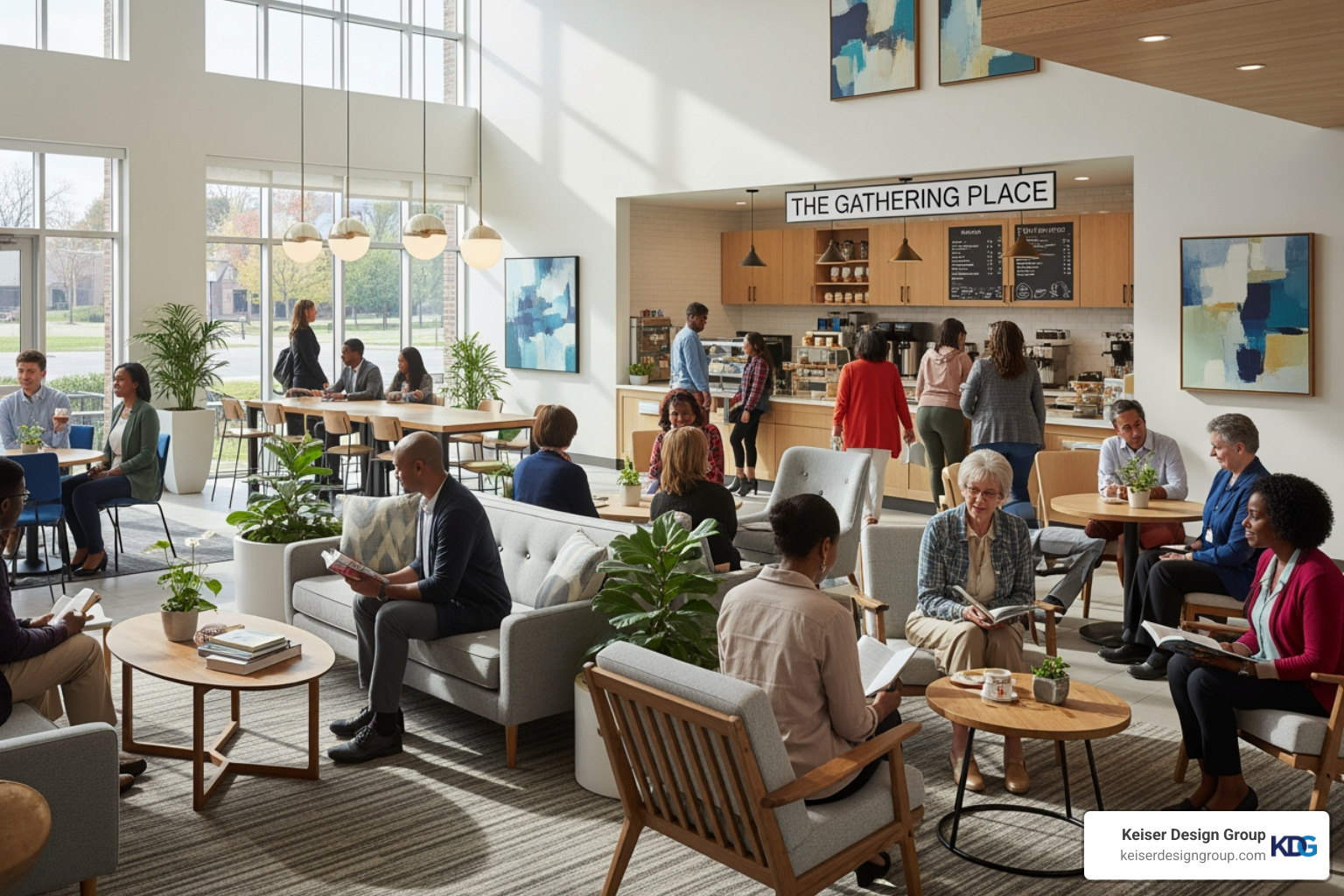
Welcoming entryways, such as spacious narthexes or inviting courtyards, set a positive tone and encourage fellowship before and after services. Intentional fellowship areas, like cafés, lounges, or multipurpose rooms, provide comfortable spaces for congregants to connect, build relationships, and engage in meaningful conversations. Safe, engaging children’s spaces are paramount, ensuring that families feel secure and supported while their children learn and grow in faith. Intuitive circulation paths guide visitors seamlessly through the building, while accessible design features ensure that everyone, regardless of physical ability, can participate fully in church life. Good design reveals truths about who we are as a community and creates positive expectations about how we can live our lives within it, making people feel part of something bigger and instilling a sense of optimism.
Church Design: Children’s Ministry
The Strategic Process: From Vision to Reality
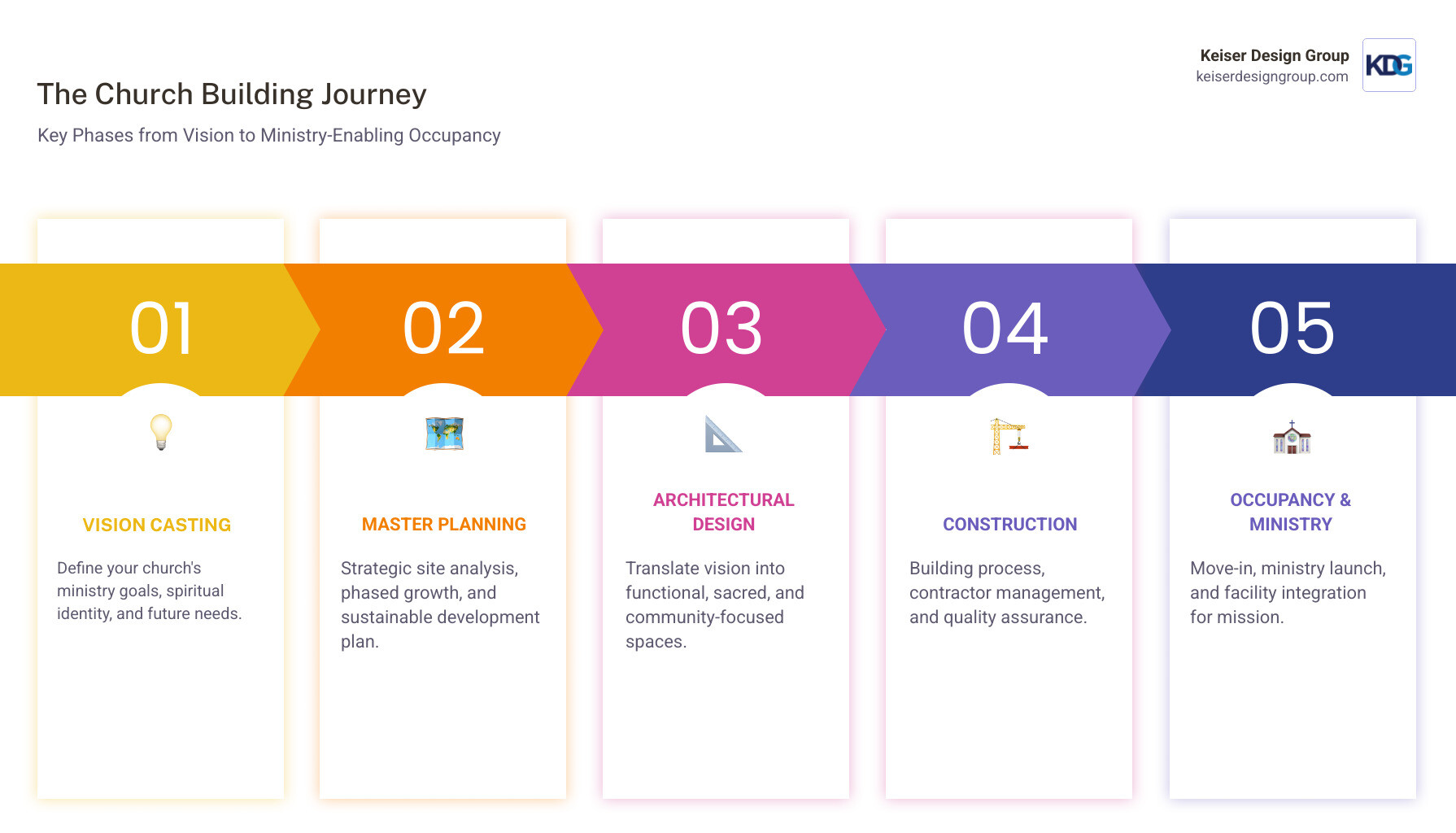
A successful church project is not just about erecting a building; it’s a strategic journey that transforms a vision into a tangible reality. This process demands careful planning, clear communication, and the active involvement of all key stakeholders. From initial dream to final occupancy, a well-defined process ensures that the facility truly serves the church’s long-term mission and growth.
The complexities of church building projects often involve navigating intricate zoning laws, securing permits, managing finances, and coordinating numerous contractors. This is why a strategic approach, guided by an experienced architect for churches, is absolutely critical. We believe in phased development and fostering a unified team to achieve long-term success. As a dedicated religious architecture firm, our goal is to help church leaders navigate the complex planning and building process, ensuring that critical needs are addressed and resources are stewarded wisely.
Church Construction Planning Guide
The Critical Role of Master Planning
Master planning is the foundational step for any church looking to build or expand. It’s an exercise unlike any other, requiring deep insight into church operations and a forward-thinking perspective. Master planning prepares your church for future growth, allowing for phased construction and adaptation to evolving ministry needs without costly rework down the line.
The key to a successful project lies in master planning, where criteria for success are defined and plans are made for the future evolution and growth of the church. This comprehensive process involves analyzing your current facility, understanding your congregation’s demographics, projecting future growth, and envisioning new ministries. Site analysis plays a crucial role, assessing how your building will integrate with its surroundings, address street presence, and potentially preserve natural features. Furthermore, master planning addresses financial stewardship by creating a realistic budget and identifying funding strategies, ensuring the project’s long-term sustainability. Resources from organizations like the Evangelical Council for Financial Accountability (ECFA) can provide valuable guidance on this front. Our most successful projects rigorously integrate emotion and function through this master planning and development process, supported by a realistic budget, ensuring the final space serves the specific needs of the congregation for decades.
The Power of Collaboration
Collaboration is the cornerstone of any successful church building project. A strong partnership between church leadership, the congregation, and the architect for churches ensures a unified vision, maximizes resources, and helps prevent conflicts. We’ve seen that when the owner, architects, engineers, and construction professionals work together, it results in better interior and exterior designs, maximized financial resources, fewer construction conflicts, compressed timelines, and overall success.
Gathering congregational input is vital to ensure the new facility truly reflects the community it serves. This involves listening sessions, surveys, and engaging key stakeholders early in the planning process to foster unity and ownership. Defining the building committee’s role and empowering them with clear objectives also streamlines decision-making. Our approach is based on a consulting model, where we come alongside your leaders to objectively assess needs, help define project priorities, and establish financial parameters. This collaborative methodology enables designs to reflect the ideas of staff and congregation members, making the experience exciting and giving members an appropriate sense of ownership.
Five Phases of Commercial Building Design
Navigating the Building Process with an Architect for Churches
The journey from initial concept to a completed church facility can be complex, filled with regulatory problems, technical specifications, and unforeseen challenges. An experienced architect for churches acts as your trusted guide, helping you steer every stage of the building process.
We help churches steer the complexities of the building process by providing a clear roadmap and expert guidance. This begins with conducting thorough feasibility studies to assess the viability of your project, followed by managing zoning applications and securing necessary permits. We assist in contractor selection, ensuring you partner with reputable and experienced builders, and provide construction oversight to guarantee that the project adheres to design specifications, budget, and timeline. The person who leads your project at Keiser Design Group is involved from beginning to end, ensuring critical information is not lost as the project moves through different stages. This continuity of project leadership is invaluable, helping to re-focus and get projects back on track even when faced with unexpected obstacles. Our comprehensive architectural services are designed to explain the process and deliver a smooth, worry-free experience for your church.
Understanding Commercial Architectural Services: Comprehensive Guide
Key Considerations for a Successful Church Building Project
Building a new church or renovating an existing one involves a delicate balance of competing priorities. We understand that success hinges on effectively integrating aesthetic appeal, functional needs, and budget constraints. This requires a thoughtful and strategic approach to design and construction, where every decision is weighed against its impact on your ministry and financial resources.
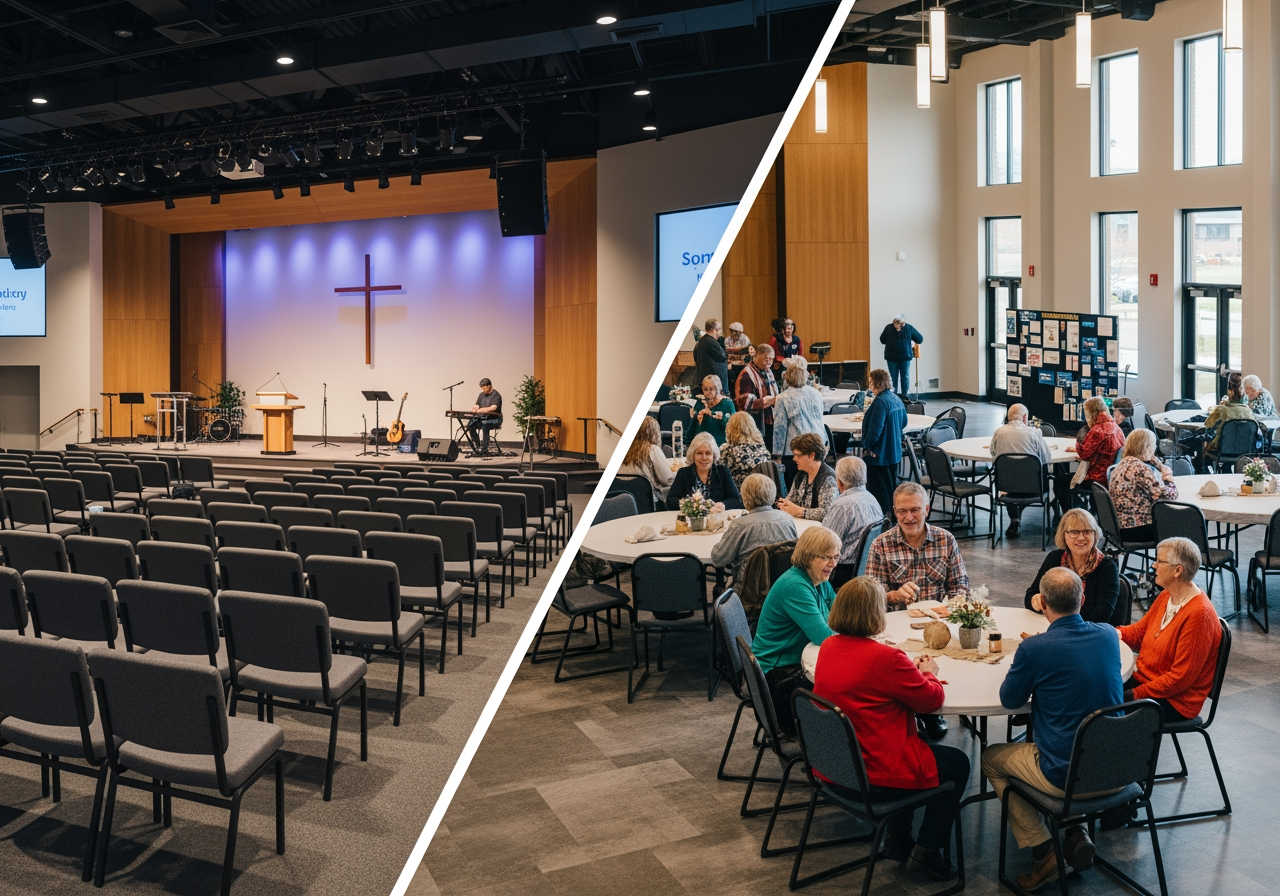
Our expertise in church design focuses on creating spaces that are not only beautiful but also highly functional and fiscally responsible. Value engineering and efficient resource management are key strategies we employ to deliver a facility that meets your needs and vision without compromising stewardship. We believe that a well-planned facility can significantly contribute to financial sustainability and the efficient use of resources, ensuring your church can thrive for years to come.
Commercial Building Design: Complete Guide
Balancing Aesthetics, Function, and Budget
Achieving the perfect balance between aesthetic appeal, functional needs, and budget constraints is perhaps the greatest challenge in church design. It requires prioritizing needs over wants, making smart material choices, and often implementing a phased development approach.
To balance these elements, we begin by evaluating your current and future church programs to develop interior and exterior layouts that work within your budget and align with your mission and values. Value engineering is a critical tool in this process, where we explore cost-effective solutions for components like audio, visual, and lighting systems without sacrificing quality or impact. For instance, sometimes renovating a commercial building or an existing structure can be a more budget-friendly and sustainable option than new construction, allowing for significant cost savings. Smart material choices, such as durable, low-maintenance finishes, contribute to long-term financial sustainability by reducing operational costs. By carefully managing costs and ensuring projects are completed on time and within budget, we help churches maximize their financial resources and achieve their vision responsibly.
Renovating a Commercial Building
Integrating Modern Technology
In today’s world, integrating modern technology is no longer a luxury for churches but a necessity. The benefits are clear: crisp, clear audio and visual communication for teaching, preaching, and worship; a warm, welcoming environment; and an improved church experience throughout the facility.
Modern churches require advanced audio, visual, and lighting (AVL) systems to engage contemporary congregations and stay relevant. This includes high-definition screens for visual presentations, sophisticated sound engineering for optimal acoustics in both sanctuary and multipurpose spaces, and dynamic lighting that can adapt to various worship styles and events. Live streaming capabilities are also crucial for extending your ministry beyond the physical walls, reaching homebound members or a global audience. Our firm understands that sound engineering can add an intimate, inviting atmosphere to even large churches and maximize technology in multipurpose spaces to continue the sanctuary experience. By thoughtfully integrating smart building systems, we create immersive worship experiences that captivate and inspire, ensuring your church is equipped for the digital age.
Case Study: Five14 Church Worship Facility
Designing for Flexibility and Sustainability
The modern church operates far beyond Sunday mornings. Designing for flexibility and sustainability is key to creating a facility that supports 7-day-a-week ministry and contributes to long-term financial health. This means creating spaces that can adapt and evolve with your congregation’s needs.
Multi-functional spaces are a hallmark of contemporary church design. A gymnasium might serve as a worship space, a community event hall, or a youth activity center. Classrooms can be designed with movable walls to accommodate varying group sizes, and lobbies can transform into informal gathering areas or café spaces. Adaptable rooms reduce the need for specialized, underused spaces, making your building more efficient. Beyond flexibility, sustainability is also a critical consideration. Energy-efficient systems, such as LED lighting, high-performance HVAC, and smart controls, significantly reduce operational costs and contribute to environmental stewardship. We also explore financial sustainability models, such as incorporating early childhood education centers or community rental spaces, to generate additional income for ministries. By embracing these principles, your church can enjoy a facility that is both environmentally responsible and financially viable, supporting your mission for years to come.
Rise of Flexible Commercial Spaces
Evolving Designs and Finding the Right Architect for Churches
Church design has undergone a significant evolution over time, moving from historically traditional sanctuaries to more contemporary, community-centric models. While reverence for tradition remains, there’s a growing recognition of the need for facilities that are adaptable, welcoming, and reflective of modern worship styles and community engagement.
Today’s architect for churches understands that the building itself can be a powerful evangelistic tool. We see adaptive reuse projects, where former commercial spaces or warehouses are transformed into vibrant places of worship, offering unique aesthetics and often cost savings. Flexible spaces are increasingly popular, allowing churches to maximize their footprint and serve a wider range of ministries throughout the week. This evolution reflects a broader understanding that the church building is not just a place for worship, but a dynamic center for community life and outreach.
Case Study: Sycamore Creek Church Worship Addition
Current Trends in Church Architecture
Current trends in church architecture are driven by a desire to create spaces that are inviting, functional, and deeply connected to the community. These trends often blend modern aesthetics with timeless principles of hospitality and spiritual reflection.
One prominent trend is the creation of “third place” environments within churches—spaces like cafés, lounges, and comfortable seating areas where people can gather informally, fostering community and connection outside of formal services. There’s also a strong emphasis on authentic materials, such as natural wood, stone, and exposed elements, which create warmth and a sense of integrity. Natural light is maximized through large windows and open designs, bringing a sense of peace and connection to the outdoors. Themed children’s areas, designed to be vibrant, safe, and engaging, are also a priority, reflecting the importance of family ministry. Furthermore, many new churches are locating away from traditional downtown neighborhoods due to population sprawl and parking needs, often converting industrial spaces or building new facilities in suburban areas that incorporate green roofs, solar energy, and other sustainable features. These trends collectively aim to make the church a relevant and accessible space for all.
Top 7 Design Trends for a Modern Commercial Building
Understanding Project Delivery: The Design-Build Advantage
When starting on a church construction project, understanding different project delivery methods is crucial. One increasingly popular approach is design-build, which offers significant advantages for churches seeking efficiency and streamlined communication.
The design-build program combines the roles of architect and builder under a single contract, creating a unified team from concept to completion. This single point of responsibility simplifies the process for church leadership, eliminating potential conflicts between designers and contractors. This approach often leads to potential cost savings and faster timelines compared to traditional design-bid-build methods, where design and construction phases are separate. With design-build, early collaboration between the design and construction teams allows for continuous value engineering, ensuring that budget and constructability are considered at every stage. This model is especially beneficial for churches that need help defining or managing their program, want assistance with financing their project, or are challenged with budget limitations. It fosters better outcomes by promoting transparency, efficiency, and a shared commitment to the project’s success.
Commercial Design-Build: Ultimate Guide
How to Find the Right Architect for Your Church
Finding the right architect for churches is one of the most important decisions your leadership team will make. It’s not just about technical skill; it’s about finding a partner who understands your unique spiritual mission and can translate that into a functional, inspiring, and financially responsible facility.
Look for architects with specialized experience in faith-based projects, a proven track record, and a ministry-first philosophy. Review their portfolios and case studies, paying close attention to projects similar in scope or vision to yours. Client testimonials can offer invaluable insights into their collaborative process and commitment to client satisfaction.
Here are some key questions to ask a potential church architect:
- What is your experience with church projects in our region (Ohio, Indiana, Kentucky)?
- How do you incorporate ministry vision into your designs?
- Can you provide references from similar projects?
- What is your approach to master planning and phased development?
- How do you ensure budget and schedule alignment throughout the project?
An architect who can articulate a clear process, demonstrate a deep understanding of church operations, and show a genuine passion for supporting ministry will be an invaluable asset to your team.
Conclusion: Building Your Church’s Future, One Thoughtful Space at a Time
The journey of building or renovating a church is a profound undertaking—one that shapes the future of your ministry and impacts countless lives. A well-designed church is more than just a building; it is a powerful ministry tool, a guide of hope, and a vibrant center for community life. Partnering with a specialized architectural firm like Keiser Design Group ensures that your facility is not only aesthetically pleasing and functionally superior but also deeply aligned with your mission and vision for years to come.
We bring over three decades of experience and a ministry-first philosophy to every project, understanding the unique challenges and sacred calling of church architecture. Our collaborative approach, expertise in master planning, and commitment to stewardship mean that we guide you through every step of the process, ensuring your project is completed on time, within budget, and to the highest standards.
Partner with a Specialized Architect for Churches
Your ministry deserves a facility that reflects its unique mission and heart for the community. If you are ready to begin your master planning or design journey, contact Keiser Design Group today to start the conversation.