Why Construction Documentation Services Matter for Your Project
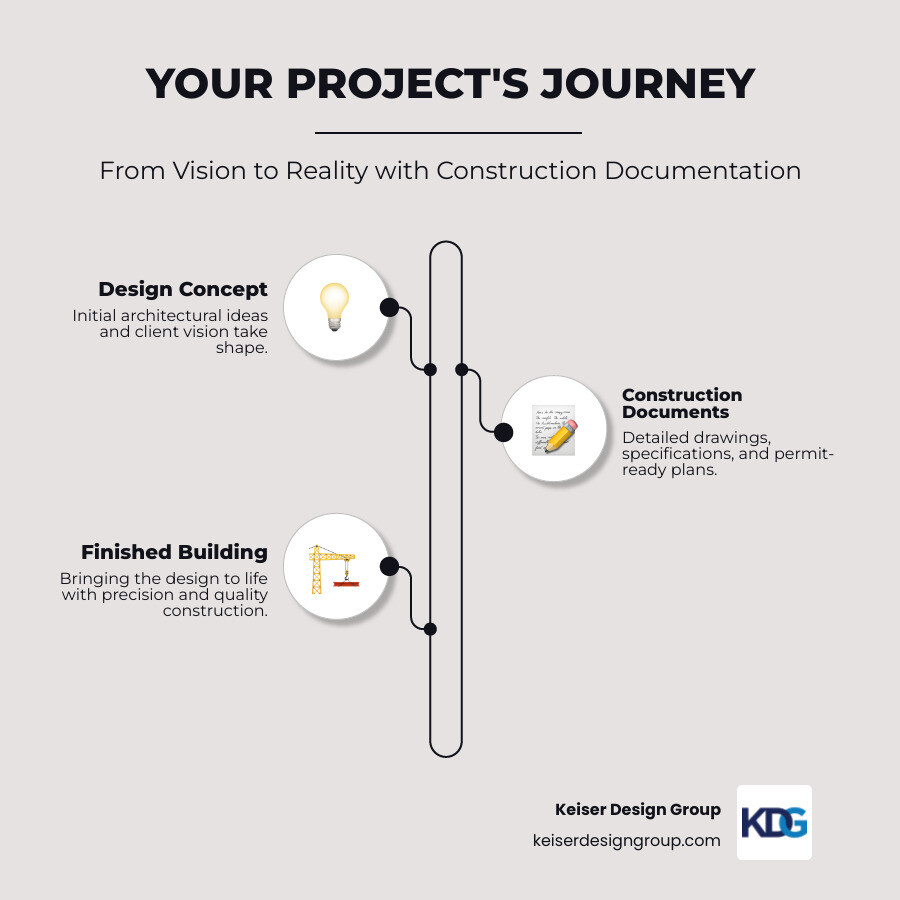
Construction documentation services are the critical link between a design vision and a finished building. They transform architectural concepts into detailed, buildable instructions used by contractors and engineers to bring a project to life.
These services include detailed architectural drawings, technical specifications for materials, coordinated MEP (mechanical, electrical, plumbing) plans, and permit-ready documents.
Thorough documentation is essential for preventing costly errors. The construction industry loses an estimated $1.6 trillion annually due to poor documentation, but projects using advanced digital tools see 20% fewer errors. These documents act as both an instruction manual and a legal contract, ensuring everyone understands what to build, how to build it, and which materials to use.
I’m Dan Keiser, founder of Keiser Design Group in Columbus, Ohio. With over three decades of experience, I lead projects through every phase, including the critical construction documentation stage. My hands-on approach ensures every detail is captured accurately, preventing mistakes and keeping your project on track.
What Are Construction Documents? The Blueprint for Your Project
Think of construction documentation services as the ultimate instruction manual for your building project. These documents are a complete set of drawings and specifications that guide every aspect of construction, from the foundation to the final fixtures. More than just technical drawings, they form a legal contract between you and your contractors, defining the scope, quality, and standards of the work.
Without thorough documentation, projects often face delays, budget overruns, and results that don’t match the owner’s vision. Most of these problems trace back to unclear or incomplete plans.

Clear documentation is vital for several reasons. It enables accurate bidding, as contractors rely on detailed plans for realistic cost estimates. It’s also required to secure building permits, as authorities in cities like Columbus, Ohio, or Indianapolis, Indiana, need to see exactly what you plan to build. Finally, these documents establish quality control standards, specifying materials and installation methods to ensure the finished project meets your expectations and prevents disputes.
Key Components of a Construction Document Set
A complete set of construction documentation services includes several critical elements:
- Architectural drawings form the backbone, showing floor plans, exterior elevations, building sections, and specific details for components like staircases or custom millwork.
- Structural drawings detail the building’s skeleton, including foundations, framing systems, and connection details that ensure stability and safety.
- MEP drawings (Mechanical, Electrical, and Plumbing) map out the systems that make a building functional, such as HVAC, power distribution, lighting, water supply, and drainage.
- Specifications are written descriptions that complement the drawings, detailing the exact materials, quality standards, installation methods, and performance criteria for every component.
- Schedules provide organized lists of specific elements like doors, windows, and light fixtures, detailing their type, size, material, and location.
These components work together to provide an unambiguous guide for construction. For more insights, explore our guide on commercial building design.
Why These Documents are Essential for Risk Mitigation
Effective construction documentation services are your best defense against project risks. Meticulous documentation acts as proactive protection against delays and budget overruns. By providing contractors with precise instructions, it leaves no room for guesswork, preventing errors and the need for rework. This clarity also prevents disputes by establishing a single source of truth that aligns all stakeholders.
Our documentation integrates all applicable building codes and zoning requirements from the start, ensuring legal compliance and avoiding costly penalties. This detailed approach provides a solid basis for accurate cost estimates, helping you manage your budget and avoid unexpected expenses.
By investing in comprehensive documentation, you’re investing in a predictable, efficient, and high-quality construction experience. To learn more, read our guide on Understanding Commercial Architectural Services.
The Role of Technology in Modern Construction Documentation Services
The world of construction documentation services has been transformed by technology. We’ve moved from hand-drawn blueprints to an intelligent digital environment that improves precision, collaboration, and efficiency. When creating documentation for clients across Ohio, Indiana, and Kentucky, we use 3D models and integrated data systems to catch errors before they become expensive on-site problems.
The benefits are measurable. Digital tools minimize human error, while cloud-based platforms enable real-time sharing among all stakeholders, leading to a 30% reduction in administrative overhead. Revisions that once took days now happen in hours, ensuring everyone is working from the latest plans. We also use cutting-edge technologies like 3D laser scanning and drones to capture existing site conditions with remarkable accuracy, providing a solid foundation that prevents surprises during construction.
The Power of Building Information Modeling (BIM)
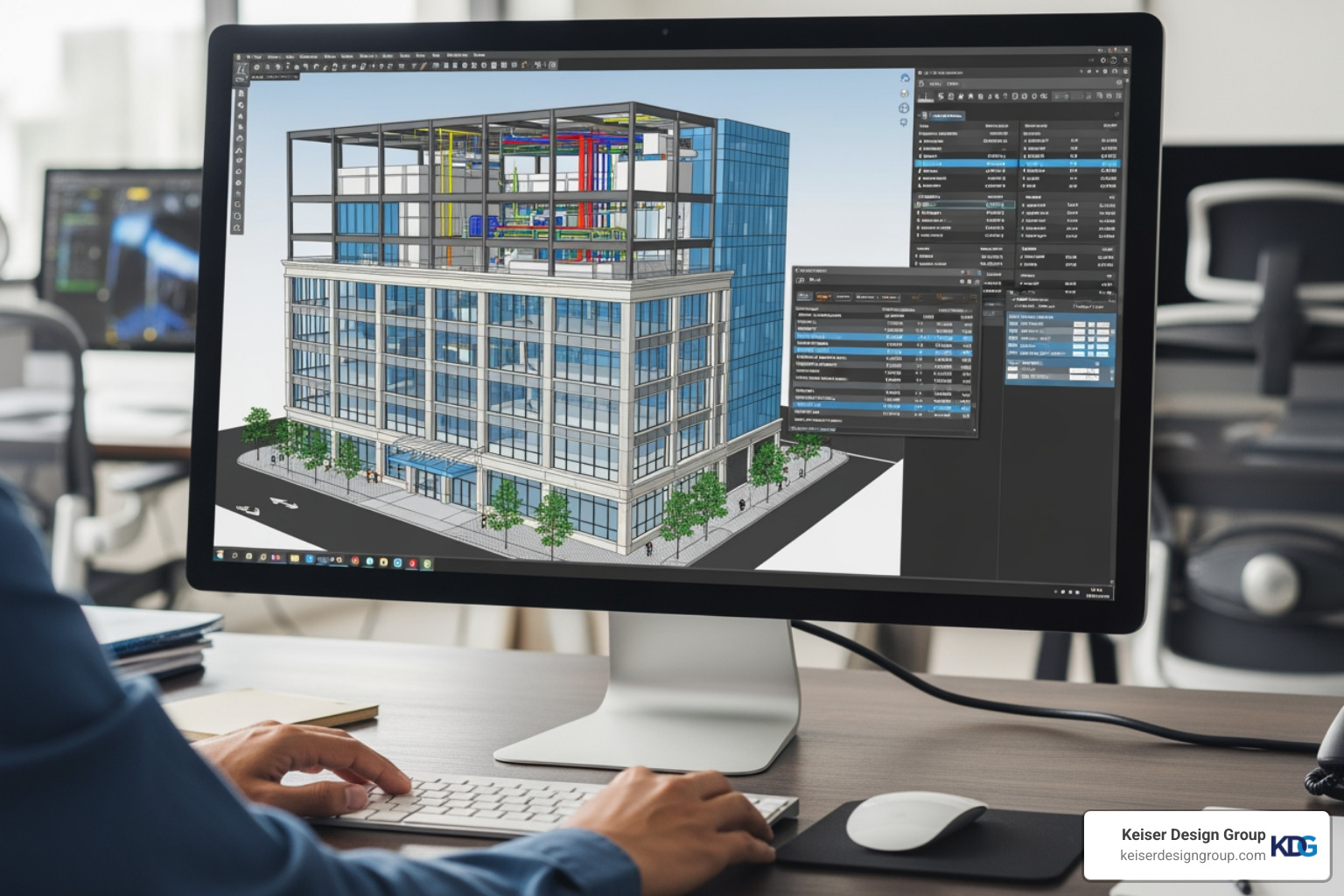
Building Information Modeling (BIM) is the most significant advancement in modern construction documentation services. It creates an intelligent 3D digital model that serves as a centralized data source for the entire project, integrating architectural, structural, and MEP plans into one coordinated environment.
The key benefit is clash detection, where the software automatically identifies conflicts—like a pipe running through a beam. Finding these issues during the design phase saves enormous time and money compared to finding them on-site. Studies show BIM can reduce construction costs by up to 10% and improve project delivery times by 15-20%.
BIM also allows for virtual reality (VR) walkthroughs, letting you experience your building at full scale before construction begins. This is invaluable for making confident design decisions. For more on this, see our article on Adapting to Change: The Rise of Flexible Spaces in Commercial Architecture Design.
Latest Trends and Innovations
We are constantly adopting new technologies to make our construction documentation services more accurate and useful.
- Advanced reality capture using 3D laser scanning and drones creates “digital twins” of existing buildings and sites with accuracy down to a fraction of an inch.
- Artificial intelligence (AI) is beginning to automate repetitive drawing tasks and analyze designs for code compliance, freeing architects to focus on creative problem-solving.
- Sustainable design integration is now essential. Our BIM models simulate a building’s energy performance, helping us design comfortable, efficient spaces. Learn more in our article on Top 7 Design Trends for a Modern Commercial Building.
- Prefabrication and modular construction require highly precise documentation to ensure components manufactured off-site fit together perfectly.
- As-built documentation, including 360° photos and videos taken before walls are closed, creates an invaluable digital archive for future maintenance, renovations, and insurance claims.
How Documentation Benefits Every Project Stakeholder
Effective construction documentation services benefit everyone involved in a project. The documents act as a common language and a single source of truth, creating clarity and confidence for owners, contractors, and facility managers alike. This shared understanding eliminates the “he said, she said” scenarios that can derail projects. When we partner with respected contractors who also value thorough documentation, projects run smoother from day one.
For Architects and Engineers
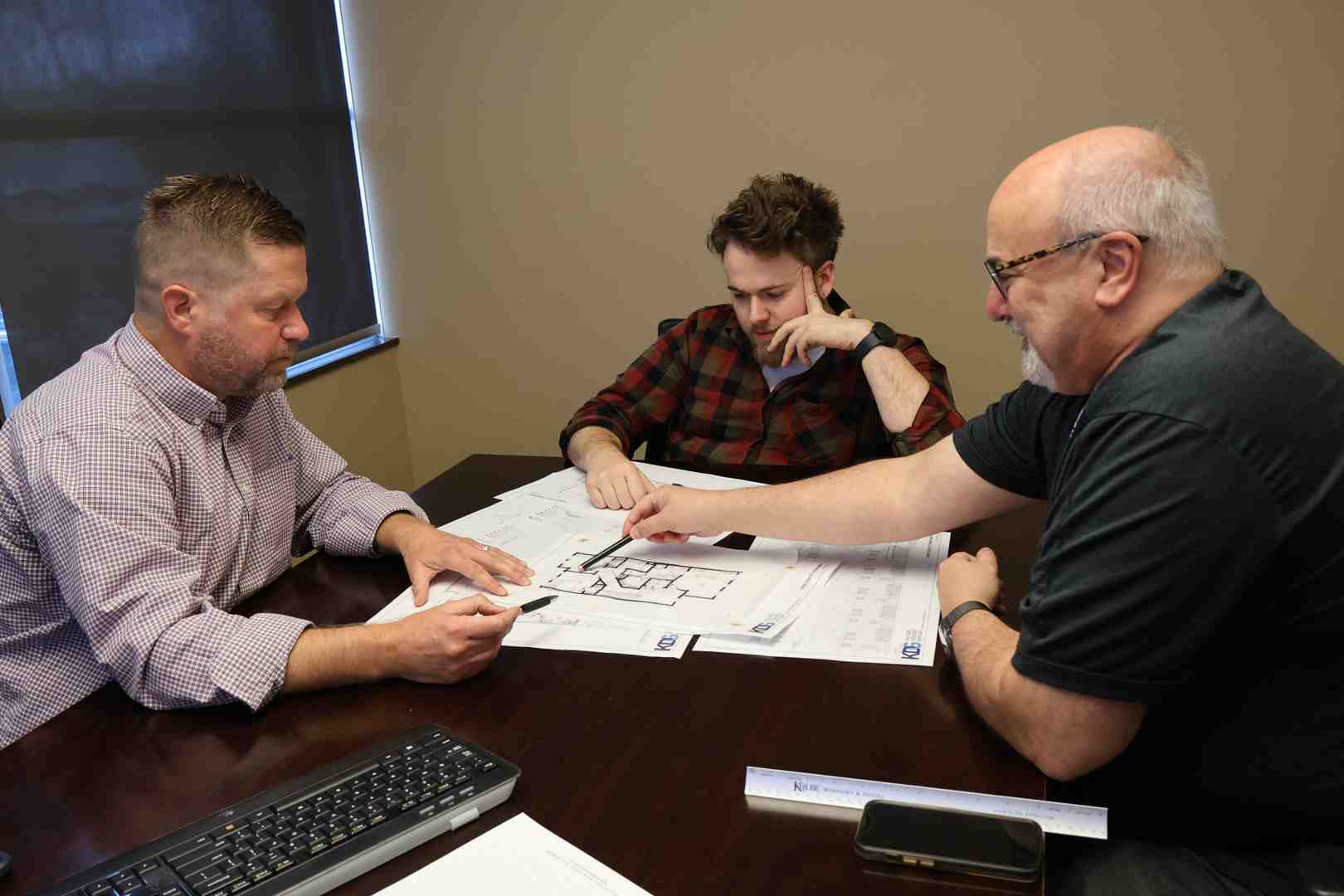
For us as design professionals, documentation protects the design vision and your investment. It allows for design validation, ensuring the creative concept translates accurately into reality. Clear specifications also reduce liability by leaving no room for misinterpretation. Most importantly, it facilitates coordination between disciplines, ensuring structural, mechanical, and electrical systems integrate seamlessly without conflicts. This detailed record also becomes a valuable foundation for any future renovations. You can learn more in our overview of Commercial Architecture Services.
For General Contractors and Builders
For contractors, vague plans lead to guesswork and costly change orders. Quality construction documentation services prevent this.
- Accurate Bidding: Detailed information on materials and methods allows contractors to provide a realistic, reliable price.
- Efficient Scheduling: Clear plans enable logical work sequencing and timely material orders, saving both time and money.
- Reduced Rework: Precise instructions help trades get it right the first time, minimizing errors and costly rework.
- Improved Site Safety: When installation methods are clearly defined, workers can perform their jobs more safely.
For Owners and Facility Managers
For the project owner, the value of documentation extends far beyond construction.
- Budget Predictability: A defined scope and specified materials lead to greater cost control and fewer financial surprises.
- On-Time Delivery: Clear instructions keep the project moving forward without delays for clarification.
- Simplified Maintenance: A complete record of where every pipe runs and what equipment was installed makes future repairs and replacements straightforward.
- Easier Renovations: Accurate as-built records eliminate the expensive investigation phase for future expansions or reconfigurations, supporting long-term asset management.
The Process: From Initial Concept to Final Delivery
Creating effective construction documentation services is a carefully orchestrated journey that transforms your vision into a buildable set of instructions. The process flows through several key stages, with client collaboration and quality checks built into every step. Our services are at the heart of this process, translating design intent into the precise language builders understand. For a deeper dive, see our guide on the Five Phases of Commercial Building Design.
Phase 1: Design Development
After the initial schematic design is approved, we move into Design Development, where the project takes on real substance. We refine the design, making decisions on building form and dimensions. We work with you on material selection, considering durability, cost, and sustainability. Simultaneously, we begin integrating building systems (structural, MEP), coordinating with engineers to ensure everything fits together without conflicts. Through client feedback loops and 3D renderings, we ensure the design reflects your needs and look for value engineering opportunities to optimize costs without sacrificing quality.
Phase 2: Creating the Construction Documentation Services Set
This is the core of construction documentation services, where we translate the design into comprehensive, legally binding documents. Our team drafts detailed drawings, including precise floor plans, elevations, and sections that show exactly how the building comes together. We also write technical specifications that spell out the materials, installation methods, and quality standards for every component. Throughout this phase, we are coordinating with consultants and running clash detection to resolve conflicts before they reach the job site. Every document undergoes rigorous quality control reviews to check for errors, inconsistencies, and code compliance.
Phase 3: Bidding, Permitting, and Construction Administration
With the documents complete, we prepare for construction. We issue documents for contractor bidding, allowing for accurate, competitive pricing. We also submit plans for building permits to the relevant local authorities, demonstrating compliance with all codes and regulations.
Once construction begins, our role shifts to construction administration. We remain actively involved to ensure the design is realized correctly. This includes answering contractor questions (RFIs), reviewing material submittals to ensure they meet specifications, and conducting regular site observation visits to monitor progress and quality. This oversight protects your investment every step of the way.
Choosing the Right Architectural Partner for Your Project
Choosing the right architectural partner is one of the most critical decisions for your project’s success. For construction documentation services, you need a partner who combines technical expertise with a genuine understanding of your goals. It’s about creating a collaborative relationship built on trust and clear communication. Many businesses find that outsourcing these services to a specialized firm brings significant advantages. For renovation projects, this choice is even more critical, a topic explored in our guide on Renovating a Commercial Building.
Key Differentiators to Look For
When selecting a firm for construction documentation services, here’s what sets the best apart:
- Local Expertise: A firm with deep roots in your region, like our experience across Ohio, Indiana, and Kentucky, understands local codes and permitting processes, preventing delays.
- Technology Proficiency: Fluency in modern tools like Building Information Modeling (BIM) is non-negotiable for delivering accurate, coordinated documents.
- A Collaborative Approach: The best partners listen carefully, improve your vision, and work seamlessly with all project stakeholders.
- Strong Communication: Your architect should keep you informed, explain complex details clearly, and be transparent about challenges.
- Meticulous Attention to Detail: Precision is the hallmark of quality documentation, minimizing errors and costly rework.
Why Outsourcing Your Construction Documentation Services Can Be a Smart Move
Outsourcing construction documentation services to a specialized firm is a strategic decision that offers several advantages:
- Access to Specialized Expertise: You gain a team of experts who are current on the latest software, best practices, and code updates without the overhead of an in-house team.
- Cost Efficiency: You pay only for the services you need, which can lead to significant savings compared to maintaining full-time staff.
- Improved Quality and Accuracy: Specialized firms have refined processes and rigorous quality control, resulting in more reliable construction documents.
- Faster Project Timelines: Dedicated resources and streamlined workflows mean your project moves forward without unnecessary delays.
- Focus on Core Business: Outsourcing frees your internal team to concentrate on what they do best—whether that’s development, property management, or business growth.
Conclusion: Building Your Vision with Confidence
After three decades in this business, I’ve learned that the quality of the documentation often determines a project’s success. Construction documentation services are not just about drawings; they provide peace of mind that every detail has been considered and every potential issue has been addressed before it becomes a costly problem.
Comprehensive documentation mitigates risk, controls costs, and ensures quality by giving every stakeholder a single source of truth. The construction industry loses over a trillion dollars annually to documentation errors, but your project doesn’t have to be part of that statistic.
At Keiser Design Group, we combine cutting-edge technology like BIM with deep local knowledge of building codes across Ohio, Indiana, and Kentucky. Our collaborative, worry-free process is built on a commitment to your goals, timeline, and budget. We handle the complexity so you can focus on your vision.
Whether you’re planning a new build or a renovation, the process starts with a conversation. Let us show you how our meticulous approach to construction documentation services can turn your vision into reality with confidence.
Ready to get started? Learn more about our commercial architectural services.
Contact Keiser Design Group today to discuss your next project. Let’s build something great together.